Setup
Executive Summary
In the summer of 2018, Advanced Micro Devices was the hottest stock in the semiconductor space. The Ryzen CPU lineup was stealing market share from Intel for the first time in a decade, EPYC server chips were landing deals with Amazon, Microsoft, and Tencent, and the stock had already doubled from its April lows. AMD closed at $16.50 the week of July 16 and proceeded to rocket to a weekly close of $32.72 by mid-September—a 98.3% gain in just nine weeks.
Then everything reversed. AMD’s Q3 earnings on October 24 delivered a beat on the top and bottom line, but Q4 guidance disappointed badly. The crypto mining boom that had inflated GPU revenues through early 2018 had collapsed to “negligible” levels, and the market punished AMD with a 22% after-hours plunge. That earnings shock landed on top of the worst broad market selloff since 2011, as the Fed hiked rates in September and signaled more to come while US-China trade tensions escalated.
This case study follows a five-month trade that ended almost exactly where it began—AMD closed at $16.93 the week of December 17, a +2.6% return that masked a gut-wrenching round trip through a 98% gain and a 48% drawdown from peak. Meanwhile, the S&P 500 dropped 13.9% over the same period. AMD technically “outperformed,” but anyone who held through the September highs and December lows experienced one of the most violent round trips in recent semiconductor history.
What Was Observable Before Entry
Pre-Trade Environment
What Was Observable Before Entry (April - July 2018)
Macro Regime:
- Fed Funds rate at 1.75–2.00% after June 2018 hike, with two more hikes expected before year-end
- US GDP growth strong at 4.2% annualized in Q2 2018
- US-China trade tensions building—first tariffs imposed in July 2018
- Tech stocks broadly in a bull market, NASDAQ hitting new highs
- Semiconductor cycle appeared healthy, with strong enterprise and data center spending
Company-Specific Setup:
- AMD stock had surged from $9.56 (April low) to $16.50 by mid-July—a 72% move
- Q1 2018 showed crypto mining was ~10% of revenue, already declining from its peak
- Ryzen 2nd generation desktop processors launched April 2018 to strong reviews
- EPYC server processors gaining traction: HPE, Cisco, Tencent, and Baidu adopting
- CEO Lisa Su executing one of the most successful turnaround stories in tech
- The company was guiding for revenue acceleration in Q3 and Q4
Sector Momentum:
- Intel stumbling on 10nm process delays, giving AMD a rare window
- NVIDIA riding both gaming and data center AI demand to record revenues
- Crypto mining GPU demand collapsing—Bitcoin had fallen from $19,000 to $6,000
- Memory chip prices peaking, with early signs of cyclical downturn in DRAM/NAND
- Semiconductor stocks broadly outperforming the S&P 500 in the first half of 2018
Sentiment:
- AMD was a retail investor favorite, heavily discussed on forums and social media
- Analyst consensus was divided—bulls pointed to Ryzen/EPYC share gains, bears warned about crypto GPU overhang
- Short interest was elevated, creating squeeze potential on positive catalysts
- Price targets ranged widely from $10 to $25, reflecting deep uncertainty about AMD’s execution
Entry
What Was Observable at Entry
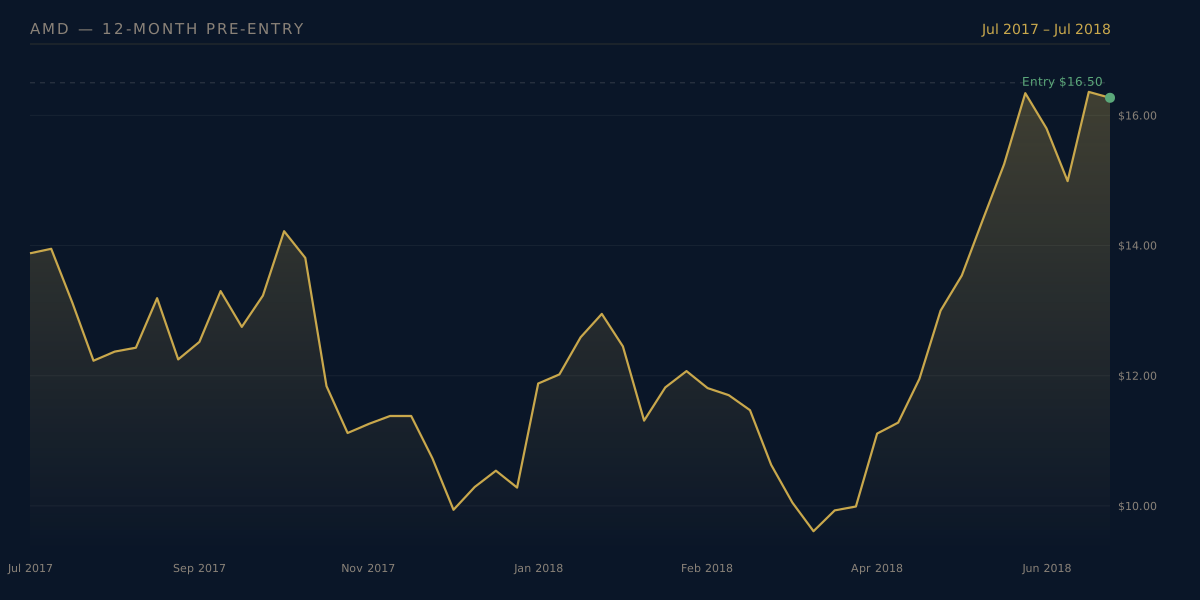
12-month price action before entry showing AMD’s dramatic climb from the $10 range in late April to $16.50 at entry, fueled by the Ryzen 2 launch and EPYC momentum. The stock had nearly doubled off its spring lows.
Entry Details
- Date: July 16, 2018
- Price: $16.50
- Context: AMD was sitting just below recent highs heading into Q2 earnings on July 25. Ryzen 2 desktop CPUs had launched to strong reviews in April, EPYC server wins were accelerating, and Intel’s continued 10nm struggles gave AMD a rare competitive advantage. The stock had pulled back slightly from its June highs of $16.34, offering what appeared to be a consolidation before the next leg up.
The Thesis
A trader entering AMD in mid-July 2018 had a compelling growth story: Lisa Su’s turnaround was delivering real results, with Ryzen taking desktop CPU share from Intel for the first time in years and EPYC starting to crack the lucrative server market. Intel’s 10nm delays had created a once-in-a-decade competitive window. At $16.50, the stock had already run from April lows but appeared to have momentum heading into Q2 earnings on July 25.
The risks were visible but easy to dismiss amid the euphoria. Crypto mining revenue, which had been 10% of AMD’s top line in Q1, was evaporating as Bitcoin cratered. The Fed was tightening aggressively, and trade war rhetoric between the US and China was escalating—both threats to the global semiconductor cycle. And AMD’s valuation was already stretched, pricing in years of server market share gains that hadn’t materialized yet. Buying here meant betting that Ryzen and EPYC growth could more than offset the crypto GPU collapse, and that the macro backdrop would cooperate.
Before continuing: Consider what you would have done. Would you have taken this entry? What risks would you have been most concerned about?
Journey
Key Events
| Date | Event | Category | Stock Reaction |
|---|---|---|---|
| Jul 16, 2018 | Entry at $16.50, stock consolidating before earnings | Entry | Starting point |
| Jul 25, 2018 | Q2 earnings beat: best quarter in 7 years, revenue up 53% YoY | Earnings | Stock surged to $18.94 weekly close (+14.8%) |
| Aug 22, 2018 | Stock breaks above $20 as Ryzen momentum builds | Technical | Closed week at $23.98, up 45.3% from entry |
| Sep 5, 2018 | Stock hits $29.94 intraweek high, crossing above $25 | Momentum | Closed at $27.38, up 65.9% |
| Sep 12, 2018 | AMD reaches $34.14 intraweek—all-time high territory | Peak | Weekly close $32.72, up 98.3% from entry |
| Sep 26, 2018 | Fed hikes rates to 2.00–2.25%, signals further tightening | Macro | Stock pulling back to $30.89 |
| Oct 10, 2018 | Broad market selloff begins; S&P 500 drops sharply | Macro | AMD falls to $27.35, down 16.4% from peak |
| Oct 24, 2018 | Q3 earnings beat, but Q4 guidance disappoints on crypto GPU collapse | Earnings | Stock crashes to $17.63—down 46.1% from peak |
| Nov 6, 2018 | AMD announces 7nm EPYC “Rome” at Next Horizon event | Product | Modest rebound to $21.03 |
| Dec 19, 2018 | Fed hikes rates again, signals more hikes coming | Macro | Broad market crashes; AMD closes week at $16.93 |
How It Unfolded
Phase 1: The Earnings Rocket (July 16 - August 2018)
AMD entered earnings season on July 25 and delivered a blowout: revenue of $1.76 billion was up 53% year-over-year, the best quarter in seven years. The Computing and Graphics segment hit $1.09 billion, up 64% on Ryzen desktop and mobile strength. EPYC server revenue jumped 50% sequentially. The stock surged from a weekly close of $16.50 to $18.94, then accelerated through August as the market digested just how fast AMD was taking share from Intel.
By the week of August 20, AMD had broken above $20 and kept going—closing at $23.98 for the week, a 45.3% gain from entry in just five weeks. Volume was explosive, averaging over 400 million shares per week. The narrative was simple and powerful: Intel was stuck on 14nm, AMD had the superior product lineup, and server market share was inflecting. Every data point confirmed the thesis.
Phase 2: The Parabolic Blow-Off (September 2018)
September was euphoric. AMD opened the week of September 3 at $25.62 and kept climbing. By the week of September 10, the stock touched $34.14 intraweek—more than double the entry price just nine weeks earlier. The weekly close of $32.72 represented a 98.3% gain from the $16.50 entry.
But the parabolic move was unsustainable. The stock had gone vertical on momentum and short-squeeze dynamics, not on fundamentals that justified a $32+ price. The week of September 17 brought the first cracks: AMD opened at $31.75 and closed at $31.02, failing to make new highs. The following week closed at $30.89. The Fed hiked rates on September 26 to 2.00–2.25% and signaled further increases. For a high-multiple growth stock like AMD, rising rates meant the market would discount those future earnings more aggressively.
Phase 3: The Double Crash (October 2018)
October was catastrophic—both for AMD and the broader market. The S&P 500 entered its worst month since 2011, falling from $290.72 to $265.33 as trade war fears and Fed tightening crushed risk appetite. AMD fell harder. The stock dropped from $30.89 to $27.35 in the first week of October, then to $26.34, then to $23.66.
The killing blow came on October 24. AMD reported Q3 earnings that technically beat expectations, but the Q4 guidance was ugly. Revenue was guided to approximately $1.45 billion, implying just 8% year-over-year growth after quarters of 50%+ growth. The culprit was clear: cryptocurrency mining GPU sales had collapsed to “negligible” levels after contributing 10% of revenue just two quarters earlier. Graphics revenue overall slid 14% sequentially. The stock plunged 22% after hours. By the week of October 22, AMD closed at $17.63—a 46.1% decline from the September peak and barely above the entry price. Five months of gains had been erased in five weeks.
Phase 4: The Failed Recovery (November - December 2018)
November offered a head-fake rally. AMD hosted its “Next Horizon” event on November 6, unveiling the 7nm EPYC “Rome” processor that would eventually become a game-changer for the server market. The stock bounced from $17.63 to $21.03 the following week. By late November, shares had recovered to $21.30 as investors bought the dip on the 7nm narrative.
But the macro backdrop was deteriorating. The Fed hiked rates again on December 19 and Chairman Jerome Powell signaled the balance sheet runoff was on “autopilot”—a comment that sent markets into a tailspin. The S&P 500 fell to $240.70 for the week of December 17, its lowest level of 2018. AMD, despite its company-specific growth story, got swept up in the broad liquidation. The stock opened the week of December 17 at $20.01 and collapsed to $16.93—wiping out the entire November recovery in a single week. The year ended with AMD essentially round-tripping back to entry.
Exit
- Date: December 24, 2018
- Price: $16.93
- Context: The December Fed-induced selloff had returned AMD to its pre-rally range. The crypto GPU overhang was unresolved, the broad market was in its worst December since 1931, and the September highs of $34.14 felt like a distant memory. While the 7nm EPYC Rome announcement provided a long-term bull case, the near-term was dominated by macro headwinds and earnings deceleration. Holding through the holiday selloff offered more risk than reward.
Charts
Price Chart with Entry/Exit
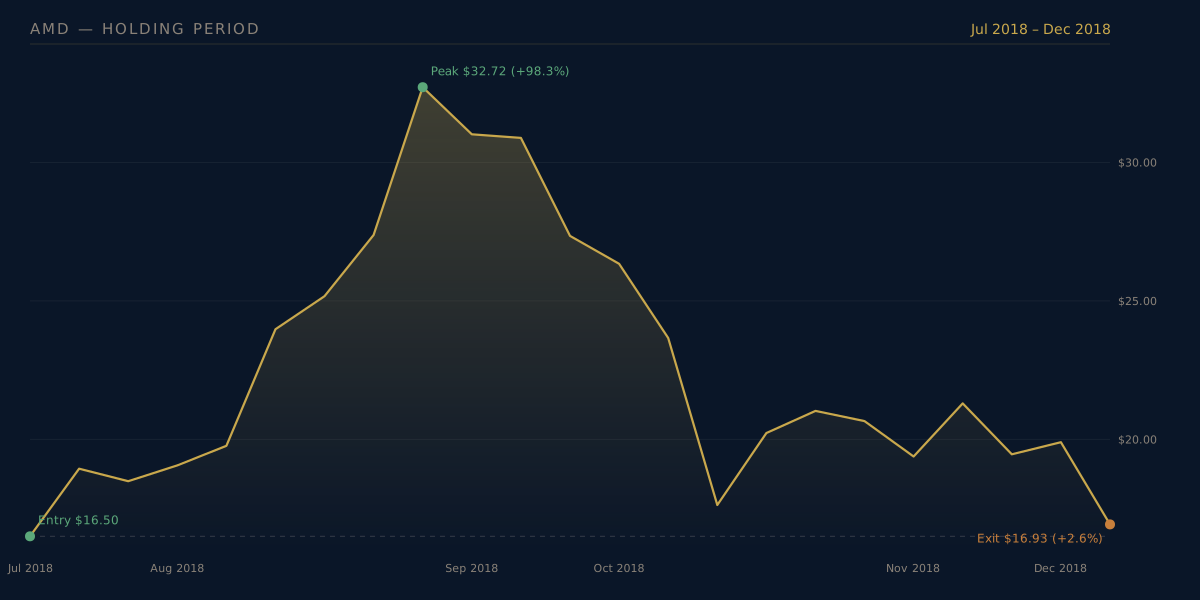
Weekly candlestick chart showing entry at $16.50 (green) and exit at $16.93 (blue). The September peak at $34.14 and the subsequent 48% drawdown frame one of the most violent round trips in 2018.
Relative Performance vs. Benchmarks
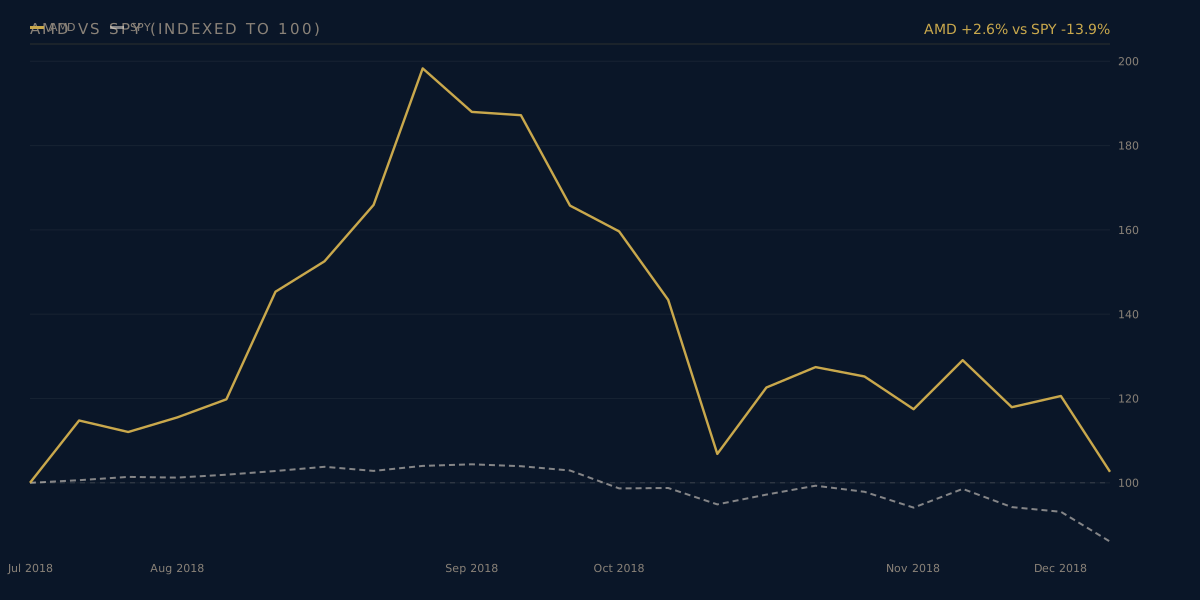
AMD vs. SPY, indexed to 100 at entry. AMD surged to nearly 200 by mid-September while SPY remained flat. By December, SPY had fallen to 86 while AMD returned to 103—outperforming in absolute terms but giving back nearly all of a historic rally.
Drawdown from Peak
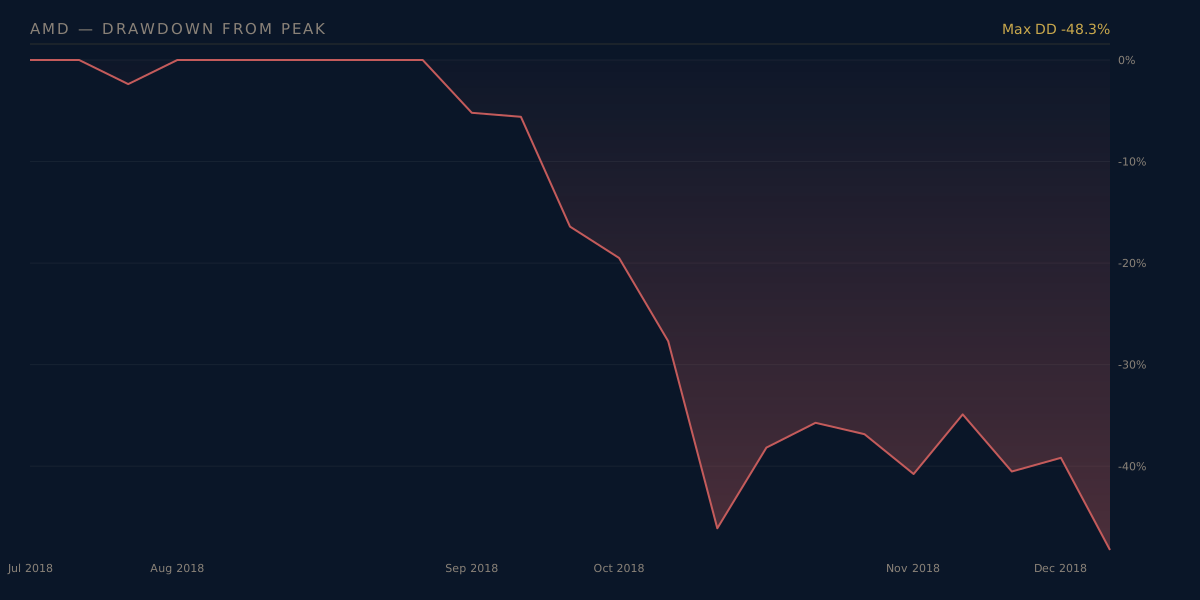
Peak drawdown reached -48.3% from the September $32.72 weekly close to the December $16.93 close. The drawdown accelerated after the Q3 earnings guidance miss and deepened further during the December market-wide liquidation.
Results
Performance Analysis
Absolute Returns
| Metric | Value |
|---|---|
| Entry Price | $16.50 |
| Exit Price | $16.93 |
| Gross Return | +2.6% |
| Holding Period | ~5 months |
| Max Price (Weekly Close) | $32.72 |
| Min Price (Weekly Close) | $16.93 |
| Peak-to-Trough Drawdown | -48.3% |
Relative Performance
During the same July 16 to December 24, 2018 period:
- S&P 500 (SPY): -13.9% ($279.68 → $240.70)
- AMD: +2.6% ($16.50 → $16.93)
AMD outperformed the S&P 500 by approximately 16.5 percentage points—but the headline number is deeply misleading. Anyone who held from entry through the September peak watched a 98.3% gain evaporate to just 2.6%. The stock’s beta made it a leveraged bet on both directions: it outperformed dramatically on the way up and gave almost all of it back on the way down. The “outperformance” came entirely from the residual Ryzen/EPYC fundamental value that kept AMD from falling as far as the broader market in December.
Lessons
What Worked
What Worked
-
The Ryzen/EPYC thesis was fundamentally correct. AMD’s Ryzen processors were genuinely taking share from Intel, and EPYC server adoption was accelerating. Q2 2018 revenue was up 53% year-over-year—not on hype, but on real product wins. The competitive story that drove the stock from $16.50 to $32.72 was grounded in hardware excellence, not just momentum trading.
-
Entry timing captured a major move. Entering ahead of Q2 earnings positioned the trade to capture AMD’s best quarter in seven years. The 98.3% peak gain in nine weeks was extraordinary, and the initial thesis—that AMD would beat earnings on Ryzen strength—played out exactly as hoped.
-
AMD’s fundamental floor held despite the selloff. Even in the worst December since 1931, AMD only returned to its July entry price rather than crashing below it. The Ryzen and EPYC product portfolios provided genuine fundamental support that kept the stock from joining the broader carnage.
-
The 7nm EPYC Rome announcement validated the long-term story. AMD’s November unveiling of next-generation server chips showed the company had a credible roadmap to continue gaining share. This helped stabilize the stock during the November bounce and would eventually drive AMD to new all-time highs in 2019 and beyond.
What Didn’t Work
-
The crypto GPU exposure was a hidden landmine. Crypto mining had inflated AMD’s GPU revenue by 10% of total sales in Q1 2018, and its collapse through the year created a revenue headwind that the market didn’t fully price until Q3 earnings. The Q4 guidance miss was driven almost entirely by evaporating mining demand—a risk that was visible in the data but underweighted by the market.
-
No profit-taking on a parabolic move. AMD went from $16.50 to $32.72 in nine weeks—a 98.3% gain. Parabolic moves of this magnitude almost always retrace significantly. The trade captured none of that gain because there was no systematic approach to taking profits or trailing stops. A 50% retracement of a near-doubling was entirely predictable.
-
Macro risk overwhelmed company-specific strength. AMD’s Q3 results were actually good—the company beat on revenue and earnings. But in a market where the Fed was hiking, trade wars were escalating, and risk appetite was collapsing, even a good earnings beat wasn’t enough to hold a high-beta stock. The December selloff had nothing to do with AMD’s products and everything to do with macro liquidation.
-
High beta cuts both ways. AMD’s massive outperformance on the way up (+98% vs SPY’s flat) was the mirror image of its vulnerability on the way down. Holding a stock with this kind of volatility through a macro regime change guaranteed an outsized drawdown. The 48.3% peak-to-trough decline was nearly four times the S&P 500’s drawdown over the same period.
Key Takeaways
Lessons and Takeaways
-
Parabolic gains demand a profit-taking plan. When a stock doubles in nine weeks, the risk/reward has shifted dramatically. AMD’s move from $16.50 to $32.72 was a gift—but only if you locked in some of it. Trailing stops, partial sells at technical targets, or selling into strength are all tools that would have preserved meaningful gains from this trade.
-
Earnings beats don’t protect you in a bear market. AMD beat Q3 estimates and still crashed 22% after hours because guidance disappointed. In a risk-off environment, the market prices forward earnings, not backward beats. When the macro backdrop is deteriorating, even good companies get repriced violently.
-
Hidden revenue dependencies create asymmetric risk. Crypto mining was 10% of AMD’s Q1 revenue and collapsed to “negligible” by Q3. If a meaningful portion of a company’s revenue comes from a volatile, unpredictable source, that’s a risk that should be sized accordingly—not dismissed because the core business is strong.
-
Beta is not a free lunch. AMD outperformed the S&P 500 by 16.5 percentage points over this period—but delivered a total return of just 2.6% while subjecting the holder to a 48% drawdown. High-beta stocks can create the illusion of alpha when the real driver is just amplified market moves. Understand whether your returns come from stock selection or from leveraged exposure to market direction.
-
The best long-term thesis can still produce a terrible trade. AMD in 2018 was everything a growth investor wanted: superior products, gaining share, visionary CEO. The stock would eventually reach $160 by 2021. But from July to December 2018, the combination of crypto GPU collapse, Fed tightening, and trade war fears turned a correct long-term thesis into a round trip to nowhere. Being right about the company doesn’t make you right about the trade.
Sources
- AMD Announces Q2 2018 Results: Best Quarter in Seven Years — AnandTech, July 25, 2018
- AMD Announces Q3 FY 2018 Earnings: Improving Margins, But Dogged By Crypto Decline — AnandTech, October 24, 2018
- AMD Stock Plunges After Q3 Earnings Beat — Here Is Why — Yahoo Finance, October 25, 2018
- AMD Beats on Q3 Earnings, Shares Down on Weak Q4 Guidance — Zacks, October 25, 2018
- AMD: GPU Sales to Crypto Miners Was ‘Negligible’ in Q3 — CoinDesk, October 24, 2018
- Crypto Mining Made Up 10% of AMD’s Revenue in Q1 — CoinDesk, April 26, 2018
- Dow Dives 350 Points After Fed Hikes Rates — CNBC, December 19, 2018
- AMD Reports Fourth Quarter and Annual 2018 Financial Results — AMD Investor Relations, January 2019
- FOMC Minutes, December 18-19, 2018 — Federal Reserve, December 2018
- Market Review for October 2018 — Nasdaq, November 2, 2018
Disclosure: This case study is for educational purposes only and does not constitute investment advice. Past performance does not guarantee future results. All investments carry risk of loss.
Timeline of Events
- Jul 16, 2018: Entry at $16.50, stock consolidating before earnings
Entry — Starting point
- Jul 25, 2018: Q2 earnings beat: best quarter in 7 years, revenue up 53% YoY
Earnings — Stock surged to $18.94 weekly close (+14.8%)
- Aug 22, 2018: Stock breaks above $20 as Ryzen momentum builds
Technical — Closed week at $23.98, up 45.3% from entry
- Sep 5, 2018: Stock hits $29.94 intraweek high, crossing above $25
Momentum — Closed at $27.38, up 65.9%
- Sep 12, 2018: AMD reaches $34.14 intraweek—all-time high territory
Peak — Weekly close $32.72, up 98.3% from entry
- Sep 26, 2018: Fed hikes rates to 2.00–2.25%, signals further tightening
Macro — Stock pulling back to $30.89
- Oct 10, 2018: Broad market selloff begins; S&P 500 drops sharply
Macro — AMD falls to $27.35, down 16.4% from peak
- Oct 24, 2018: Q3 earnings beat, but Q4 guidance disappoints on crypto GPU collapse
Earnings — Stock crashes to $17.63—down 46.1% from peak
- Nov 6, 2018: AMD announces 7nm EPYC "Rome" at Next Horizon event
Product — Modest rebound to $21.03
- Dec 19, 2018: Fed hikes rates again, signals more hikes coming
Macro — Broad market crashes; AMD closes week at $16.93
Phase Breakdown
Phase 1: The Earnings Rocket (July 16 - August 2018)
AMD entered earnings season on July 25 and delivered a blowout: revenue of $1.76 billion was up 53% year-over-year, the best quarter in seven years. The Computing and Graphics segment hit $1.09 billion, up 64% on Ryzen desktop and mobile strength. EPYC server revenue jumped 50% sequentially. The stock surged from a weekly close of $16.50 to $18.94, then accelerated through August as the market digested just how fast AMD was taking share from Intel. By the week of August 20, AMD had broken above $20 and kept going—closing at $23.98 for the week, a 45.3% gain from entry in just five weeks. Volume was explosive, averaging over 400 million shares per week. The narrative was simple and powerful: Intel was stuck on 14nm, AMD had the superior product lineup, and server market share was inflecting. Every data point confirmed the thesis.
Phase 2: The Parabolic Blow-Off (September 2018)
September was euphoric. AMD opened the week of September 3 at $25.62 and kept climbing. By the week of September 10, the stock touched $34.14 intraweek—more than double the entry price just nine weeks earlier. The weekly close of $32.72 represented a 98.3% gain from the $16.50 entry. But the parabolic move was unsustainable. The stock had gone vertical on momentum and short-squeeze dynamics, not on fundamentals that justified a $32+ price. The week of September 17 brought the first cracks: AMD opened at $31.75 and closed at $31.02, failing to make new highs. The following week closed at $30.89. The Fed hiked rates on September 26 to 2.00–2.25% and signaled further increases. For a high-multiple growth stock like AMD, rising rates meant the market would discount those future earnings more aggressively.
Phase 3: The Double Crash (October 2018)
October was catastrophic—both for AMD and the broader market. The S&P 500 entered its worst month since 2011, falling from $290.72 to $265.33 as trade war fears and Fed tightening crushed risk appetite. AMD fell harder. The stock dropped from $30.89 to $27.35 in the first week of October, then to $26.34, then to $23.66. The killing blow came on October 24. AMD reported Q3 earnings that technically beat expectations, but the Q4 guidance was ugly. Revenue was guided to approximately $1.45 billion, implying just 8% year-over-year growth after quarters of 50%+ growth. The culprit was clear: cryptocurrency mining GPU sales had collapsed to "negligible" levels after contributing 10% of revenue just two quarters earlier. Graphics revenue overall slid 14% sequentially. The stock plunged 22% after hours. By the week of October 22, AMD closed at $17.63—a 46.1% decline from the September peak and barely above the entry price. Five months of gains had been erased in five weeks.
Phase 4: The Failed Recovery (November - December 2018)
November offered a head-fake rally. AMD hosted its "Next Horizon" event on November 6, unveiling the 7nm EPYC "Rome" processor that would eventually become a game-changer for the server market. The stock bounced from $17.63 to $21.03 the following week. By late November, shares had recovered to $21.30 as investors bought the dip on the 7nm narrative. But the macro backdrop was deteriorating. The Fed hiked rates again on December 19 and Chairman Jerome Powell signaled the balance sheet runoff was on "autopilot"—a comment that sent markets into a tailspin. The S&P 500 fell to $240.70 for the week of December 17, its lowest level of 2018. AMD, despite its company-specific growth story, got swept up in the broad liquidation. The stock opened the week of December 17 at $20.01 and collapsed to $16.93—wiping out the entire November recovery in a single week. The year ended with AMD essentially round-tripping back to entry.
Key Lessons
- Parabolic gains demand a profit-taking plan
When a stock doubles in nine weeks, the risk/reward has shifted dramatically. AMD's move from $16.50 to $32.72 was a gift—but only if you locked in some of it. Trailing stops, partial sells at technical targets, or selling into strength are all tools that would have preserved meaningful gains from this trade.
- Earnings beats don't protect you in a bear market
AMD beat Q3 estimates and still crashed 22% after hours because guidance disappointed. In a risk-off environment, the market prices forward earnings, not backward beats. When the macro backdrop is deteriorating, even good companies get repriced violently.
- Hidden revenue dependencies create asymmetric risk
Crypto mining was 10% of AMD's Q1 revenue and collapsed to "negligible" by Q3. If a meaningful portion of a company's revenue comes from a volatile, unpredictable source, that's a risk that should be sized accordingly—not dismissed because the core business is strong.
- Beta is not a free lunch
AMD outperformed the S&P 500 by 16.5 percentage points over this period—but delivered a total return of just 2.6% while subjecting the holder to a 48% drawdown. High-beta stocks can create the illusion of alpha when the real driver is just amplified market moves. Understand whether your returns come from stock selection or from leveraged exposure to market direction.
- The best long-term thesis can still produce a terrible trade
AMD in 2018 was everything a growth investor wanted: superior products, gaining share, visionary CEO. The stock would eventually reach $160 by 2021. But from July to December 2018, the combination of crypto GPU collapse, Fed tightening, and trade war fears turned a correct long-term thesis into a round trip to nowhere. Being right about the company doesn't make you right about the trade.
Disclaimer: Equicurious provides educational content only, not investment advice. Past performance does not guarantee future results. Always verify with primary sources and consult a licensed professional for your specific situation.