Setup
Executive Summary
By early April 2018, Accenture had just experienced its worst quarter in years. The February VIX spike and March trade-war fears had slammed the stock from $162 to $147—a swift 9% decline. The question facing investors: was this a buying opportunity or the start of something worse?
The fundamentals hadn’t changed. Digital transformation demand remained strong. Tax reform benefits were flowing through. But the tape was ugly, volume had spiked on the selloff, and fear was palpable.
This case study examines a “buy the dip” trade—entering after a sharp correction to test whether quality names recover quickly or continue lower. Would patience be rewarded, or was the market telling us something?
What Was Observable Before Entry
Pre-Trade Environment
What Was Observable Before Entry (Q1 2018)
Macro Regime:
- The Fed was hiking rates, having just raised in March 2018
- Trade tensions between U.S. and China were escalating with tariff announcements
- The February “Volmageddon” had shaken investor confidence
- Market volatility had spiked dramatically from 2017’s calm
Company-Specific Setup:
- ACN had dropped from ~$162 (January high) to ~$147 (March low)
- The selloff was broad-based, not company-specific
- No negative earnings surprises or guidance cuts
- The stock was testing support levels from late 2017
Sector Momentum:
- Tech and growth stocks had been hit hard in the correction
- Professional services less affected than pure tech
Sentiment:
- Fear was elevated after the March selloff
- Institutional volume had surged during the decline (19.8M shares on the worst week)
- The question: dead cat bounce or real recovery?
Thesis Formation
A contrarian trader might have entered here seeing:
- Quality company with unchanged fundamentals
- Sharp selloff creating attractive entry point
- Support holding near $147-150 zone
- High volume capitulation suggesting exhaustion of selling
The bear case: Trade war escalation, continued Fed tightening, or a broader market downturn could push the stock lower still.
Entry
What Was Observable at Entry
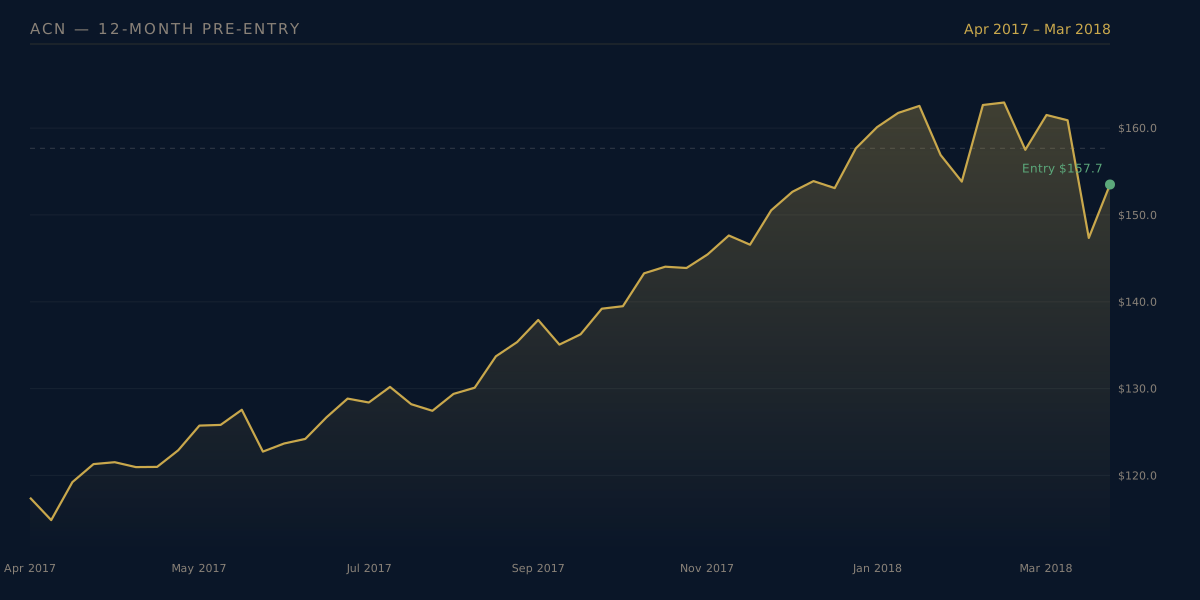
12-month price action before entry showing the late 2017 rally, the Q1 2018 selloff, and the entry point near the lows.
Entry Details
- Date: April 2, 2018
- Price: $147.38
- Context: Buying near the lows after a 9% correction, betting on recovery
The Thesis
A contrarian trader might have entered here seeing:
- Quality company with unchanged fundamentals
- Sharp selloff creating attractive entry point
- Support holding near $147-150 zone
- High volume capitulation suggesting exhaustion of selling
The bear case: Trade war escalation, continued Fed tightening, or a broader market downturn could push the stock lower still.
Before continuing: Consider what you would have done. Would you have taken this entry? What risks would you have been most concerned about?
Journey
Key Events
| Date | Event | Category | Stock Reaction |
|---|---|---|---|
| Apr 2, 2018 | Entry near Q1 lows | Entry | Starting point |
| Apr 9-16, 2018 | Initial bounce, stock climbs toward $153 | Recovery | Positive early signs |
| Apr-May 2018 | Steady grind higher, trade fears subside temporarily | Trend | Gradual gains |
| May 7-28, 2018 | Breakout to $158.89, brief dip to $155 | Breakout | Momentum building |
| Jun 4-11, 2018 | Sharp rally to $163.48 (new high) | Rally | Peak of trade |
| Jun 18, 2018 | Retracement to $159.63 | Exit | Exit point |
How It Unfolded
Phase 1: The Initial Bounce (Early April) After the brutal March selloff, buyers emerged. The stock lifted from $147 toward $153 in the first two weeks—a quick 4% move that suggested the worst might be over. Volume remained elevated but was now buying rather than selling.
Phase 2: The Grind Higher (Mid-April to May) With trade-war headlines fading temporarily and earnings season showing no damage, ACN methodically climbed. The $153-155 zone saw some consolidation, but higher lows formed. Confidence was returning.
Phase 3: The Breakout (Late May to Early June) In late May, ACN broke above $158 and didn’t look back. By early June, the stock had reclaimed its January highs at $163—a complete round trip. Volume surged on the breakout week (17.7M shares), confirming institutional participation.
Phase 4: The Pullback (Mid-June) After hitting $163.48, the stock pulled back to $159.63 by exit. Some profit-taking after the sharp run was natural.
Exit
- Date: June 18, 2018
- Price: $159.63
- Context: Taking profits after a strong recovery, slight pullback from highs
Charts
Price Chart with Entry/Exit
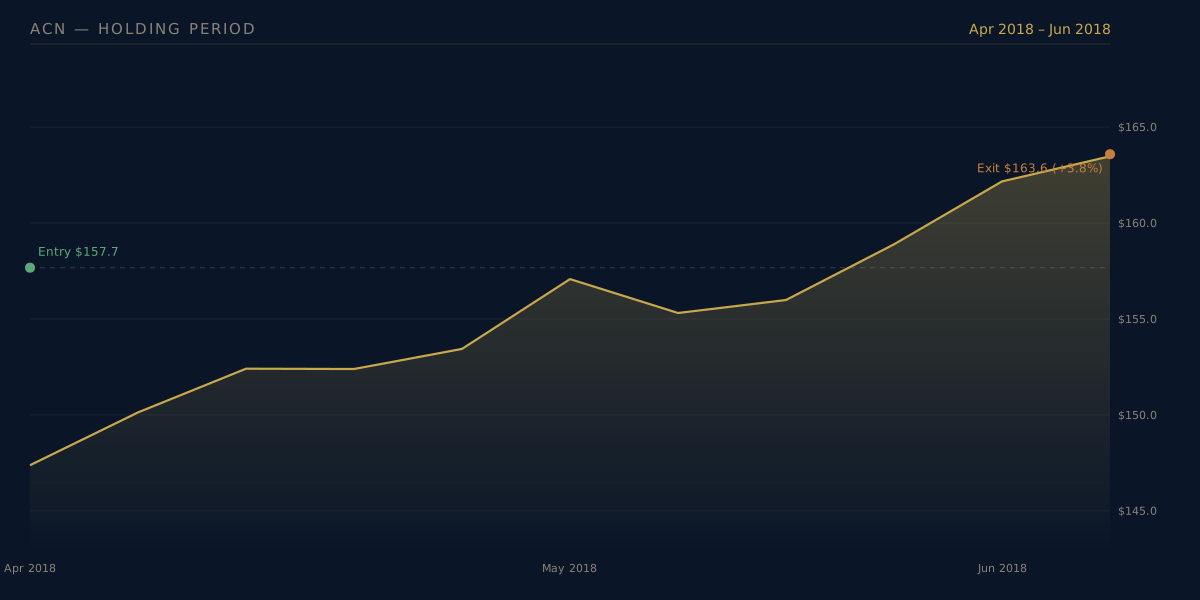
Weekly candlestick chart showing entry at $147.38 (green) and exit at $159.63 (blue). Note the steady recovery and June peak.
Relative Performance vs. Benchmarks
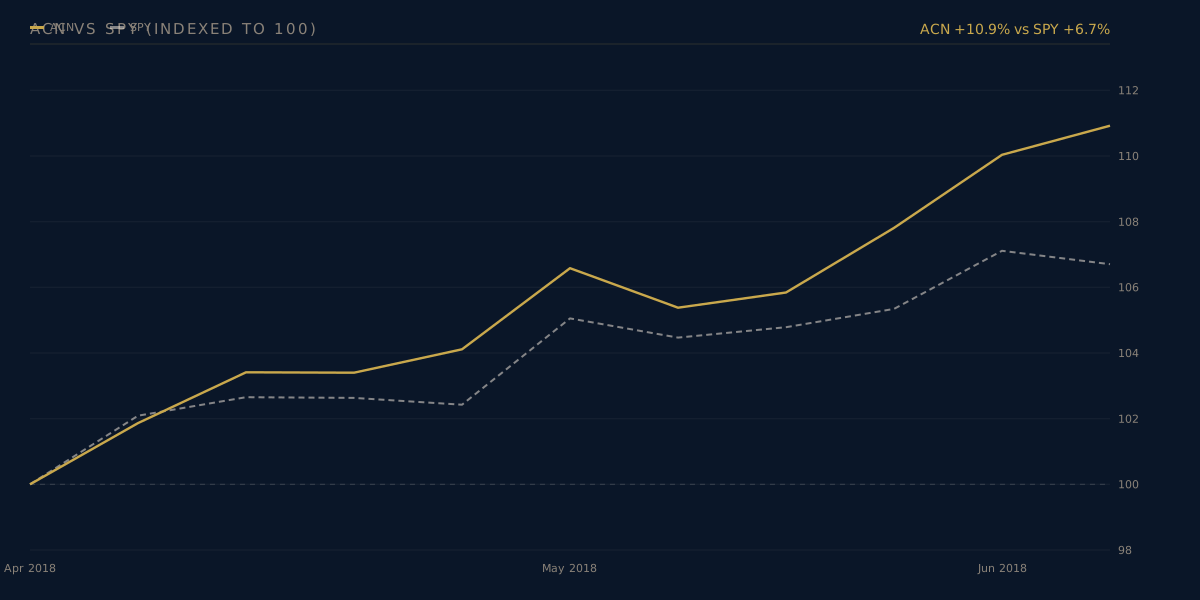
ACN vs. S&P 500, normalized to 100 at trade start. ACN outperformed during the recovery.
Drawdown from Peak
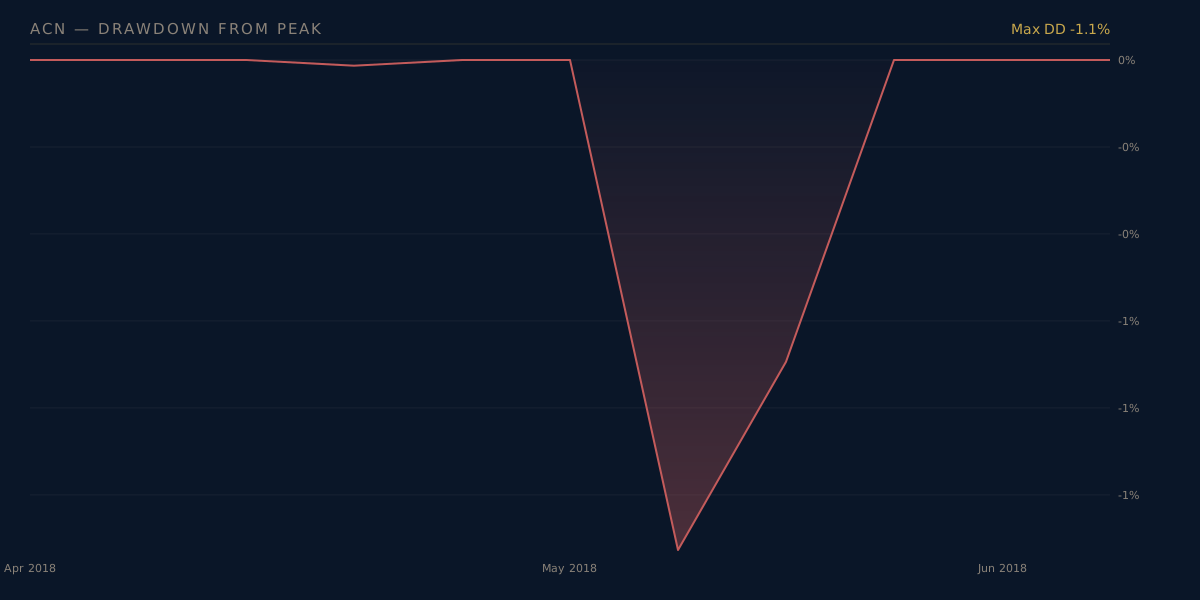
Minimal drawdown during this trade as entry occurred near the lows.
Results
Performance Analysis
Absolute Returns
| Metric | Value |
|---|---|
| Entry Price | $147.38 |
| Exit Price | $159.63 |
| Gross Return | +8.3% |
| Holding Period | ~11 weeks |
| Max Price (Close) | $163.48 |
| Min Price (Close) | $147.38 (entry) |
| Peak-to-Exit Drawdown | -2.4% |
Relative Performance
During the same period:
- S&P 500 (SPY): Up approximately 4-5%
- ACN vs. S&P 500: Outperformed by ~3-4%
Buying the dip paid off, both in absolute terms and relative to the market.
Lessons
What Worked
What Worked
-
Buying quality on weakness: Entering after a sharp selloff in a fundamentally sound company provided an attractive risk/reward.
-
Patience paid off: Holding through the 11-week recovery captured the bulk of the move.
-
High-volume capitulation signal: The extreme volume during the March selloff suggested exhaustion, which proved correct.
What Didn’t Work
-
Didn’t capture the full peak: Exiting at $159.63 left $3.85/share (2.4%) on the table from the $163.48 high.
-
No defined profit target: Without a trailing stop or target, the exit timing was somewhat arbitrary.
-
Concentrated bet: Full position from entry meant no ability to add if the stock dipped further.
Key Takeaways
Lessons and Takeaways
-
Dip-buying can work—in quality names. The key is distinguishing between temporary dislocations and fundamental problems. ACN’s selloff was macro-driven, not company-specific.
-
Volume tells a story. The massive volume on the March selloff suggested capitulation. When volume normalizes on subsequent days, it can signal the worst is over.
-
Define your exit criteria. An 8.3% gain is solid, but leaving 16% on the table (if exited at peak) shows the value of trailing stops or profit targets.
-
Compare to opportunity cost. Outperforming the S&P by 3-4% validated the active trade versus simply holding an index.
-
The scariest moments can be the best entries. Buying when headlines are worst often produces the best returns—if the fundamentals support it.
Sources
- Yahoo Finance historical data for ACN
- VIX historical data (CBOE)
- U.S.-China trade timeline 2018
Disclosure: This case study is for educational purposes only and does not constitute investment advice. Past performance does not guarantee future results. All investments carry risk of loss.
Timeline of Events
- Apr 2, 2018: Entry near Q1 lows
Entry — Starting point
- Apr 9-16, 2018: Initial bounce, stock climbs toward $153
Recovery — Positive early signs
- Apr-May 2018: Steady grind higher, trade fears subside temporarily
Trend — Gradual gains
- May 7-28, 2018: Breakout to $158.89, brief dip to $155
Breakout — Momentum building
- Jun 4-11, 2018: Sharp rally to $163.48 (new high)
Rally — Peak of trade
- Jun 18, 2018: Retracement to $159.63
Exit — Exit point
Phase Breakdown
Phase 1: The Initial Bounce (Early April)
After the brutal March selloff, buyers emerged. The stock lifted from $147 toward $153 in the first two weeks—a quick 4% move that suggested the worst might be over. Volume remained elevated but was now buying rather than selling.
Phase 2: The Grind Higher (Mid-April to May)
With trade-war headlines fading temporarily and earnings season showing no damage, ACN methodically climbed. The $153-155 zone saw some consolidation, but higher lows formed. Confidence was returning.
Phase 3: The Breakout (Late May to Early June)
In late May, ACN broke above $158 and didn't look back. By early June, the stock had reclaimed its January highs at $163—a complete round trip. Volume surged on the breakout week (17.7M shares), confirming institutional participation.
Phase 4: The Pullback (Mid-June)
After hitting $163.48, the stock pulled back to $159.63 by exit. Some profit-taking after the sharp run was natural.
Key Lessons
- Dip-buying can work—in quality names
The key is distinguishing between temporary dislocations and fundamental problems. ACN's selloff was macro-driven, not company-specific.
- Volume tells a story
The massive volume on the March selloff suggested capitulation. When volume normalizes on subsequent days, it can signal the worst is over.
- Define your exit criteria
An 8.3% gain is solid, but leaving 16% on the table (if exited at peak) shows the value of trailing stops or profit targets.
- Compare to opportunity cost
Outperforming the S&P by 3-4% validated the active trade versus simply holding an index.
- The scariest moments can be the best entries
Buying when headlines are worst often produces the best returns—if the fundamentals support it.
Disclaimer: Equicurious provides educational content only, not investment advice. Past performance does not guarantee future results. Always verify with primary sources and consult a licensed professional for your specific situation.