Setup
Executive Summary
In late July 2025, Amazon had just completed an impressive run. After a 24% surge in early May, the stock had consolidated and then broken out again in late June. By late July, it sat near recent highs around $215, with the AI-driven cloud narrative supporting valuations.
The setup looked constructive: a stock in an uptrend, coming off a consolidation, with volume confirming the moves. The question was whether the rally had more room to run or if the easy gains had already been captured.
This case study follows a trade that caught a rally, watched it peak, and then gave back all the gains—ending almost exactly where it started. What lessons emerge when a winning trade becomes a scratch?
What Was Observable Before Entry
Pre-Trade Environment
What Was Observable Before Entry (May - July 2025)
Macro Regime:
- The Fed had resumed rate cuts in 2025, supporting growth stocks
- AI spending remained robust, benefiting AWS
- The broader tech sector was performing well
- Consumer spending showed resilience
Company-Specific Setup:
- Amazon had surged 24% in early May on strong earnings and AI momentum
- The stock had consolidated in May-June, building a base
- A breakout in late June pushed prices toward $225
- The stock was trading near 52-week highs
Sector Momentum:
- Tech was outperforming the S&P 500
- Cloud computing names were particularly strong
- The AI narrative continued to drive valuations
Sentiment:
- Generally bullish on Amazon as an AI beneficiary
- Some concern about valuations after the strong run
- Volume had been healthy during the May-July rally
Thesis Formation
A trader might have entered here seeing:
- Strong momentum with higher highs and higher lows
- AI/cloud tailwinds supporting the fundamental story
- Fed policy turning supportive
- Technical consolidation suggesting another leg higher
The concern: After a 24% move and subsequent rally, was the stock extended? Could it sustain these levels?
Entry
What Was Observable at Entry
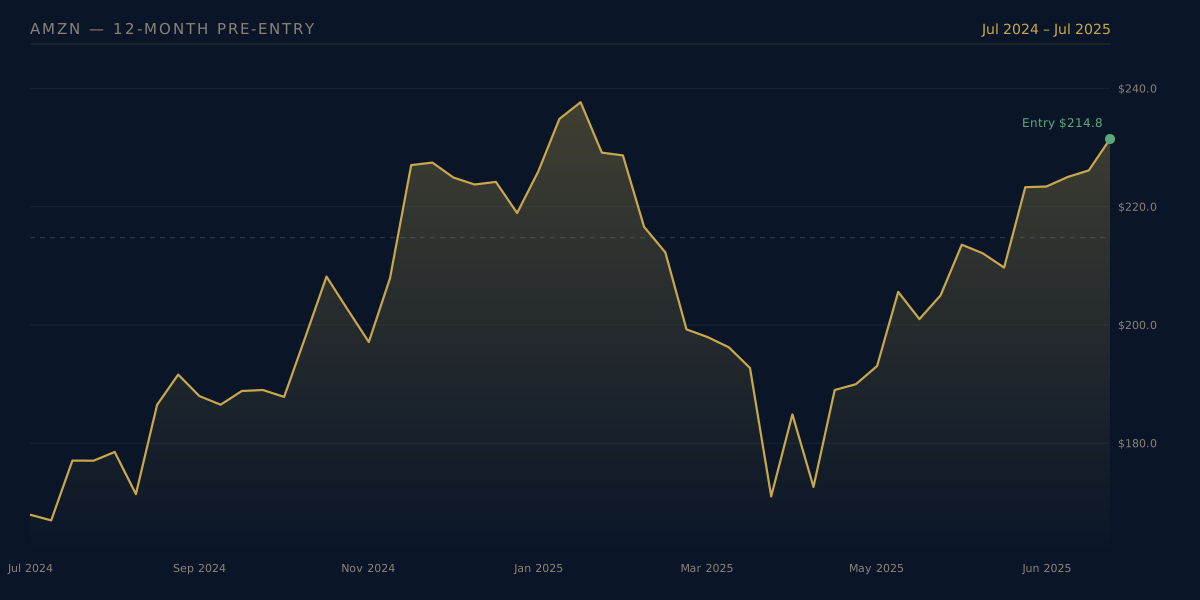
12-month price action before entry showing the May surge, consolidation, and entry near recent highs.
Entry Details
- Date: July 28, 2025
- Price: $214.75
- Context: Entering after the May rally and June consolidation, betting on continuation
The Thesis
A trader might have entered here seeing:
- Strong momentum with higher highs and higher lows
- AI/cloud tailwinds supporting the fundamental story
- Fed policy turning supportive
- Technical consolidation suggesting another leg higher
The concern: After a 24% move and subsequent rally, was the stock extended? Could it sustain these levels?
Before continuing: Consider what you would have done. Would you have taken this entry? What risks would you have been most concerned about?
Journey
Key Events
| Date | Event | Category | Stock Reaction |
|---|---|---|---|
| Jul 28, 2025 | Entry at $214.75 | Entry | Starting point |
| Aug 4-11, 2025 | Rally continues, stock pushes toward $231 | Rally | +7.7% from entry |
| Sep 1, 2025 | Peak reached at $232.33 | Peak | +8.5% from entry |
| Sep 8-15, 2025 | Stock begins to fade, volume increases | Reversal | Warning signs |
| Sep 22-29, 2025 | Continued decline, can’t hold $225 | Breakdown | Giving back gains |
| Oct 13, 2025 | Exit at $213.04 | Exit | Slight loss from entry |
How It Unfolded
Phase 1: The Extension (Late July - Early August) The trade started well. Amazon pushed from $214.75 to $231 in the first three weeks—a clean 7.7% gain. Volume was healthy, and the trend seemed intact. The bullish thesis appeared to be playing out.
Phase 2: The Peak (September 1) Amazon touched $232.33 on September 1—an 8.5% gain from entry. This was the high-water mark. At this point, the trade was working beautifully. But there was no exit plan triggered.
Phase 3: The Fade (September) Starting in mid-September, the stock began to slip. Volume actually increased as prices fell—a warning sign that selling pressure was building. The $225 level, which had been support, became resistance. Each bounce was weaker than the last.
Phase 4: The Round Trip (October) By October, the gains had evaporated. The stock dropped below the entry price, eventually closing at $213.04 on October 13—a slight loss of 1.54%. What had been an 8.5% winner became a scratch.
Exit
- Date: October 13, 2025
- Price: $213.04
- Context: Exiting after giving back all gains, slight loss from entry
Charts
Price Chart with Entry/Exit
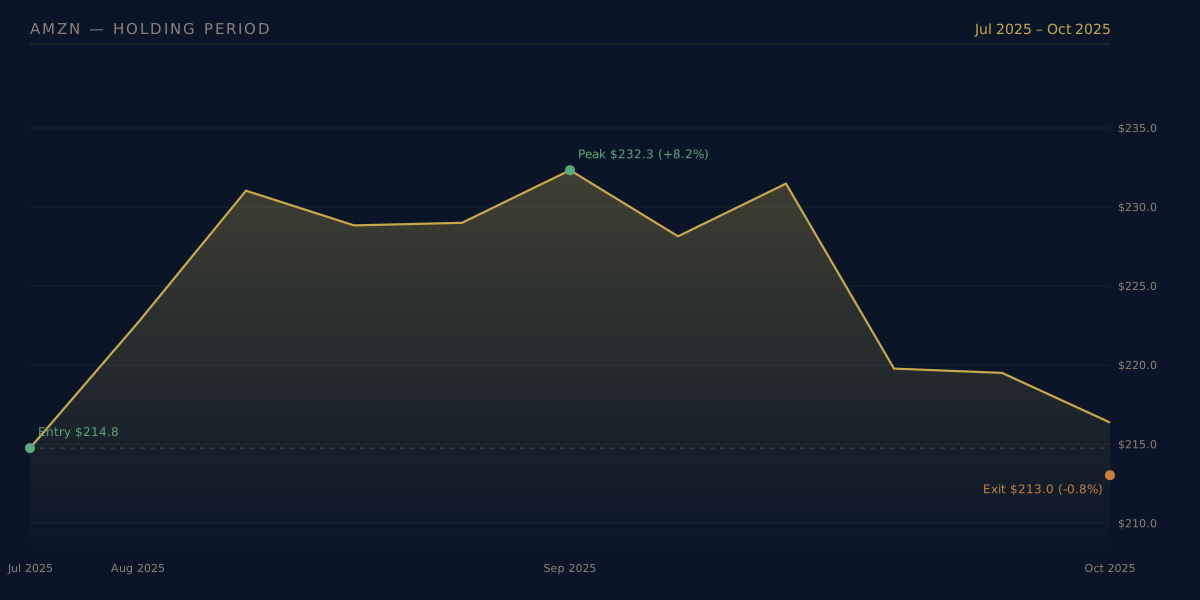
Weekly candlestick chart showing entry at $214.75 (green) and exit at $213.04 (blue). Note the September peak and subsequent decline.
Relative Performance vs. Benchmarks
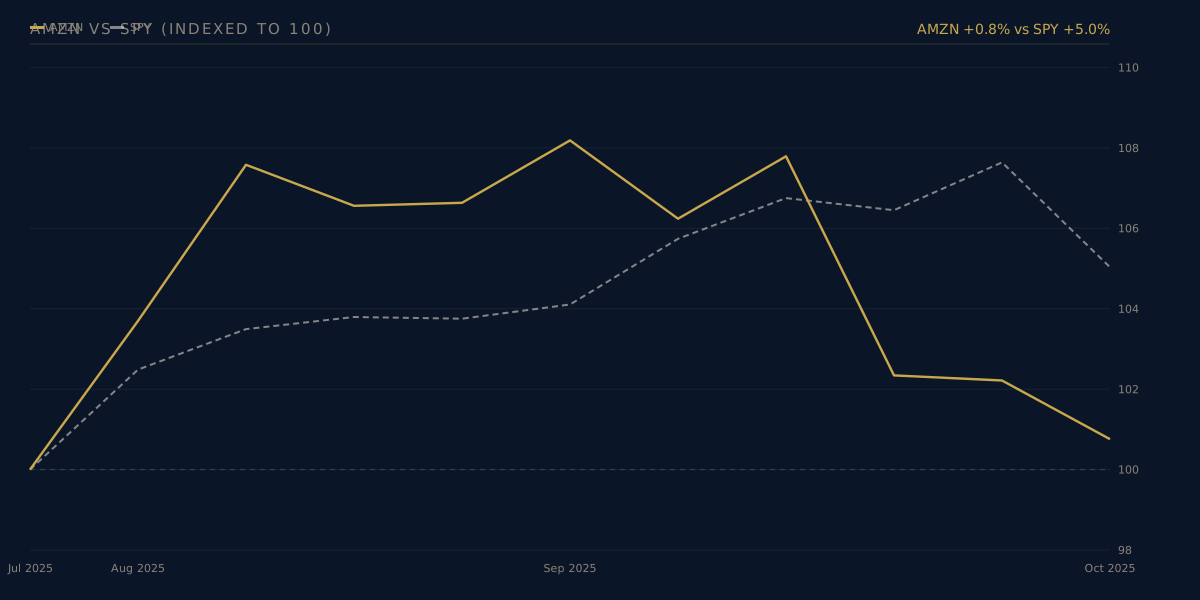
AMZN vs. S&P 500 vs. QQQ. All three ended the period near their starting points.
Drawdown from Peak
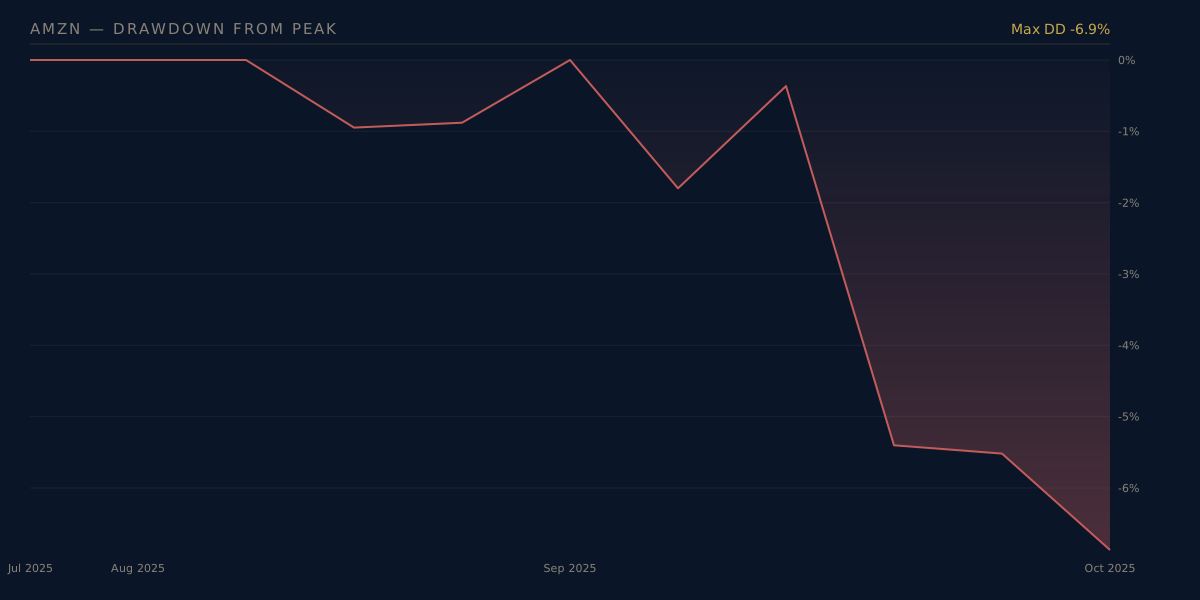
From the September peak, the stock declined about 8% to exit.
Results
Performance Analysis
Absolute Returns
| Metric | Value |
|---|---|
| Entry Price | $214.75 |
| Exit Price | $213.04 |
| Gross Return | -1.5% |
| Holding Period | ~11 weeks |
| Max Price (Close) | $232.33 |
| Min Price (Close) | $213.04 |
| Peak Unrealized Gain | +8.5% |
Relative Performance
During the same period:
- S&P 500 (SPY): Approximately flat
- Nasdaq 100 (QQQ): Slight decline
- AMZN vs. S&P 500: Slight underperformance
The trade essentially matched the market—a wash on both absolute and relative terms.
Lessons
What Worked
What Worked
-
Trend identification was correct: The stock did rally after entry, reaching +8.5% at the peak.
-
Entry timing was reasonable: Buying during consolidation near highs wasn’t wrong—the stock did continue higher initially.
-
Avoided a larger loss: Despite giving back gains, the exit avoided what could have been a larger decline.
What Didn’t Work
-
No profit-taking mechanism: An 8.5% gain evaporated because there was no trailing stop, profit target, or scale-out strategy.
-
Ignored rising volume on decline: When volume increased as prices fell in September, that was a warning sign that was not acted upon.
-
Held through the breakdown: When $225 turned from support to resistance, that was an exit signal.
-
Round trip to scratch: Psychologically, this is one of the most frustrating outcomes—being up 8.5% and ending flat.
Key Takeaways
Lessons and Takeaways
-
Profits are only real when taken. An 8.5% unrealized gain became a 1.5% loss. Without a profit protection mechanism, gains can evaporate.
-
Trailing stops preserve gains. A trailing stop at 5% below the high would have locked in a ~3.5% gain instead of a loss.
-
Volume on decline is a warning. When selling volume exceeds buying volume on rallies, momentum is shifting.
-
Support becoming resistance is a signal. When a stock can no longer hold prior support levels (like $225), the trend has likely changed.
-
The round trip is the worst outcome psychologically. Being right about direction but wrong about exit timing creates frustration and second-guessing.
-
Have an exit plan before entry. “I’ll sell when it feels right” is not a plan. Define profit targets and stop losses upfront.
Sources
- Yahoo Finance historical data for AMZN
- Federal Reserve rate decision archives
- AWS quarterly reports (2025)
Disclosure: This case study is for educational purposes only and does not constitute investment advice. Past performance does not guarantee future results. All investments carry risk of loss.
Timeline of Events
- Jul 28, 2025: Entry at $214.75
Entry — Starting point
- Aug 4-11, 2025: Rally continues, stock pushes toward $231
Rally — +7.7% from entry
- Sep 1, 2025: Peak reached at $232.33
Peak — +8.5% from entry
- Sep 8-15, 2025: Stock begins to fade, volume increases
Reversal — Warning signs
- Sep 22-29, 2025: Continued decline, can't hold $225
Breakdown — Giving back gains
- Oct 13, 2025: Exit at $213.04
Exit — Slight loss from entry
Phase Breakdown
Phase 1: The Extension (Late July - Early August)
The trade started well. Amazon pushed from $214.75 to $231 in the first three weeks—a clean 7.7% gain. Volume was healthy, and the trend seemed intact. The bullish thesis appeared to be playing out.
Phase 2: The Peak (September 1)
Amazon touched $232.33 on September 1—an 8.5% gain from entry. This was the high-water mark. At this point, the trade was working beautifully. But there was no exit plan triggered.
Phase 3: The Fade (September)
Starting in mid-September, the stock began to slip. Volume actually increased as prices fell—a warning sign that selling pressure was building. The $225 level, which had been support, became resistance. Each bounce was weaker than the last.
Phase 4: The Round Trip (October)
By October, the gains had evaporated. The stock dropped below the entry price, eventually closing at $213.04 on October 13—a slight loss of 1.54%. What had been an 8.5% winner became a scratch.
Key Lessons
- Profits are only real when taken
An 8.5% unrealized gain became a 1.5% loss. Without a profit protection mechanism, gains can evaporate.
- Trailing stops preserve gains
A trailing stop at 5% below the high would have locked in a ~3.5% gain instead of a loss.
- Volume on decline is a warning
When selling volume exceeds buying volume on rallies, momentum is shifting.
- Support becoming resistance is a signal
When a stock can no longer hold prior support levels (like $225), the trend has likely changed.
- The round trip is the worst outcome psychologically
Being right about direction but wrong about exit timing creates frustration and second-guessing.
- Have an exit plan before entry
"I'll sell when it feels right" is not a plan. Define profit targets and stop losses upfront.
Disclaimer: Equicurious provides educational content only, not investment advice. Past performance does not guarantee future results. Always verify with primary sources and consult a licensed professional for your specific situation.