Setup
Executive Summary
By late July 2025, Best Buy had been through a roller coaster. After rallying from $67 to $76 in May, the stock had given back most of those gains, falling to $64—a level not seen since the spring lows. Consumer electronics demand was in question, and the stock looked tired.
But the chart told a different story. Heavy volume on the decline suggested capitulation rather than distribution. The $64-65 zone had held as support multiple times. And with consumer spending proving resilient and back-to-school season approaching, perhaps the worst was priced in.
This case study follows a trade that bought near the lows and rode a powerful recovery. What signals separated this dip from a trap?
What Was Observable Before Entry
Pre-Trade Environment
What Was Observable Before Entry (May - July 2025)
Macro Regime:
- Consumer spending remained resilient despite higher rates
- Back-to-school and holiday seasons approaching
- The Fed had begun cutting rates, potentially supporting discretionary spending
- Housing activity was showing signs of stabilization
Company-Specific Setup:
- BBY had rallied from $67 to $76 in early May
- The stock then corrected sharply, falling to $64 by late July
- Volume spiked on the decline—26.5M shares on May 26 (vs. 17M average)
- The $64-65 zone had acted as support multiple times
Sector Momentum:
- Consumer discretionary was mixed
- Electronics retailers facing questions about demand sustainability
- Inventory levels were normalizing after pandemic distortions
Sentiment:
- Skeptical after the May-July decline
- High-volume selling suggested institutional repositioning
- But the stock was approaching levels that had previously attracted buyers
Thesis Formation
A contrarian trader might have entered here seeing:
- Stock at the low end of its trading range
- High-volume capitulation suggesting exhaustion
- Seasonal tailwinds approaching (back-to-school, holidays)
- Fed rate cuts potentially boosting consumer sentiment
The risk: Was this a capitulation low or the start of a deeper decline? Consumer electronics demand could disappoint.
Entry
What Was Observable at Entry
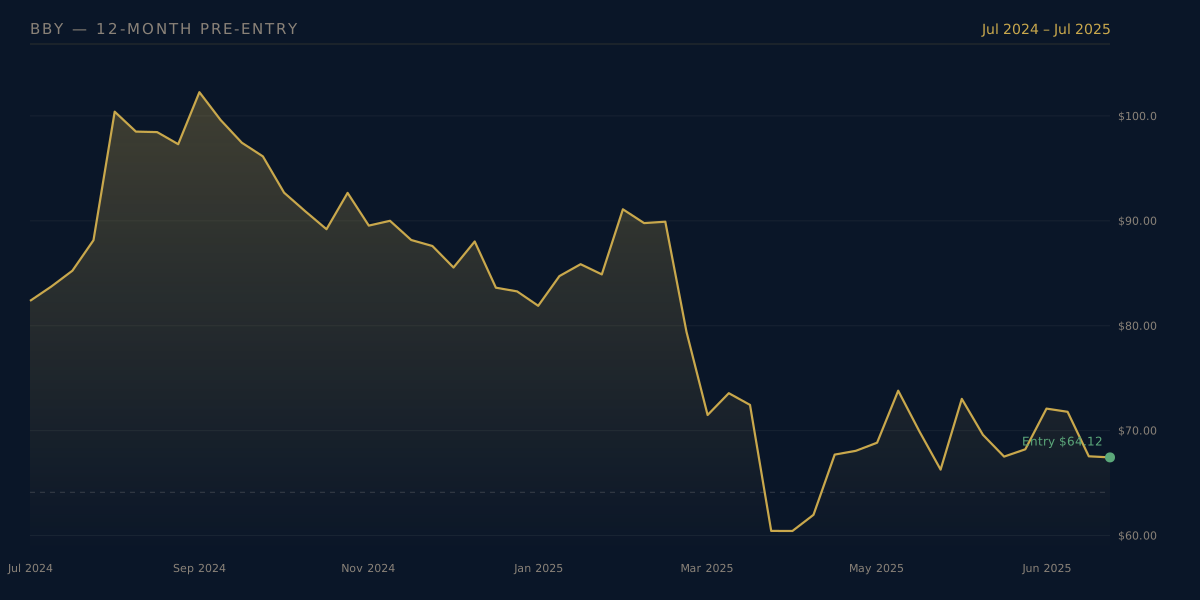
12-month price action before entry showing the May rally, subsequent correction, and entry near the lows.
Entry Details
- Date: July 28, 2025
- Price: $64.12
- Context: Buying near multi-month lows after high-volume selling
The Thesis
A contrarian trader might have entered here seeing:
- Stock at the low end of its trading range
- High-volume capitulation suggesting exhaustion
- Seasonal tailwinds approaching (back-to-school, holidays)
- Fed rate cuts potentially boosting consumer sentiment
The risk: Was this a capitulation low or the start of a deeper decline? Consumer electronics demand could disappoint.
Before continuing: Consider what you would have done. Would you have taken this entry? What risks would you have been most concerned about?
Journey
Key Events
| Date | Event | Category | Stock Reaction |
|---|---|---|---|
| Jul 28, 2025 | Entry at $64.12 near recent lows | Entry | Starting point |
| Aug 4-11, 2025 | Stock begins to recover, reaching $68 | Recovery | Early confirmation |
| Aug 18, 2025 | Surge to $75.39 on strong volume | Breakout | +17.5% from entry |
| Aug 25, 2025 | Pullback to $73.64 on 26M shares | Correction | Testing the move |
| Sep 2025 | Consolidation in $72-77 range | Base building | Digesting gains |
| Oct 13, 2025 | Breakout to $79.71 | Exit | New highs, +24% gain |
How It Unfolded
Phase 1: The Bottom (Late July) Entry came at $64.12—nearly the low of the entire lead-in period. Within the first week, the stock actually dipped briefly to $63.39, testing conviction. But buyers emerged, and the stock began to lift.
Phase 2: The Rally (August) August was explosive. BBY surged from the mid-$60s to $75.39 by August 18—a 17.5% gain in just three weeks. Volume was healthy, and the move recaptured the May highs. The thesis was clearly working.
Phase 3: The Correction (Late August) After the sharp rally, some profit-taking was inevitable. On August 25, volume spiked to 26M shares as the stock pulled back to $73.64. This was the test: would the correction become a reversal, or would buyers defend the gains?
Phase 4: Consolidation and Breakout (September - October) September saw the stock consolidate in a $72-77 range, building a base for the next move. Then in October, BBY broke out to new highs at $79.71 on strong volume (18M shares), confirming the uptrend.
Exit
- Date: October 13, 2025
- Price: $79.71
- Context: Exiting at new highs with a 24% gain
Charts
Price Chart with Entry/Exit
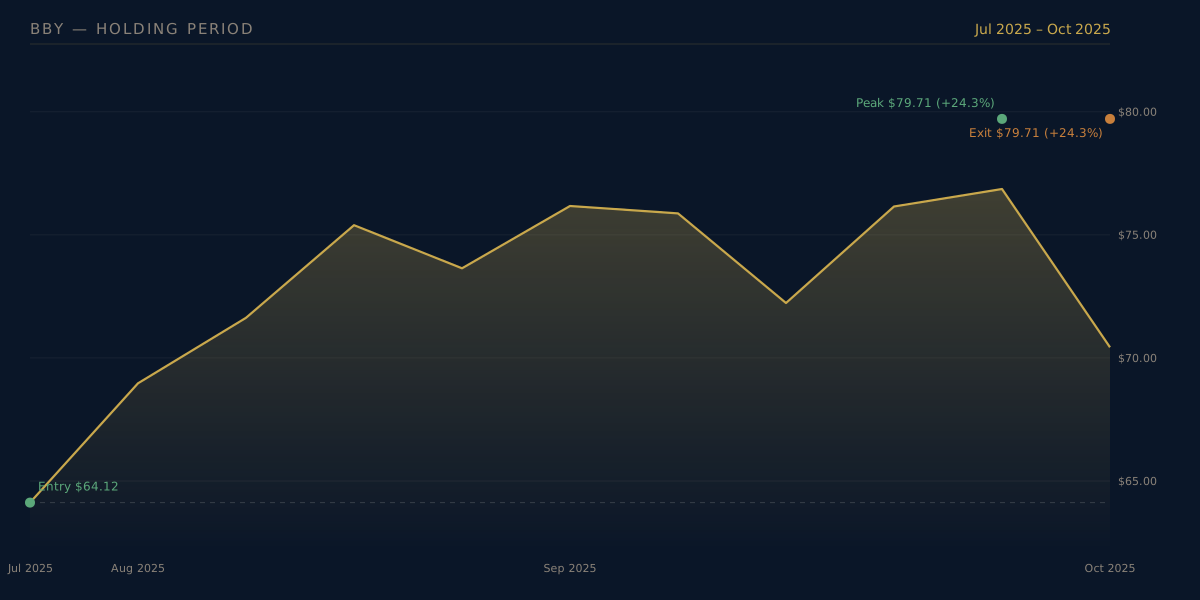
Weekly candlestick chart showing entry at $64.12 (green) and exit at $79.71 (blue). Note the August rally and October breakout.
Relative Performance vs. Benchmarks
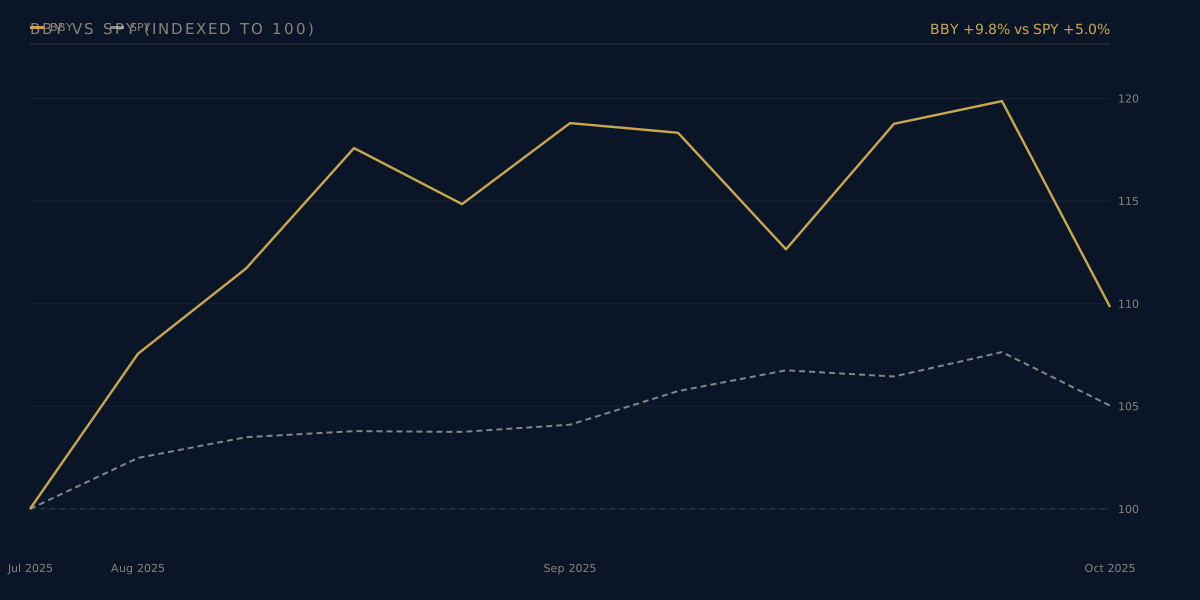
BBY significantly outperformed the S&P 500 during this period.
Drawdown from Peak
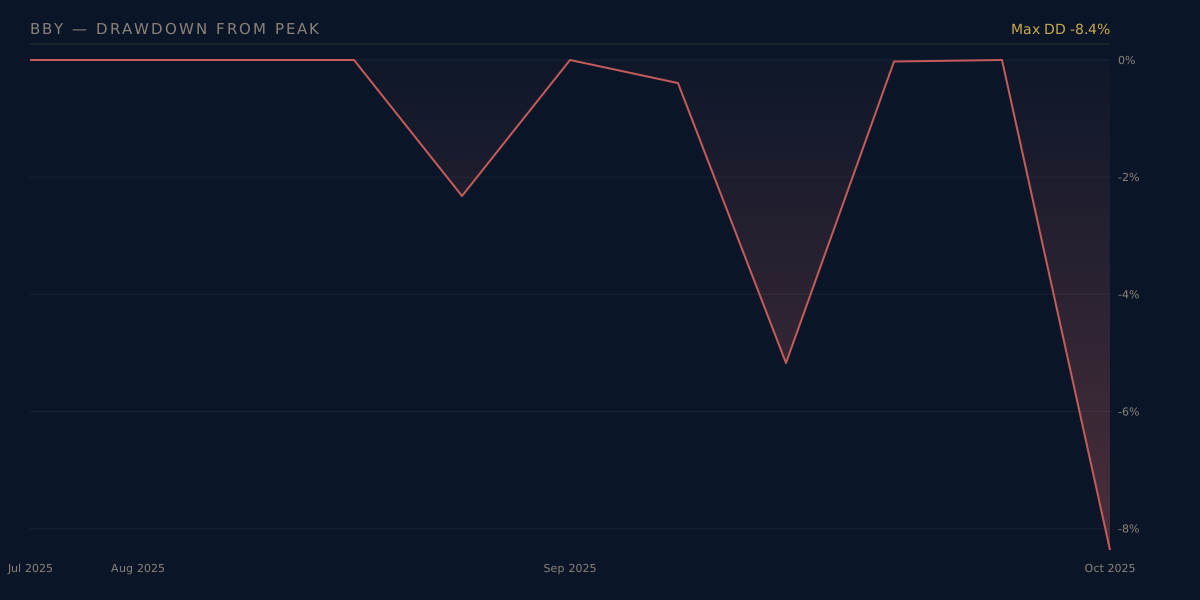
Minimal drawdown as entry occurred near the lows.
Results
Performance Analysis
Absolute Returns
| Metric | Value |
|---|---|
| Entry Price | $64.12 |
| Exit Price | $79.71 |
| Gross Return | +24.3% |
| Holding Period | ~11 weeks |
| Max Price (Close) | $79.71 |
| Min Price (Close) | $64.12 (entry) |
| Max Drawdown from Entry | -1.1% (brief dip to $63.39) |
Relative Performance
During the same period:
- S&P 500 (SPY): Approximately flat
- Consumer Discretionary (XLY): Up modestly
- BBY vs. S&P 500: Outperformed by ~24%
This was significant outperformance, capturing a strong recovery in a beaten-down name.
Lessons
What Worked
What Worked
-
Buying capitulation: High-volume selling in May-July suggested exhaustion. The $64 entry was near the actual low.
-
Respecting support: The $64-65 zone had held multiple times. Buying at support provided a clear risk/reward.
-
Holding through the August pullback: The August 25 correction to $73.64 tested conviction, but holding was rewarded.
-
Exiting at new highs: Taking profits at $79.71 captured the bulk of the move.
What Didn’t Work
-
Nearly perfect entry is luck: Buying within $1 of the low is fortunate. A more systematic approach would have scaled in.
-
No defined stop loss: If the $64 support had broken, there was no predetermined exit.
-
Single exit point: Could have scaled out—taking some profits at $75 and letting the rest ride.
Key Takeaways
Lessons and Takeaways
-
High-volume declines can signal capitulation. When volume spikes on selloffs, it often means weak hands are exiting. If fundamentals are intact, this can be a buying opportunity.
-
Support levels matter. The $64-65 zone had held before. Buying at support with a stop below provides defined risk.
-
Corrections within uptrends are normal. The August 25 pullback was scary (26M shares sold), but it didn’t break the trend. Holding through corrections is often rewarded.
-
Seasonal patterns can provide tailwinds. Back-to-school and holiday seasons are typically strong for electronics retailers.
-
Outperformance requires taking risk. A 24% gain while the market was flat required buying a beaten-down name when sentiment was negative.
-
Volume confirms breakouts. Both the August rally and October breakout came on strong volume, confirming institutional participation.
Sources
- Yahoo Finance historical data for BBY
- Consumer discretionary sector analysis
- Federal Reserve rate decision archives
Disclosure: This case study is for educational purposes only and does not constitute investment advice. Past performance does not guarantee future results. All investments carry risk of loss.
Timeline of Events
- Jul 28, 2025: Entry at $64.12 near recent lows
Entry — Starting point
- Aug 4-11, 2025: Stock begins to recover, reaching $68
Recovery — Early confirmation
- Aug 18, 2025: Surge to $75.39 on strong volume
Breakout — +17.5% from entry
- Aug 25, 2025: Pullback to $73.64 on 26M shares
Correction — Testing the move
- Sep 2025: Consolidation in $72-77 range
Base building — Digesting gains
- Oct 13, 2025: Breakout to $79.71
Exit — New highs, +24% gain
Phase Breakdown
Phase 1: The Bottom (Late July)
Entry came at $64.12—nearly the low of the entire lead-in period. Within the first week, the stock actually dipped briefly to $63.39, testing conviction. But buyers emerged, and the stock began to lift.
Phase 2: The Rally (August)
August was explosive. BBY surged from the mid-$60s to $75.39 by August 18—a 17.5% gain in just three weeks. Volume was healthy, and the move recaptured the May highs. The thesis was clearly working.
Phase 3: The Correction (Late August)
After the sharp rally, some profit-taking was inevitable. On August 25, volume spiked to 26M shares as the stock pulled back to $73.64. This was the test: would the correction become a reversal, or would buyers defend the gains?
Phase 4: Consolidation and Breakout (September - October)
September saw the stock consolidate in a $72-77 range, building a base for the next move. Then in October, BBY broke out to new highs at $79.71 on strong volume (18M shares), confirming the uptrend.
Key Lessons
- High-volume declines can signal capitulation
When volume spikes on selloffs, it often means weak hands are exiting. If fundamentals are intact, this can be a buying opportunity.
- Support levels matter
The $64-65 zone had held before. Buying at support with a stop below provides defined risk.
- Corrections within uptrends are normal
The August 25 pullback was scary (26M shares sold), but it didn't break the trend. Holding through corrections is often rewarded.
- Seasonal patterns can provide tailwinds
Back-to-school and holiday seasons are typically strong for electronics retailers.
- Outperformance requires taking risk
A 24% gain while the market was flat required buying a beaten-down name when sentiment was negative.
- Volume confirms breakouts
Both the August rally and October breakout came on strong volume, confirming institutional participation.
Disclaimer: Equicurious provides educational content only, not investment advice. Past performance does not guarantee future results. Always verify with primary sources and consult a licensed professional for your specific situation.