Setup
In late October 2024, Microsoft was firing on all cylinders. Azure growth remained strong, AI integration (Copilot) was ramping, and the stock had just pulled back from recent highs—creating a potential entry point. The setup looked promising: volume had spiked in September, suggesting institutional interest, and the pullback felt like healthy consolidation.
But a 52-week holding period would test conviction severely. The AI narrative faced headwinds. Market volatility surged. And a significant correction in early 2025 would take the stock from $416 to $360—a gut-wrenching 13% decline from entry.
This case study follows a full-year position through remarkable volatility. What does it take to hold through a 30%+ swing and still capture gains?
What Was Observable Before Entry
What Was Observable Before Entry (Summer - October 2024)
Macro Regime:
- Fed was navigating a soft landing
- AI spending was accelerating
- Tech valuations were elevated but supported by earnings
- No immediate macro shocks visible
Company-Specific Setup:
- MSFT had seen volume expansion in September (128M shares, up from ~80M average)
- The stock had pulled back ~6% from September highs
- Azure growth remained strong
- Copilot integration was beginning to show monetization potential
- Trading near $416, below the $430+ September highs
Sector Momentum:
- Tech was leading the market
- AI-related names seeing strong flows
- Cloud spending robust
Sentiment:
- Bullish on Microsoft’s AI positioning
- Some concern about elevated valuations
- The September pullback created a “buy the dip” opportunity
Thesis Formation
A trader might have entered here seeing:
- Strong fundamental story with AI/cloud tailwinds
- Healthy pullback from September highs
- Volume patterns suggesting institutional accumulation
- Market leader with diversified revenue streams
The concern: Valuations were stretched. A 52-week hold carries significant risk of drawdowns along the way.
Entry
What Was Observable at Entry
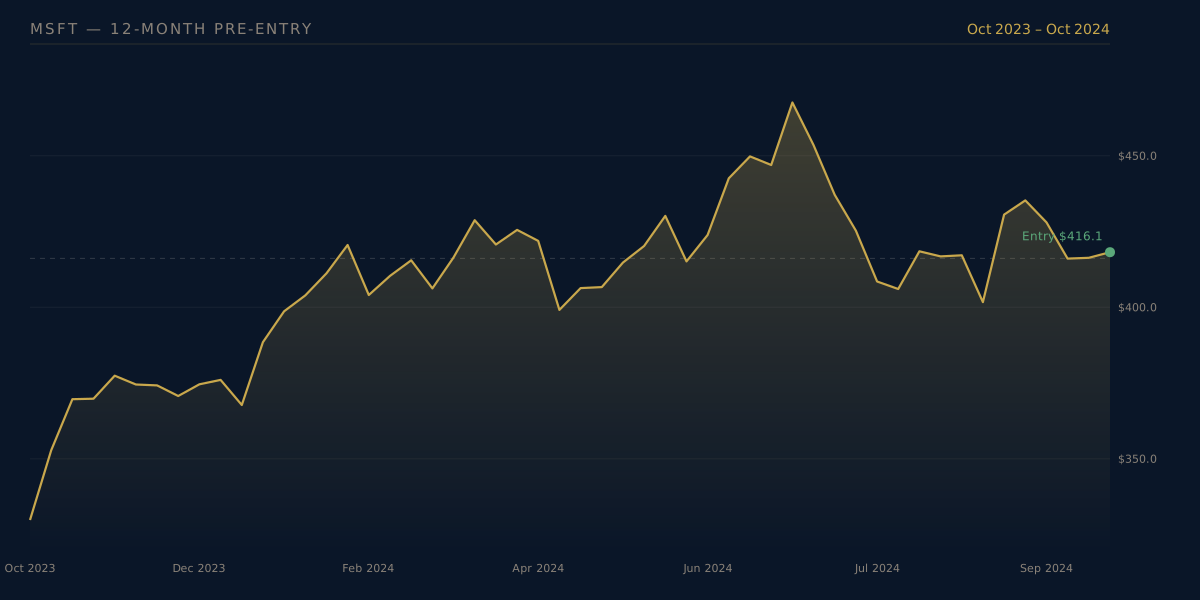
12-month price action before entry showing the September volume expansion and October pullback.
Entry Details
- Date: October 21, 2024
- Price: $416.12
- Context: Entering after a pullback from September highs, betting on AI/cloud continuation
The Thesis
A trader might have entered here seeing:
- Strong fundamental story with AI/cloud tailwinds
- Healthy pullback from September highs
- Volume patterns suggesting institutional accumulation
- Market leader with diversified revenue streams
The concern: Valuations were stretched. A 52-week hold carries significant risk of drawdowns along the way.
Before continuing: Consider what you would have done. Would you have taken this entry? What risks would you have been most concerned about?
Journey
Key Events
| Date | Event | Category | Stock Reaction |
|---|---|---|---|
| Oct 21, 2024 | Entry at $416.12 | Entry | Starting point |
| Oct-Nov 2024 | Initial volatility, stock drops then recovers | Chop | Testing the position |
| Dec 2024 | Year-end rally pushes stock higher | Rally | Encouraging |
| Jan-Feb 2025 | Market correction begins | Weakness | Early warning |
| Mar 31, 2025 | Trough at $359.84 | Trough | -13.5% from entry |
| Apr 28, 2025 | Rally to $524.11 | Peak | +26% from entry |
| May-Sep 2025 | Consolidation in $470-520 range | Base building | Digesting gains |
| Oct 13, 2025 | Exit at $513.58 | Exit | +23.4% from entry |
How It Unfolded
Phase 1: Early Chop (October - December 2024) The trade started with volatility. After entry at $416, the stock dropped, then recovered. By year-end, the position was modestly positive. Nothing dramatic—just the normal gyrations of a large-cap tech stock.
Phase 2: The Correction (January - March 2025) The new year brought trouble. A broad market correction hit tech hard. Microsoft fell steadily from January through March, eventually touching $359.84—a 13.5% decline from entry. Volume picked up as selling pressure intensified. This was the moment of maximum doubt.
Phase 3: The Recovery (April 2025) April brought a dramatic reversal. Microsoft surged from $360 to $524 in just four weeks—a stunning 45% rally from the lows. AI enthusiasm returned, earnings beat expectations, and the market rotated back into quality tech. The position went from a painful loss to a significant gain.
Phase 4: Consolidation (May - October 2025) After the April peak, the stock consolidated in a $470-520 range. Volatility declined, and the stock digested its gains. By October, it closed at $513—still a strong 23% above entry.
Exit
- Date: October 13, 2025
- Price: $513.58
- Context: Exiting after 52 weeks with +23.4% gain
Charts
Price Chart with Entry/Exit
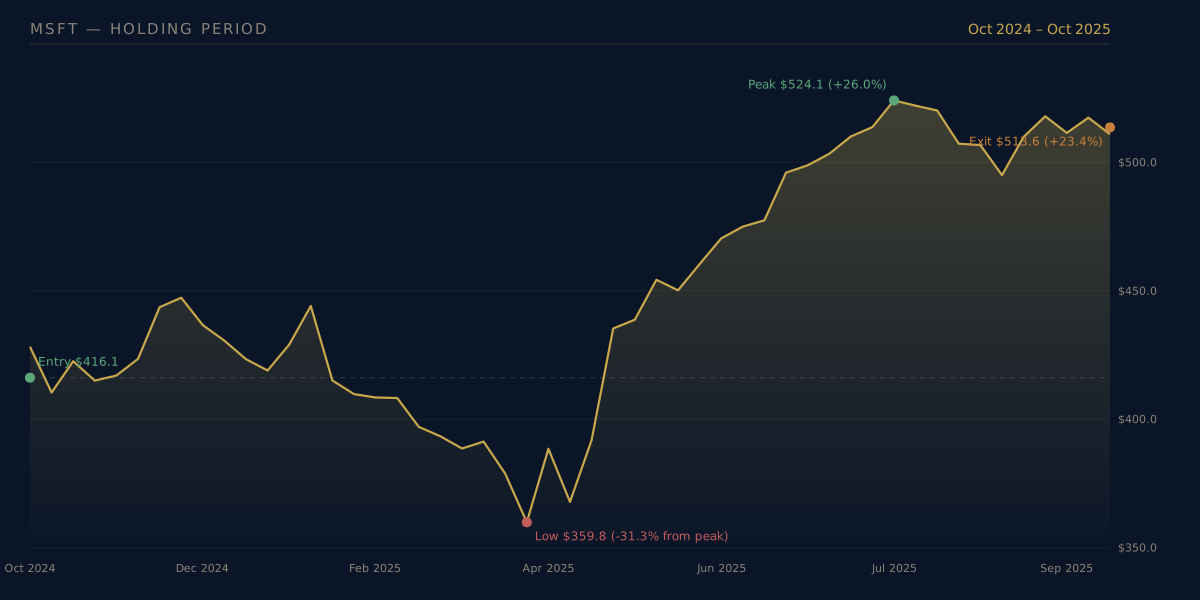
Weekly candlestick chart showing entry at $416.12 (green) and exit at $513.58 (blue). Note the March trough and April surge.
Relative Performance vs. Benchmarks
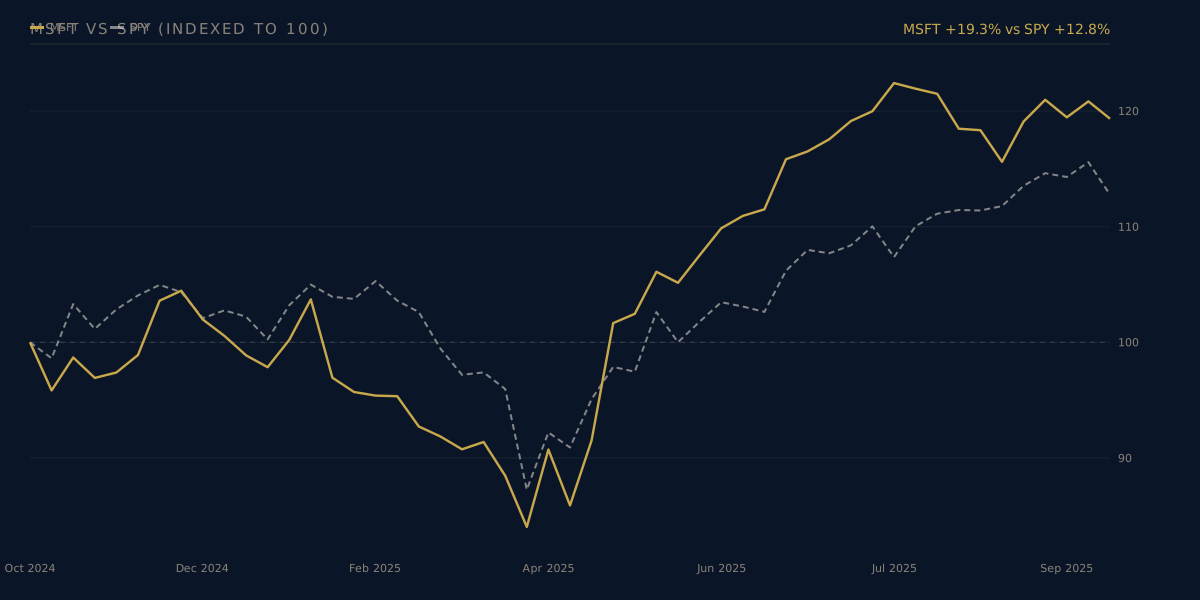
MSFT modestly outperformed the S&P 500 over the full year.
Drawdown from Peak
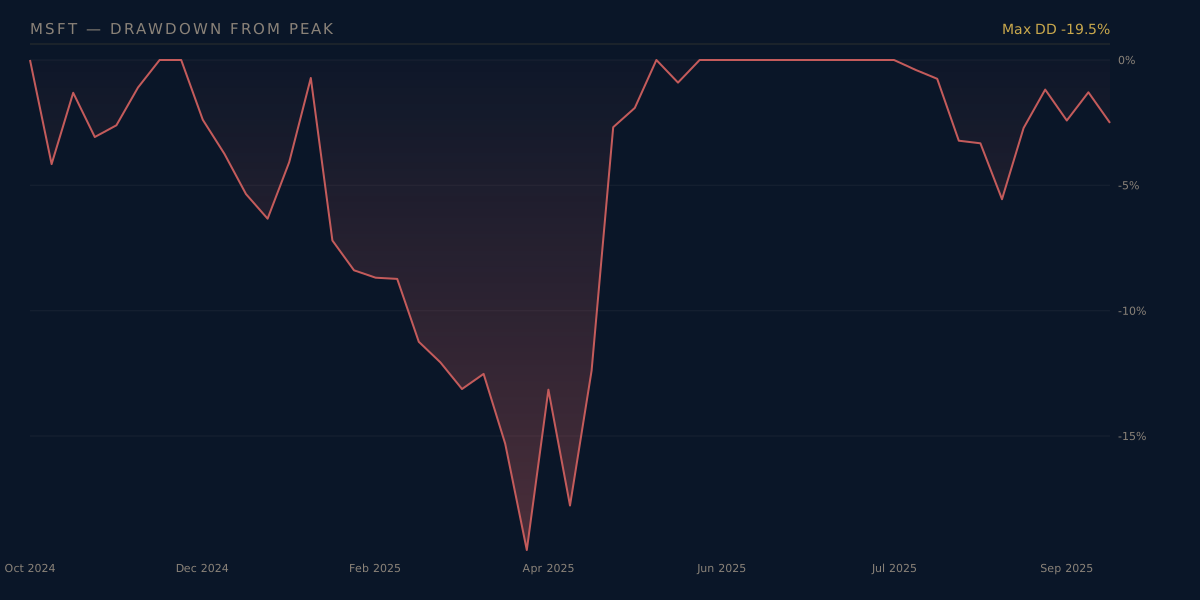
The 31% peak-to-trough swing illustrates the volatility of holding through a full year.
Results
Absolute Returns
| Metric | Value |
|---|---|
| Entry Price | $416.12 |
| Exit Price | $513.58 |
| Gross Return | +23.4% |
| Holding Period | 52 weeks |
| Max Price (Close) | $524.11 |
| Min Price (Close) | $359.84 |
| Max Drawdown from Entry | -13.5% |
| Peak-to-Trough Drawdown | -31.3% |
Relative Performance
During the same period:
- S&P 500 (SPY): Up approximately 18%
- Nasdaq 100 (QQQ): Up approximately 22%
- MSFT vs. S&P 500: Outperformed by ~5%
Solid outperformance, achieved through significant volatility.
Lessons
What Worked
-
Staying invested through the correction: The March trough felt like a disaster, but holding captured the subsequent recovery.
-
Quality name with strong fundamentals: Microsoft’s AI/cloud story provided the foundation for the recovery rally.
-
Volume signals at entry: The September volume expansion suggested institutional interest that ultimately proved correct.
-
52-week horizon: A shorter holding period might have exited during the March weakness.
What Didn’t Work
-
13% drawdown from entry: While the trade ended well, sitting through a 13% loss requires significant conviction.
-
31% peak-to-trough swing: Even within a winning trade, the volatility was substantial.
-
Exited below the peak: The $513 exit was 2% below the $524 April high—modest slippage but room for improvement.
-
No risk management: No stops, hedges, or position adjustments during the drawdown.
Key Takeaways
-
52-week holds require conviction and patience. The path from entry to exit is rarely smooth. Microsoft had a 31% swing within a 23% winning trade.
-
Drawdowns are normal, even in winners. A 13% decline from entry feels terrible in the moment, but it’s often just noise in a longer trend.
-
Quality matters during corrections. Microsoft’s recovery was supported by strong fundamentals. Weaker names might not have bounced back.
-
Consider volatility-adjusted position sizing. Higher expected volatility might warrant smaller position sizes.
-
Trailing stops are a double-edged sword. A stop at -10% would have sold the March low and missed the April recovery. But it also would have limited the pain.
-
Time in the market vs. timing the market. This trade worked because the holder stayed invested. Attempting to time the correction likely would have failed.
Sources
- Yahoo Finance historical data for MSFT
- Microsoft quarterly earnings (2024-2025)
- Azure growth metrics
- AI/Copilot monetization reports
Disclosure: This case study is for educational purposes only and does not constitute investment advice. Past performance does not guarantee future results. All investments carry risk of loss.
Timeline of Events
- Oct 21, 2024: Entry at $416.12
Entry — Starting point
- Oct-Nov 2024: Initial volatility, stock drops then recovers
Chop — Testing the position
- Dec 2024: Year-end rally pushes stock higher
Rally — Encouraging
- Jan-Feb 2025: Market correction begins
Weakness — Early warning
- Mar 31, 2025: Trough at $359.84
Trough — -13.5% from entry
- Apr 28, 2025: Rally to $524.11
Peak — +26% from entry
- May-Sep 2025: Consolidation in $470-520 range
Base building — Digesting gains
- Oct 13, 2025: Exit at $513.58
Exit — +23.4% from entry
Phase Breakdown
Phase 1: Early Chop (October - December 2024)
The trade started with volatility. After entry at $416, the stock dropped, then recovered. By year-end, the position was modestly positive. Nothing dramatic—just the normal gyrations of a large-cap tech stock.
Phase 2: The Correction (January - March 2025)
The new year brought trouble. A broad market correction hit tech hard. Microsoft fell steadily from January through March, eventually touching $359.84—a 13.5% decline from entry. Volume picked up as selling pressure intensified. This was the moment of maximum doubt.
Phase 3: The Recovery (April 2025)
April brought a dramatic reversal. Microsoft surged from $360 to $524 in just four weeks—a stunning 45% rally from the lows. AI enthusiasm returned, earnings beat expectations, and the market rotated back into quality tech. The position went from a painful loss to a significant gain.
Phase 4: Consolidation (May - October 2025)
After the April peak, the stock consolidated in a $470-520 range. Volatility declined, and the stock digested its gains. By October, it closed at $513—still a strong 23% above entry.
Key Lessons
- 52-week holds require conviction and patience
The path from entry to exit is rarely smooth. Microsoft had a 31% swing within a 23% winning trade.
- Drawdowns are normal, even in winners
A 13% decline from entry feels terrible in the moment, but it's often just noise in a longer trend.
- Quality matters during corrections
Microsoft's recovery was supported by strong fundamentals. Weaker names might not have bounced back.
- Consider volatility-adjusted position sizing
Higher expected volatility might warrant smaller position sizes.
- Trailing stops are a double-edged sword
A stop at -10% would have sold the March low and missed the April recovery. But it also would have limited the pain.
- Time in the market vs. timing the market
This trade worked because the holder stayed invested. Attempting to time the correction likely would have failed.
Disclaimer: Equicurious provides educational content only, not investment advice. Past performance does not guarantee future results. Always verify with primary sources and consult a licensed professional for your specific situation.