Setup
In late November 2024, Apple appeared to have everything going for it: a fresh iPhone 16 cycle, the rollout of Apple Intelligence to address AI skepticism, and a Fed pivoting toward rate cuts. The stock traded near all-time highs around $230.
But storm clouds were forming. China—17% of revenue—faced mounting competitive pressure from Huawei. The Fed’s hawkish December guidance surprised markets. And tariff risks loomed on the horizon.
This case study follows an 11-month buy-and-hold position through what became one of the most volatile periods for the world’s largest company. How did it unfold? Would you have held through the turbulence?
What Was Observable Before Entry
What Was Observable Before Entry (September - November 2024)
Macro Regime:
- The Fed had just cut rates by 25bps in September 2024, with another cut expected in December
- Inflation was trending lower but proving sticky above the 2% target
- The S&P 500 and QQQ were in a strong uptrend, with tech leading
Company-Specific Setup:
- Apple reported solid Q4 FY2024 results on October 31: $94.9 billion revenue (+6% YoY), beating expectations
- iPhone 16 had just launched in September to strong initial demand
- Apple Intelligence (AI features) had begun rolling out with iOS 18.1 in October
- The stock was trading near all-time highs around $230
Sector Momentum:
- Tech sector up significantly in 2024, with AI as the dominant narrative
- QQQ had outperformed the S&P 500 consistently
Sentiment:
- Generally bullish on Apple, though some analysts noted China headwinds
- Options market showed complacency with relatively low implied volatility
Thesis Formation
A reasonable trader might have entered here seeing:
- Strong iPhone 16 cycle beginning
- Apple Intelligence addressing the “AI gap” narrative
- Fed pivoting to rate cuts, supportive of growth stocks
- Services business providing recurring revenue stability
The contrarian concern: China exposure (17% of revenue) and mounting competition from Huawei.
Entry
What Was Observable at Entry
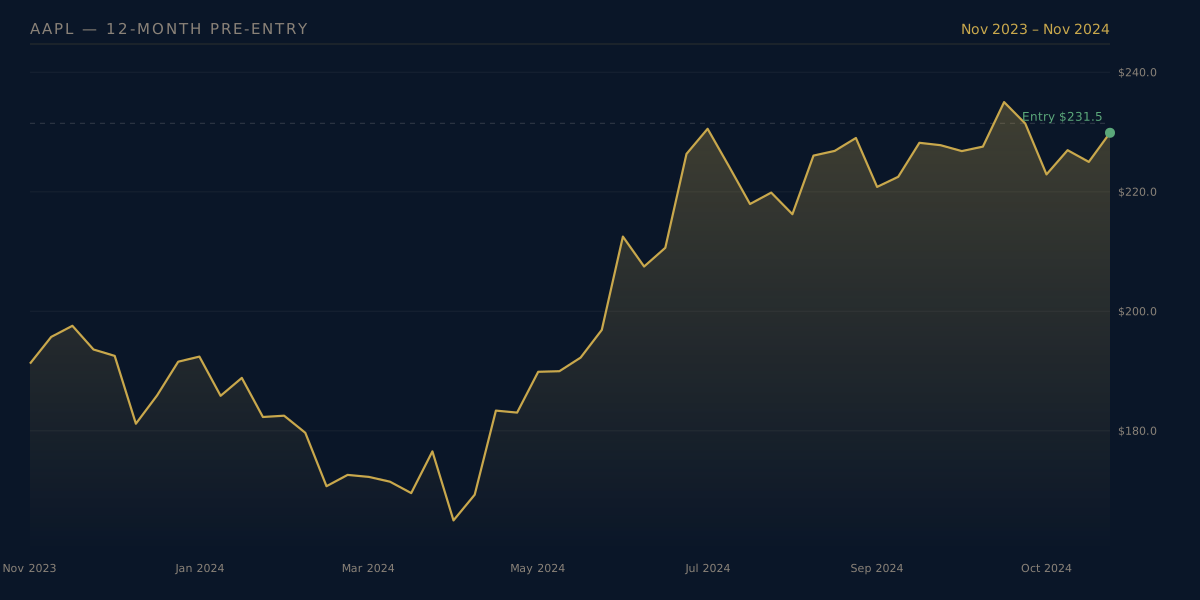
12-month price action before entry showing the trend, moving averages, and entry point. This is what was observable at the time of the trade.
Entry Details
- Date: November 25, 2024
- Price: $231.46
- Context: Post-earnings drift higher, riding iPhone 16 momentum and AI optimism
The Thesis
A reasonable trader might have entered here seeing:
- Strong iPhone 16 cycle beginning
- Apple Intelligence addressing the “AI gap” narrative
- Fed pivoting to rate cuts, supportive of growth stocks
- Services business providing recurring revenue stability
The contrarian concern: China exposure (17% of revenue) and mounting competition from Huawei.
Before continuing: Consider what you would have done. Would you have taken this entry? What risks would you have been most concerned about?
Journey
Key Events
| Date | Event | Category | Stock Reaction |
|---|---|---|---|
| Dec 18, 2024 | Fed cuts 25bps but signals only 2 cuts in 2025 (hawkish) | Fed | Negative |
| Jan 2, 2025 | Barclays downgrades AAPL to Underweight, PT $160 | Analyst | -3.6% |
| Jan 4-7, 2025 | Apple announces rare iPhone discounts in China (500 yuan) | Company | Negative |
| Jan 30, 2025 | Q1 FY2025 earnings: iPhone sales -0.8% YoY | Earnings | Mixed |
| Mar 31, 2025 | Apple Intelligence expands to Chinese, German, French | Product | Positive |
| Apr 8, 2025 | Tariff concerns trigger historic Apple selloff | Macro | Sharp decline |
| May 2, 2025 | Q2 FY2025: China sales slide on tariff fallout | Earnings | Negative |
| Sep 18, 2025 | Fed cuts rates 25bps - first since December | Fed | Positive |
| Sep 22, 2025 | Stock hits $256, near 52-week high | Momentum | Strong |
| Oct 13, 2025 | Exit date | - | - |
How It Unfolded
Phase 1: Post-Entry Strength (Nov-Dec 2024) Apple drifted higher after entry as iPhone 16 demand remained solid and the market anticipated continued Fed easing. The December FOMC meeting provided a reality check - while the Fed cut rates as expected, Chair Powell signaled only two cuts in 2025, fewer than markets had priced. The hawkish tone put pressure on growth stocks.
Phase 2: The China Crisis (Jan-Apr 2025) This was where the trade got ugly. In rapid succession:
- Barclays slashed Apple to Underweight on January 2, citing deteriorating China conditions
- Reports emerged that Apple was offering rare discounts on iPhones in China - a clear signal of competitive pressure
- Data showed iPhone shipments in China had plummeted 17% in 2024, with a 25% collapse in Q4
- Huawei’s Mate 70 was stealing share with AI features Apple couldn’t yet offer in China
- Tariff concerns in April triggered what Bloomberg called a “historic selloff”
The stock cratered from the low $230s to a trough around $188 - a devastating 26% drawdown from peak levels near $258.
Phase 3: The Slow Grind Back (May-Aug 2025) Recovery was gradual. Apple Intelligence expanded to more languages in March, addressing the AI gap. iPhone 16 continued to dominate global sales rankings (best-selling smartphone in Q1 and Q3 2025). Services revenue kept growing at 15%+ rates. But the Fed remained on hold, and China uncertainty lingered.
Phase 4: The September Rally (Sep-Oct 2025) The final phase brought vindication for patient holders:
- The Fed resumed rate cuts in September, signaling confidence in the soft landing
- Apple stock surged past its early-2025 high, approaching $260
- Q4 FY2025 earnings (reported late October) showed record $102.5 billion revenue
- Jim Cramer declared the rally proof that investors should “hold, not sell”
Exit
- Date: October 13, 2025
- Price: $252.29
- Context: Strong recovery, but slightly off the late-September peak of ~$258
Charts
Price Chart with Entry/Exit
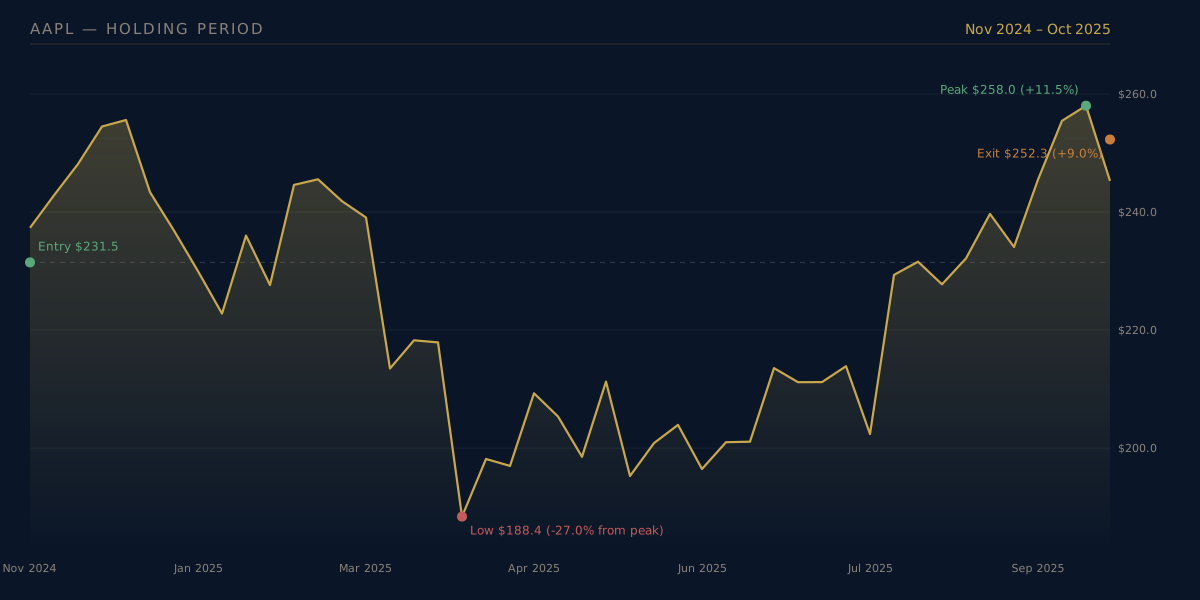
Weekly candlestick chart showing entry at $231 (green) and exit at $252 (blue). Note the deep trough to ~$188 in early 2025 and recovery to ~$258 in September before settling at the exit price.
Relative Performance vs. Benchmarks
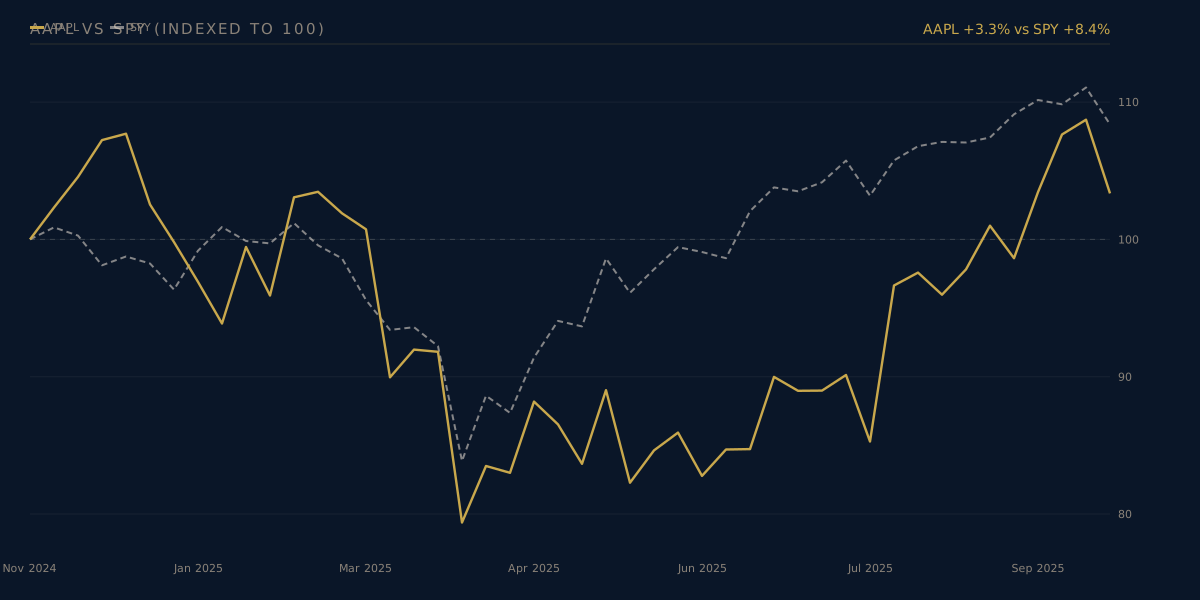
Apple (green) vs. S&P 500 (gray) vs. QQQ (purple), normalized to 100 at trade start. Apple underperformed both indices over the full period despite the absolute gain.
Drawdown from Peak
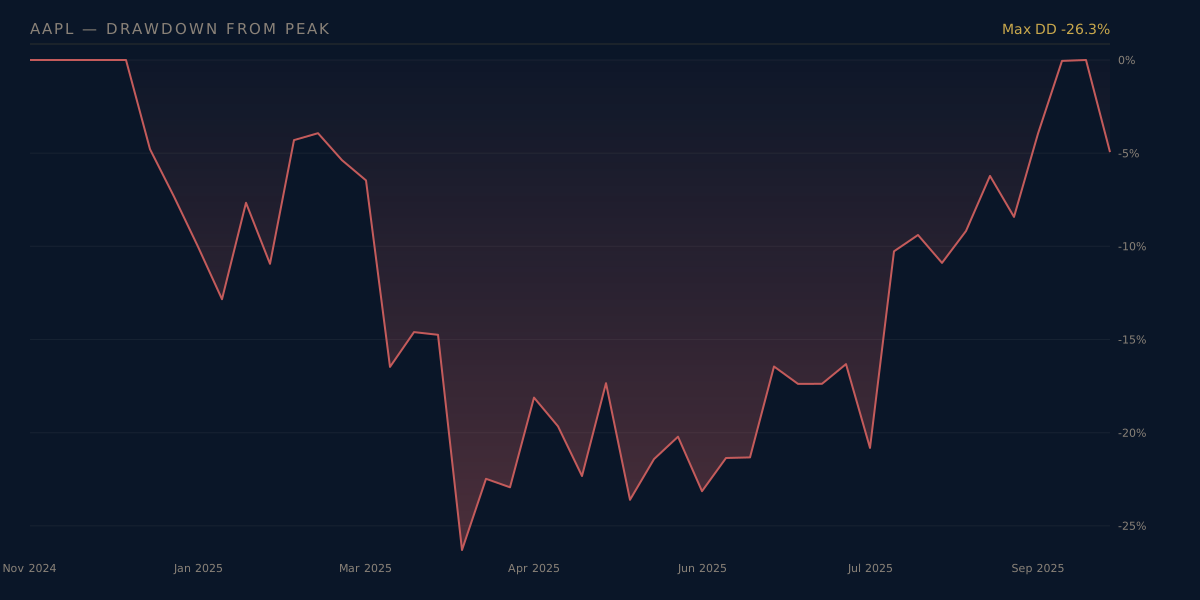
The 26% peak-to-trough drawdown occurred between late 2024 highs and the early 2025 lows. A passive holder sat through the entire decline.
Results
Absolute Returns
| Metric | Value |
|---|---|
| Entry Price | $231.46 |
| Exit Price | $252.29 |
| Gross Return | +9.0% |
| Holding Period | ~11 months |
| Max Price (Close) | $258.02 |
| Min Price (Close) | $188.38 |
| Peak-to-Trough Drawdown | -26% |
Relative Performance
During the same period:
- S&P 500 (SPY): Up approximately 14-15%
- Nasdaq 100 (QQQ): Up approximately 17-18%
- Apple vs. S&P 500: Underperformed by ~5-6%
- Apple vs. QQQ: Underperformed by ~8-9%
Despite the positive absolute return, Apple lagged both major benchmarks during this period, weighed down by the China-driven selloff in early 2025.
Lessons
What Worked
-
Stayed invested through extreme volatility: The 26% drawdown tested conviction, but holding through it captured the eventual recovery.
-
Thesis proved correct on fundamentals: iPhone 16 was indeed the best-selling smartphone globally, and Apple Intelligence did address the AI narrative.
-
Fed ultimately supportive: The resumption of rate cuts in September 2025 provided a tailwind for growth stocks.
-
Services moat intact: The recurring revenue from Services ($28.8B/quarter by Q4 FY2025) provided ballast during hardware uncertainty.
What Didn’t Work
-
No risk management during drawdown: A 26% decline would trigger margin calls for leveraged accounts and stop-losses for most systematic strategies. Passive holding meant sitting through the pain.
-
Missed the September high: Exiting at $252 left ~$6/share on the table from the ~$258 peak. Trailing stops or partial profit-taking could have locked in more.
-
Underperformed benchmarks: A simple SPY or QQQ position would have outperformed with less volatility.
-
China exposure unhedged: The single largest risk factor (China) was entirely unmitigated.
Key Takeaways
-
Even blue chips can deliver 25%+ drawdowns. Apple - the world’s most valuable company - experienced a gut-wrenching decline that would shake most investors. Size doesn’t equal stability.
-
Geographic concentration matters. Apple’s 17% China exposure became a liability when competition intensified and tariff risks emerged. Consider hedging or position sizing for single-country risks.
-
Passive strategies require process, not just patience. “Hold through volatility” is easy to say, hard to execute. Predefined rules (trailing stops, rebalancing triggers) make discipline mechanical rather than emotional.
-
Relative performance matters. A 9% gain sounds good until you realize a simple index fund did better with less drama. Opportunity cost is real.
-
Fundamentals eventually matter. Despite the drawdown, Apple’s strong iPhone sales, growing Services revenue, and AI rollout ultimately drove the recovery. The noise was temporary; the business wasn’t broken.
Sources
- Apple Q4 FY2024 Earnings
- Fed December 2024 Decision
- iPhone 16 Best-Selling Smartphone
- Apple China Market Concerns
- Apple Intelligence Rollout
- Apple Stock September Rally
- QQQ Performance Review
- Fed 2025 Rate Decisions
- Barclays Apple Downgrade
- Apple Tariff Selloff
Disclosure: This case study is for educational purposes only and does not constitute investment advice. Past performance does not guarantee future results. All investments carry risk of loss.
Timeline of Events
- Dec 18, 2024: Fed cuts 25bps but signals only 2 cuts in 2025 (hawkish)
Fed — Negative
- Jan 2, 2025: Barclays downgrades AAPL to Underweight, PT $160
Analyst — -3.6%
- Jan 4-7, 2025: Apple announces rare iPhone discounts in China (500 yuan)
Company — Negative
- Jan 30, 2025: Q1 FY2025 earnings: iPhone sales -0.8% YoY
Earnings — Mixed
- Mar 31, 2025: Apple Intelligence expands to Chinese, German, French
Product — Positive
- Apr 8, 2025: Tariff concerns trigger historic Apple selloff
Macro — Sharp decline
- May 2, 2025: Q2 FY2025: China sales slide on tariff fallout
Earnings — Negative
- Sep 18, 2025: Fed cuts rates 25bps - first since December
Fed — Positive
- Sep 22, 2025: Stock hits $256, near 52-week high
Momentum — Strong
- Oct 13, 2025: Exit date
- — -
Phase Breakdown
Phase 1: Post-Entry Strength (Nov-Dec 2024)
Apple drifted higher after entry as iPhone 16 demand remained solid and the market anticipated continued Fed easing. The December FOMC meeting provided a reality check - while the Fed cut rates as expected, Chair Powell signaled only two cuts in 2025, fewer than markets had priced. The hawkish tone put pressure on growth stocks.
Phase 2: The China Crisis (Jan-Apr 2025)
This was where the trade got ugly. In rapid succession: - Barclays slashed Apple to Underweight on January 2, citing deteriorating China conditions - Reports emerged that Apple was offering rare discounts on iPhones in China - a clear signal of competitive pressure - Data showed iPhone shipments in China had plummeted 17% in 2024, with a 25% collapse in Q4 - Huawei's Mate 70 was stealing share with AI features Apple couldn't yet offer in China - Tariff concerns in April triggered what Bloomberg called a "historic selloff" The stock cratered from the low $230s to a trough around $188 - a devastating 26% drawdown from peak levels near $258.
Phase 3: The Slow Grind Back (May-Aug 2025)
Recovery was gradual. Apple Intelligence expanded to more languages in March, addressing the AI gap. iPhone 16 continued to dominate global sales rankings (best-selling smartphone in Q1 and Q3 2025). Services revenue kept growing at 15%+ rates. But the Fed remained on hold, and China uncertainty lingered.
Phase 4: The September Rally (Sep-Oct 2025)
The final phase brought vindication for patient holders: - The Fed resumed rate cuts in September, signaling confidence in the soft landing - Apple stock surged past its early-2025 high, approaching $260 - Q4 FY2025 earnings (reported late October) showed record $102.5 billion revenue - Jim Cramer declared the rally proof that investors should "hold, not sell"
Key Lessons
- Even blue chips can deliver 25%+ drawdowns
Apple - the world's most valuable company - experienced a gut-wrenching decline that would shake most investors. Size doesn't equal stability.
- Geographic concentration matters
Apple's 17% China exposure became a liability when competition intensified and tariff risks emerged. Consider hedging or position sizing for single-country risks.
- Passive strategies require process, not just patience
"Hold through volatility" is easy to say, hard to execute. Predefined rules (trailing stops, rebalancing triggers) make discipline mechanical rather than emotional.
- Relative performance matters
A 9% gain sounds good until you realize a simple index fund did better with less drama. Opportunity cost is real.
- Fundamentals eventually matter
Despite the drawdown, Apple's strong iPhone sales, growing Services revenue, and AI rollout ultimately drove the recovery. The noise was temporary; the business wasn't broken.
Disclaimer: Equicurious provides educational content only, not investment advice. Past performance does not guarantee future results. Always verify with primary sources and consult a licensed professional for your specific situation.