Setup
In early 2013, Oracle appeared to be a value play transitioning to cloud. The stock had rallied 27% in 2012, climbing from $27 to $35 on hopes that the database giant could pivot to SaaS and ride the enterprise software modernization wave. QE3 liquidity and an improving U.S. economy provided tailwinds.
But beneath the surface, challenges lurked. Sun hardware was soft. Cloud traction lagged nimble SaaS competitors like Salesforce and Workday. And two earnings misses would expose the gap between the cloud narrative and execution reality.
This case study follows a trade that learned the hard way: transition stories can take longer than expected—and markets can punish execution gaps harshly.
What Was Observable Before Entry
What Was Observable Before Entry (2012)
Macro Regime:
- QE3 had launched in September 2012
- Draghi’s “whatever it takes” stabilized Europe
- U.S. housing recovery supporting risk appetite
- But fiscal cliff debate created year-end uncertainty
Company-Specific Setup:
- ORCL had rallied from $27 to $35 (+27%) during 2012
- Traditional license business still dominant
- Cloud transition underway but lagging SaaS leaders
- Sun hardware integration remained a drag
- Stock was near 52-week highs entering 2013
Sector Momentum:
- Enterprise software was strong
- SaaS names like Salesforce and Workday were outperforming
- Cloud was the theme, but Oracle was playing catch-up
Sentiment:
- Cautiously optimistic about cloud transition
- Value investors liked the dividend and cash flow
- But SaaS competition raised questions about execution
Thesis Formation
A trader might have entered here seeing:
- Strong 2012 performance suggesting momentum
- Cloud transition story gaining traction
- QE liquidity supporting risk assets
- Attractive valuation relative to SaaS peers
The concern: Oracle’s cloud execution was unproven. Hardware was weak. And the stock had already rallied significantly.
Entry
What Was Observable at Entry
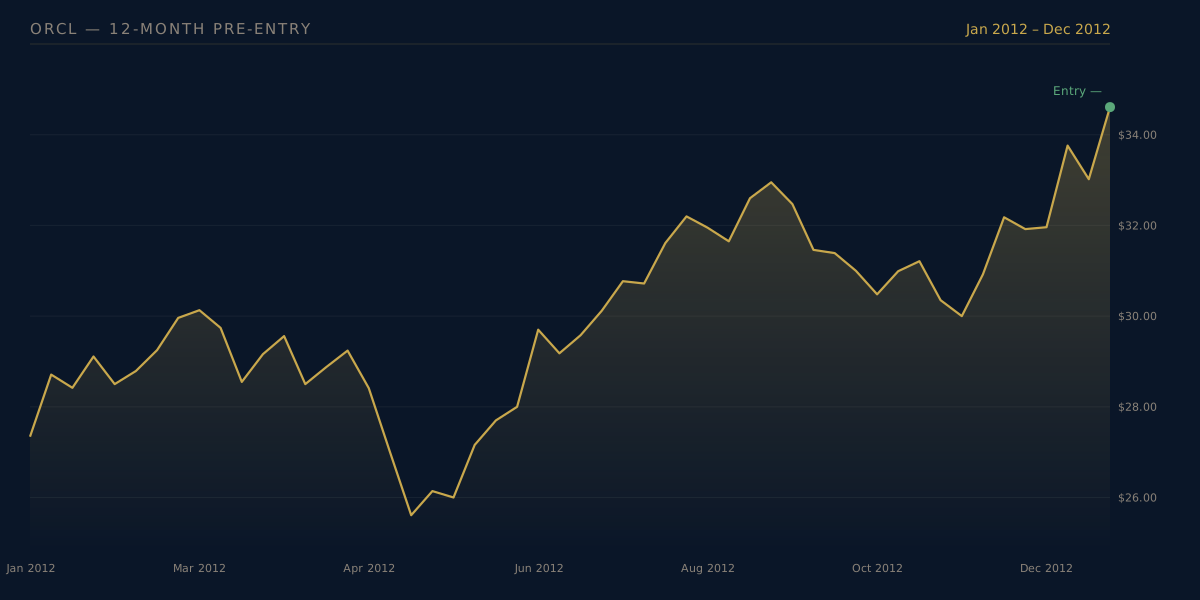
12-month price action before entry showing the 2012 rally and entry near the highs.
Entry Details
- Date: January 7, 2013
- Price: ~$34.61
- Context: Entering after a 27% rally, betting on cloud transition continuation
The Thesis
A trader might have entered here seeing:
- Strong 2012 performance suggesting momentum
- Cloud transition story gaining traction
- QE liquidity supporting risk assets
- Attractive valuation relative to SaaS peers
The concern: Oracle’s cloud execution was unproven. Hardware was weak. And the stock had already rallied significantly.
Before continuing: Consider what you would have done. Would you have taken this entry? What risks would you have been most concerned about?
Journey
Key Events
| Date | Event | Category | Stock Reaction |
|---|---|---|---|
| Jan 7, 2013 | Entry at ~$34.61 | Entry | Starting point |
| Jan 28, 2013 | Peak at $36.31 | Peak | +5% from entry |
| Mar 18, 2013 | Earnings miss + Cyprus crisis | Crash | Drop to $31.98 on 279M volume |
| Apr-May 2013 | Partial recovery, then taper talk | Chop | Range-bound |
| Jun 17, 2013 | Taper tantrum low at $30.14 | Trough | -13% from entry |
| Jun 24, 2013 | Exit at $30.71 | Exit | -11.3% from entry |
How It Unfolded
Phase 1: The Brief Honeymoon (January) The trade started well. Oracle pushed from $34.61 to $36.31 in the first three weeks—a 5% gain at the peak. The cloud narrative was holding, and the market was supportive.
Phase 2: The First Crack (March) Then came the March earnings miss. Oracle reported weaker-than-expected results, exposing cloud transition challenges. Combined with the Cyprus banking crisis, the stock cratered from the mid-$35s to $31.98 on massive volume (279M shares). This was the warning that the thesis was in trouble.
Phase 3: The False Recovery (April - May) Oracle bounced from the March lows, but couldn’t reclaim the highs. The stock chopped in the $32-35 range as investors questioned the cloud execution. Meanwhile, SaaS competitors like Salesforce were making new highs.
Phase 4: The Taper Tantrum (June) The Fed’s taper hints sparked a global risk-off. Oracle, already weakened, dropped to $30.14—the low of the period. Volume spiked to 231M shares. The trade was deeply underwater.
Exit
- Date: June 24, 2013
- Price: ~$30.71
- Context: Exiting with -11.3% loss during taper tantrum
Charts
Price Chart with Entry/Exit
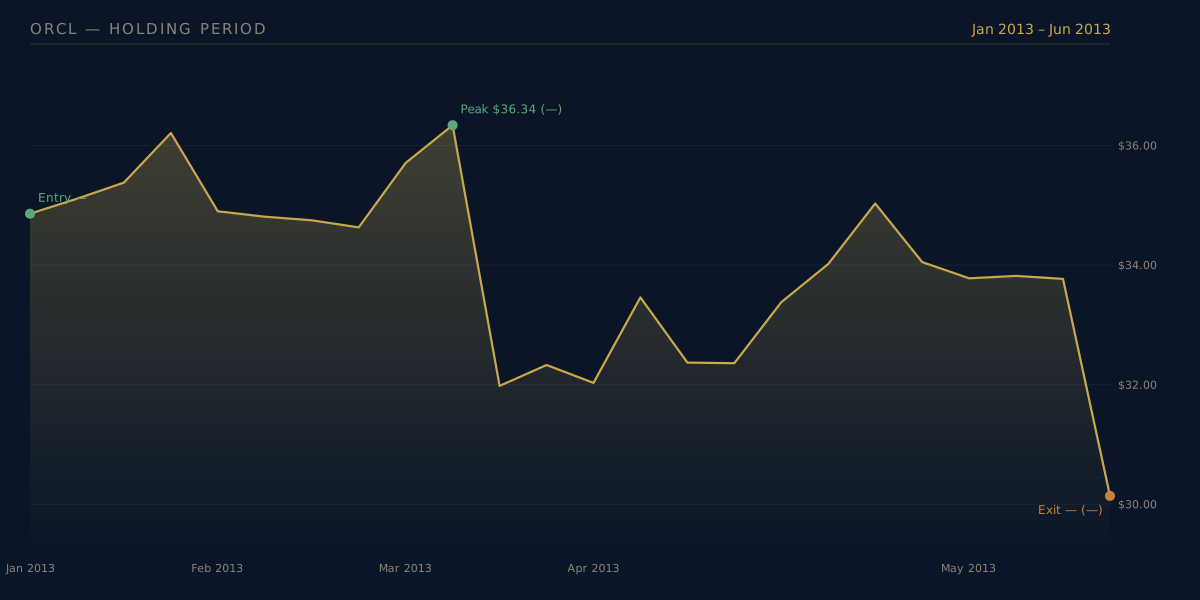
Weekly candlestick chart showing entry at ~$34.61 (green) and exit at ~$30.71 (blue). Note the March earnings crash and June taper tantrum.
Relative Performance vs. Benchmarks
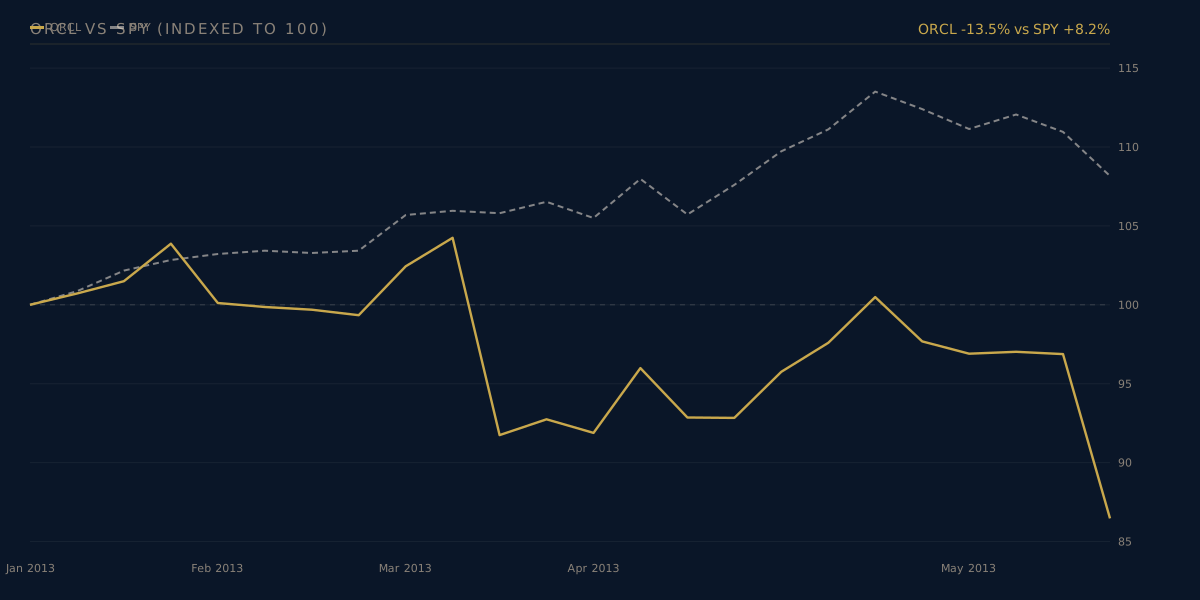
ORCL dramatically underperformed both the S&P 500 and Nasdaq 100 during this period.
Drawdown from Peak
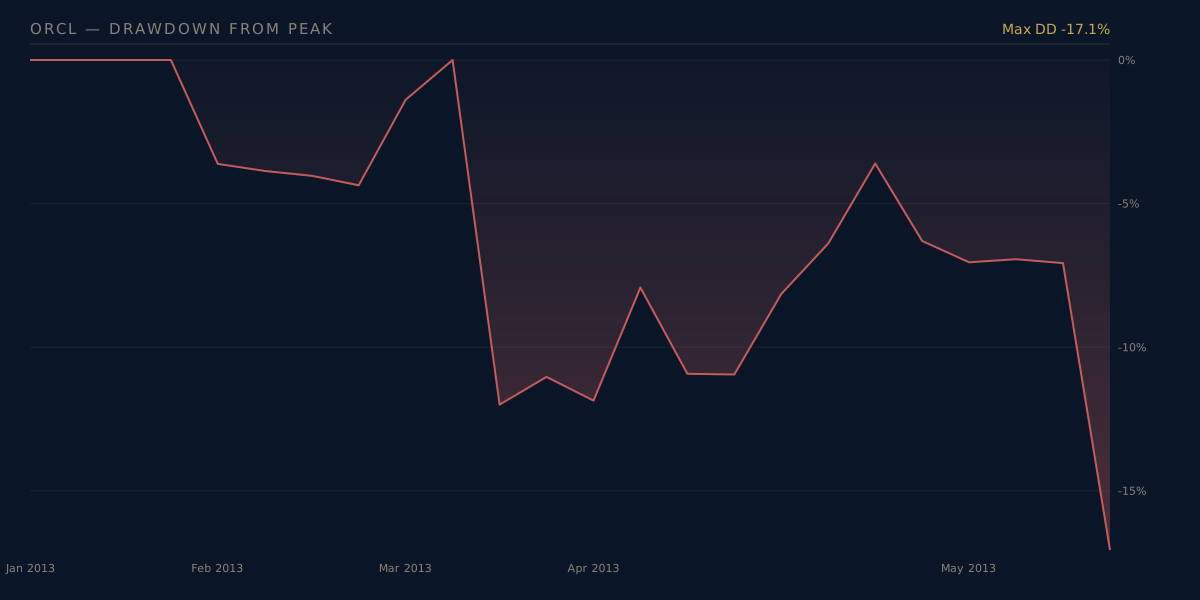
The 17% peak-to-trough drawdown illustrates the cost of holding through execution disappointments.
Results
Absolute Returns
| Metric | Value |
|---|---|
| Entry Price | ~$34.61 |
| Exit Price | ~$30.71 |
| Gross Return | -11.3% |
| Holding Period | ~6 months |
| Max Price (Close) | ~$36.31 |
| Min Price (Close) | ~$30.14 |
| Max Drawdown from Entry | -12.9% |
| Peak-to-Trough Drawdown | -17.0% |
Relative Performance
During the same period:
- S&P 500 (SPY): Up approximately 13%
- Nasdaq 100 (QQQ): Up approximately 10%
- ORCL vs. S&P 500: Underperformed by ~24%
Oracle dramatically underperformed during a strong market—a painful outcome.
Lessons
What Worked
-
Ample liquidity: Despite the losses, exits were feasible even during stress periods.
-
Early cushion: The brief January rally provided some buffer before the decline.
What Didn’t Work
-
Cloud execution gap: The transition story was real, but execution lagged. Two earnings misses exposed this.
-
Late entry after rally: Buying after a 27% move left no margin of safety when earnings disappointed.
-
No stop loss: A stop at -10% would have limited losses.
-
Ignored competitive dynamics: SaaS leaders were executing better. Oracle was fighting headwinds.
-
Held through earnings: Earnings gaps are binary risk. Holding through without hedges was costly.
Key Takeaways
-
Transition stories require execution proof. Oracle’s cloud pivot was real, but execution was slow. Wait for evidence before sizing up.
-
Late entries into rallies are fragile. After a 27% gain, the stock was priced for perfection. Any disappointment triggered selling.
-
Competitive dynamics matter. While Oracle transitioned, SaaS competitors were gaining share. Relative performance was poor.
-
Hedge around earnings. Two earnings misses drove most of the losses. Protection or reduced size before announcements would have helped.
-
Underperforming during a bull market is painful. A -11% loss while the S&P gained 13% is effectively a -24% relative return.
-
Stops preserve capital. A stop at the March break of $33 would have saved 5-6% of losses.
Sources
- Yahoo Finance historical data for ORCL
- Oracle quarterly earnings (2013)
- Federal Reserve QE and taper announcements
- Cyprus banking crisis coverage
Disclosure: This case study is for educational purposes only and does not constitute investment advice. Past performance does not guarantee future results. All investments carry risk of loss.
Timeline of Events
- Jan 7, 2013: Entry at ~$34.61
Entry — Starting point
- Jan 28, 2013: Peak at $36.31
Peak — +5% from entry
- Mar 18, 2013: Earnings miss + Cyprus crisis
Crash — Drop to $31.98 on 279M volume
- Apr-May 2013: Partial recovery, then taper talk
Chop — Range-bound
- Jun 17, 2013: Taper tantrum low at $30.14
Trough — -13% from entry
- Jun 24, 2013: Exit at $30.71
Exit — -11.3% from entry
Phase Breakdown
Phase 1: The Brief Honeymoon (January)
The trade started well. Oracle pushed from $34.61 to $36.31 in the first three weeks—a 5% gain at the peak. The cloud narrative was holding, and the market was supportive.
Phase 2: The First Crack (March)
Then came the March earnings miss. Oracle reported weaker-than-expected results, exposing cloud transition challenges. Combined with the Cyprus banking crisis, the stock cratered from the mid-$35s to $31.98 on massive volume (279M shares). This was the warning that the thesis was in trouble.
Phase 3: The False Recovery (April - May)
Oracle bounced from the March lows, but couldn't reclaim the highs. The stock chopped in the $32-35 range as investors questioned the cloud execution. Meanwhile, SaaS competitors like Salesforce were making new highs.
Phase 4: The Taper Tantrum (June)
The Fed's taper hints sparked a global risk-off. Oracle, already weakened, dropped to $30.14—the low of the period. Volume spiked to 231M shares. The trade was deeply underwater.
Key Lessons
- Transition stories require execution proof
Oracle's cloud pivot was real, but execution was slow. Wait for evidence before sizing up.
- Late entries into rallies are fragile
After a 27% gain, the stock was priced for perfection. Any disappointment triggered selling.
- Competitive dynamics matter
While Oracle transitioned, SaaS competitors were gaining share. Relative performance was poor.
- Hedge around earnings
Two earnings misses drove most of the losses. Protection or reduced size before announcements would have helped.
- Underperforming during a bull market is painful
A -11% loss while the S&P gained 13% is effectively a -24% relative return.
- Stops preserve capital
A stop at the March break of $33 would have saved 5-6% of losses.
Disclaimer: Equicurious provides educational content only, not investment advice. Past performance does not guarantee future results. Always verify with primary sources and consult a licensed professional for your specific situation.