Setup
In early 2013, NVIDIA was a gaming GPU company with a side bet on mobile (Tegra). Data center AI was a future footnote, not a P&L driver. The stock was emerging from a difficult 2012—PC softness, Intel’s improving integrated graphics, and a sluggish tablet market had weighed on sentiment.
But the Kepler architecture was gaining traction in discrete GPUs, and CUDA was quietly building an ecosystem among scientific computing users. The stock sat around $0.30 (split-adjusted), having bounced from November lows near $0.28.
This case study examines NVIDIA before it became a household name—when it traded like a cyclical semiconductor company rather than an AI platform. What lessons emerge from trading a company before its transformative moment?
What Was Observable Before Entry
What Was Observable Before Entry (2012)
Macro Regime:
- QE3 had launched in September 2012, providing liquidity support
- The U.S. fiscal cliff debate created year-end uncertainty
- Europe remained stressed but stabilizing
- Risk appetite was improving after mid-2012 lows
Company-Specific Setup:
- NVIDIA had dropped from ~$0.37 to ~$0.28 during fall 2012
- The Kepler GPU architecture was gaining market share
- But PC demand was weak, pressuring core gaming revenue
- Tegra mobile chips faced intense competition
- Data center was a small business with uncertain prospects
Sector Momentum:
- Semiconductors were mixed
- Intel’s integrated graphics were improving, squeezing low-end GPUs
- AMD remained a competitive threat in discrete graphics
Sentiment:
- Cautious on NVIDIA as a PC-dependent company
- Some optimism around gaming and Kepler
- Data center/AI optionality wasn’t priced in yet
Thesis Formation
A trader might have entered here seeing:
- Stock recovering from November lows
- Kepler gaining share in discrete GPUs
- QE liquidity supporting risk assets
- Beaten-down valuation
The concern: NVIDIA was a cyclical GPU vendor facing PC headwinds and competitive pressure. Without a structural growth catalyst, upside was limited.
Entry
What Was Observable at Entry
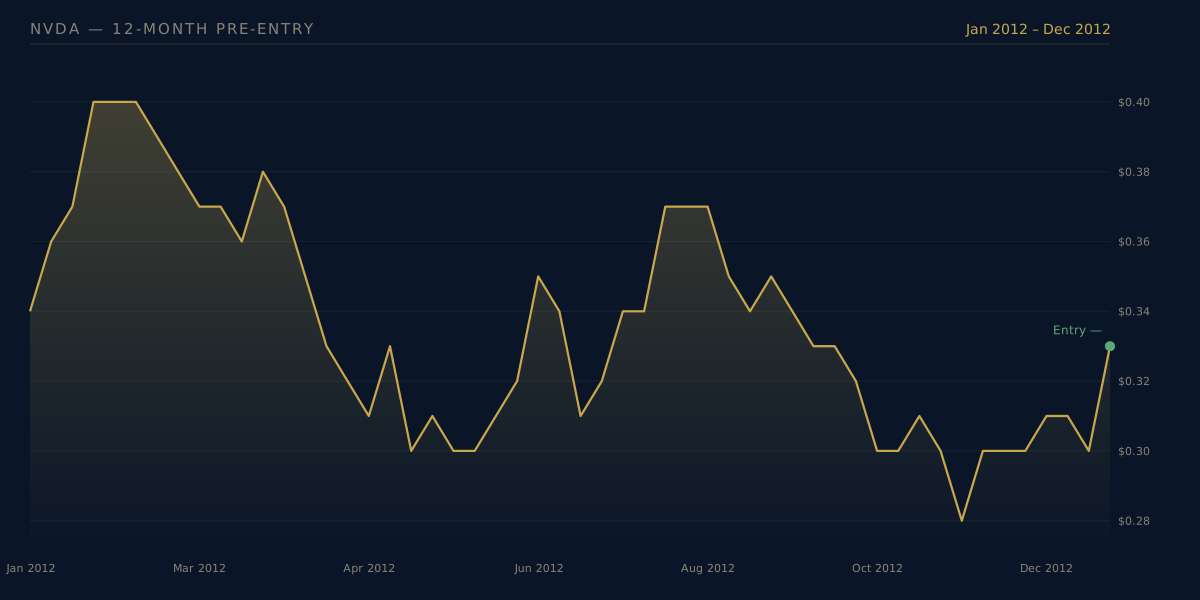
12-month price action before entry showing the 2012 volatility, November low, and recovery into 2013.
Entry Details
- Date: January 7, 2013
- Price: ~$0.30 (split-adjusted)
- Context: Entering after the November low, betting on gaming/Kepler recovery
The Thesis
A trader might have entered here seeing:
- Stock recovering from November lows
- Kepler gaining share in discrete GPUs
- QE liquidity supporting risk assets
- Beaten-down valuation
The concern: NVIDIA was a cyclical GPU vendor facing PC headwinds and competitive pressure. Without a structural growth catalyst, upside was limited.
Before continuing: Consider what you would have done. Would you have taken this entry? What risks would you have been most concerned about?
Journey
Key Events
| Date | Event | Category | Stock Reaction |
|---|---|---|---|
| Jan 7, 2013 | Entry at ~$0.30 | Entry | Starting point |
| Jan-Feb 2013 | Stock drifts higher to $0.32 | Grind | Modest gains |
| Mar 2013 | Cyprus banking crisis creates volatility | Macro | Brief wobble |
| Apr 2013 | Discrete GPU strength; stock reaches $0.35 | Rally | +17% from entry |
| May 2013 | Taper tantrum begins | Macro | Volatility increases |
| Jun 17, 2013 | Local peak at ~$0.39 | Peak | +30% from entry |
| Jun 24, 2013 | Exit at ~$0.36 | Exit | +20% from entry |
How It Unfolded
Phase 1: The Quiet Recovery (January - February) The trade began with NVIDIA grinding higher. From $0.30 to $0.32 in the first two months—nothing spectacular, but a steady recovery from the November lows. Volume was heavy but not panic-driven.
Phase 2: Testing the Rally (March) The Cyprus banking crisis briefly spooked markets in March, but NVIDIA held up reasonably well. The gaming/discrete GPU thesis remained intact, and the stock consolidated before its next move.
Phase 3: The Breakout (April - June) Spring brought strength. Discrete GPU sales were solid, Kepler was winning share, and optimism about CUDA and potential data center applications began to build. The stock pushed from $0.33 to $0.39 by mid-June—a 30% gain from entry.
Phase 4: Taper Tantrum Pullback (Late June) The Fed’s hint at tapering QE sparked a global selloff. NVIDIA dropped from $0.39 to $0.36 in the final weeks. The trade ended with a solid 20% gain, but 10% off the highs.
Exit
- Date: June 24, 2013
- Price: ~$0.36
- Context: Exiting during taper tantrum volatility with +20% gain
Charts
Price Chart with Entry/Exit
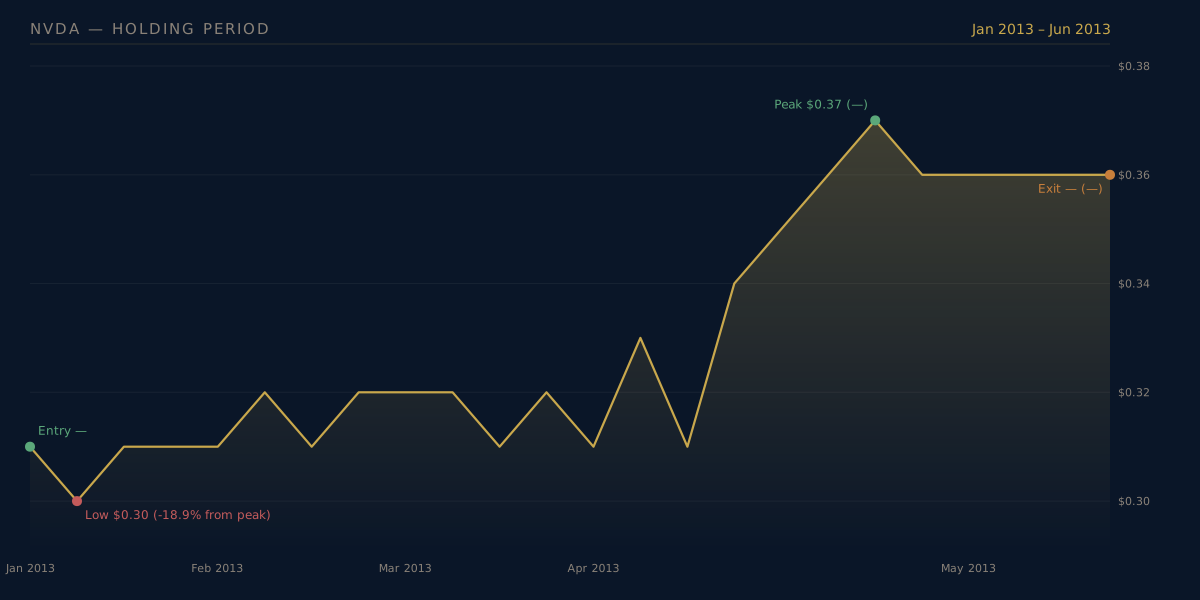
Weekly candlestick chart showing entry at ~$0.30 (green) and exit at ~$0.36 (blue). Note the June peak and taper tantrum pullback.
Relative Performance vs. Benchmarks
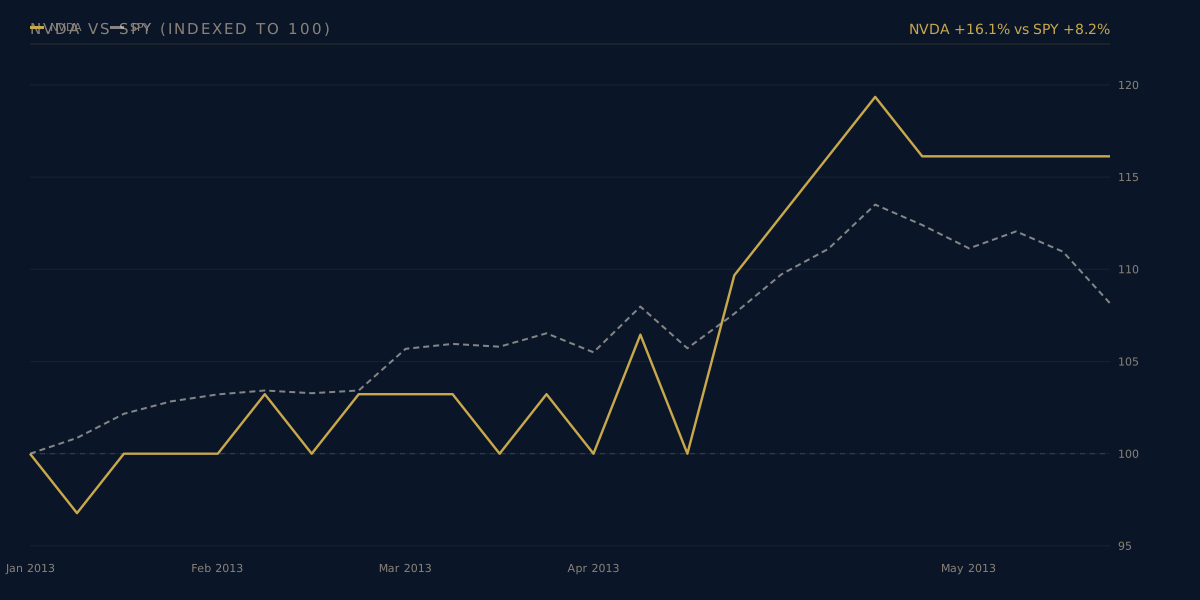
NVDA outperformed both the S&P 500 and semiconductor sector during this period.
Drawdown from Peak
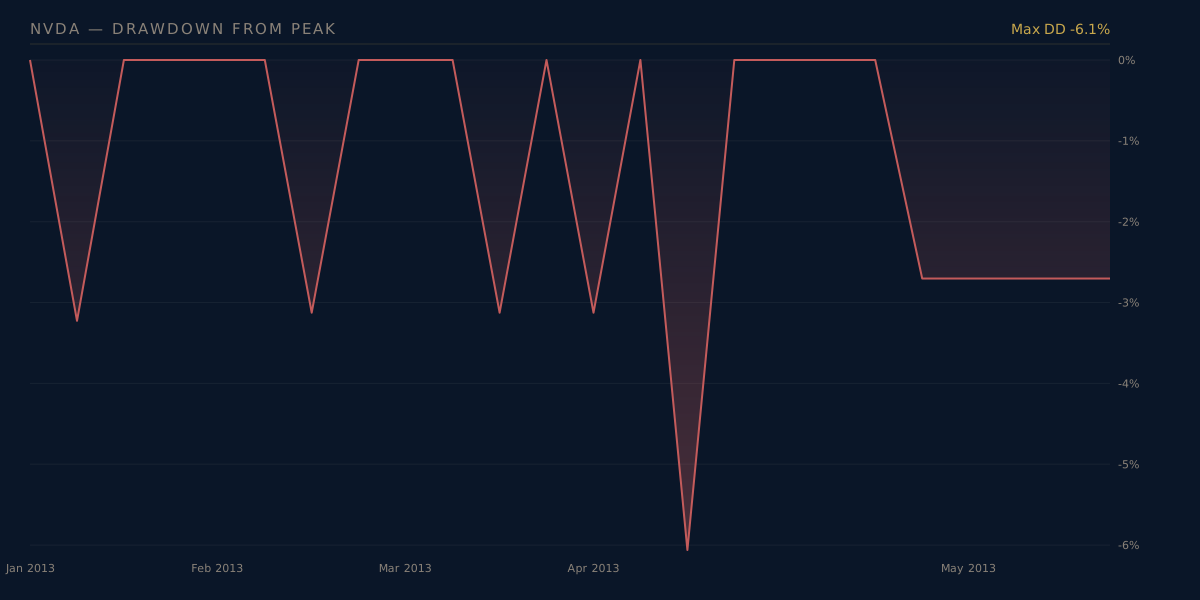
The 8% pullback from the June peak during the taper tantrum.
Results
Absolute Returns
| Metric | Value |
|---|---|
| Entry Price | ~$0.30 |
| Exit Price | ~$0.36 |
| Gross Return | +20% |
| Holding Period | ~6 months |
| Max Price (Close) | ~$0.39 |
| Min Price (Close) | ~$0.30 (entry) |
| Peak-to-Exit Pullback | -8% |
Relative Performance
During the same period:
- S&P 500 (SPY): Up approximately 13%
- Semiconductors (SMH): Up approximately 15%
- NVDA vs. S&P 500: Outperformed by ~7%
Solid outperformance during a strong market, though with significant volatility.
Lessons
What Worked
-
Entering after a selloff: Buying near the November lows (recovered by January) provided a margin of safety.
-
Riding the gaming cycle: Kepler’s strength drove the rally. The thesis played out.
-
QE liquidity tailwind: Central bank support helped risk assets broadly, lifting NVIDIA along the way.
What Didn’t Work
-
Gave back gains at the peak: A 30% gain became 20%. Taking profits near $0.39 would have captured more.
-
Macro sensitivity: The taper tantrum reminded traders that NVIDIA was a cyclical name vulnerable to macro shocks.
-
No structural growth catalyst priced in: Without the AI story (which came later), NVIDIA traded like a volatile PC/gaming name.
Key Takeaways
-
Before transformation, cyclicals trade like cyclicals. NVIDIA in 2013 was a gaming GPU company—not an AI platform. The volatility reflected this reality.
-
Macro matters for cyclical tech. QE3 helped on the way up; taper fears hurt on the way down. Central bank policy moved the stock as much as fundamentals.
-
Take profits into strength. The 30% peak-to-20% exit illustrates the value of scaling out during rallies.
-
Look for structural catalysts. The data center opportunity that would transform NVIDIA was visible to some analysts in 2013—but it wasn’t priced in. Finding these inflection points early is enormously valuable.
-
PC exposure was a drag. Intel’s integrated graphics and AMD competition kept pressure on NVIDIA’s core business. Diversification matters.
-
Patience for transformation. Those who held NVIDIA through the 2010s were rewarded enormously. But in 2013, the AI thesis was speculative at best.
Sources
- Yahoo Finance historical data for NVDA
- Federal Reserve QE3 and taper announcements
- NVIDIA Kepler architecture coverage
- PC and GPU market reports (2012-2013)
Disclosure: This case study is for educational purposes only and does not constitute investment advice. Past performance does not guarantee future results. All investments carry risk of loss.
Timeline of Events
- Jan 7, 2013: Entry at ~$0.30
Entry — Starting point
- Jan-Feb 2013: Stock drifts higher to $0.32
Grind — Modest gains
- Mar 2013: Cyprus banking crisis creates volatility
Macro — Brief wobble
- Apr 2013: Discrete GPU strength; stock reaches $0.35
Rally — +17% from entry
- May 2013: Taper tantrum begins
Macro — Volatility increases
- Jun 17, 2013: Local peak at ~$0.39
Peak — +30% from entry
- Jun 24, 2013: Exit at ~$0.36
Exit — +20% from entry
Phase Breakdown
Phase 1: The Quiet Recovery (January - February)
The trade began with NVIDIA grinding higher. From $0.30 to $0.32 in the first two months—nothing spectacular, but a steady recovery from the November lows. Volume was heavy but not panic-driven.
Phase 2: Testing the Rally (March)
The Cyprus banking crisis briefly spooked markets in March, but NVIDIA held up reasonably well. The gaming/discrete GPU thesis remained intact, and the stock consolidated before its next move.
Phase 3: The Breakout (April - June)
Spring brought strength. Discrete GPU sales were solid, Kepler was winning share, and optimism about CUDA and potential data center applications began to build. The stock pushed from $0.33 to $0.39 by mid-June—a 30% gain from entry.
Phase 4: Taper Tantrum Pullback (Late June)
The Fed's hint at tapering QE sparked a global selloff. NVIDIA dropped from $0.39 to $0.36 in the final weeks. The trade ended with a solid 20% gain, but 10% off the highs.
Key Lessons
- Before transformation, cyclicals trade like cyclicals
NVIDIA in 2013 was a gaming GPU company—not an AI platform. The volatility reflected this reality.
- Macro matters for cyclical tech
QE3 helped on the way up; taper fears hurt on the way down. Central bank policy moved the stock as much as fundamentals.
- Take profits into strength
The 30% peak-to-20% exit illustrates the value of scaling out during rallies.
- Look for structural catalysts
The data center opportunity that would transform NVIDIA was visible to some analysts in 2013—but it wasn't priced in. Finding these inflection points early is enormously valuable.
- PC exposure was a drag
Intel's integrated graphics and AMD competition kept pressure on NVIDIA's core business. Diversification matters.
- Patience for transformation
Those who held NVIDIA through the 2010s were rewarded enormously. But in 2013, the AI thesis was speculative at best.
Disclaimer: Equicurious provides educational content only, not investment advice. Past performance does not guarantee future results. Always verify with primary sources and consult a licensed professional for your specific situation.