Setup
Executive Summary
By late July 2025, Oracle had transformed. The cloud transition that struggled in the early 2010s was now delivering results. Cloud revenue was growing rapidly, AI workloads were driving demand, and the company had emerged as a credible hyperscaler competitor.
The stock had already rallied significantly—from $150 in May to $245 in late July. But unlike previous Oracle rallies, this one was backed by execution. Cloud growth was accelerating. Database demand was strong. And a major infrastructure announcement was sparking fresh interest.
This case study follows a trade that entered a reformed Oracle—betting that the cloud transformation was finally paying off.
What Was Observable Before Entry
Pre-Trade Environment
What Was Observable Before Entry (May - July 2025)
Macro Regime:
- AI spending driving enterprise infrastructure investment
- Cloud adoption continuing to accelerate
- Interest rates had stabilized
- Tech sector momentum was strong
Company-Specific Setup:
- ORCL had surged from $150 to $245 (+63%) in 12 weeks
- Cloud infrastructure revenue growing rapidly
- AI workloads driving new database demand
- Week 6 (June 9) saw a breakout to $215 on 147M volume (138% above average)
- Transformation narrative finally backed by execution
Sector Momentum:
- Enterprise software strong
- Cloud infrastructure names outperforming
- AI theme benefiting database/infrastructure players
Sentiment:
- Increasingly bullish as execution improved
- Still some skepticism from historical disappointments
- The breakout was attracting momentum buyers
Thesis Formation
A trader might have entered here seeing:
- Transformation finally delivering results
- Cloud execution proving out
- AI tailwind for database/infrastructure
- Strong technical breakout with volume confirmation
The concern: After a 63% rally, was there upside left? And could Oracle sustain execution in a competitive market?
Entry
What Was Observable at Entry
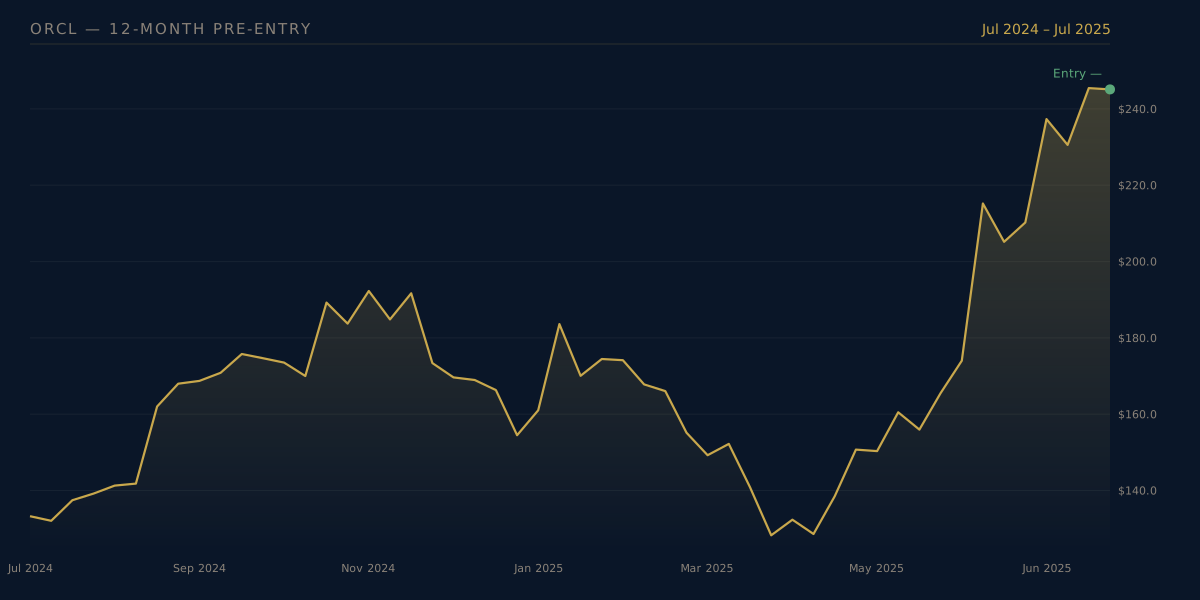
12-month price action before entry showing the massive May-July rally and volume-confirmed breakout.
Entry Details
- Date: July 28, 2025
- Price: $244.42
- Context: Entering after a strong rally, betting on continued cloud momentum
The Thesis
A trader might have entered here seeing:
- Transformation finally delivering results
- Cloud execution proving out
- AI tailwind for database/infrastructure
- Strong technical breakout with volume confirmation
The concern: After a 63% rally, was there upside left? And could Oracle sustain execution in a competitive market?
Before continuing: Consider what you would have done. Would you have taken this entry? What risks would you have been most concerned about?
Journey
Key Events
| Date | Event | Category | Stock Reaction |
|---|---|---|---|
| Jul 28, 2025 | Entry at $244.42 | Entry | Starting point |
| Aug 4-11, 2025 | Early strength to $250 | Rally | Encouraging start |
| Aug 18-25, 2025 | Correction to $226.13 | Trough | -7.5% from entry |
| Sep 1, 2025 | Recovery to $232.80 | Recovery | Bouncing |
| Sep 8, 2025 | Breakout to $292.18 on 313M volume | Breakout | +20% from entry |
| Sep 15, 2025 | Peak at $308.66 | Peak | +26% from entry |
| Sep 22-Oct 6, 2025 | Consolidation in $283-293 range | Pause | Digesting gains |
| Oct 13, 2025 | Exit at $291.31 | Exit | +19.2% from entry |
How It Unfolded
Phase 1: Early Chop (Late July - Mid-August) The trade began with volatility. ORCL touched $250 in the first two weeks, then dropped to $226—a 7.5% decline from entry that tested conviction. Volume was moderate, and the action felt uncertain.
Phase 2: The Consolidation (Late August) After the dip to $226, Oracle stabilized around $230. This was the base-building phase. Volume declined as selling pressure exhausted. The setup for the next move was forming.
Phase 3: The Explosion (September 8) Then came the breakout. On September 8, Oracle surged 25% to $292 on 313 million shares—nearly 3x average volume. This was unmistakable institutional buying. Something fundamental had shifted. The following week saw continuation to $308.
Phase 4: Consolidation and Exit (Late September - October) After the explosive move, Oracle consolidated in the $283-293 range. The volatility subsided, and the stock settled. The exit at $291 captured the bulk of the move.
Exit
- Date: October 13, 2025
- Price: $291.31
- Context: Exiting with +19.2% gain after consolidation
Charts
Price Chart with Entry/Exit
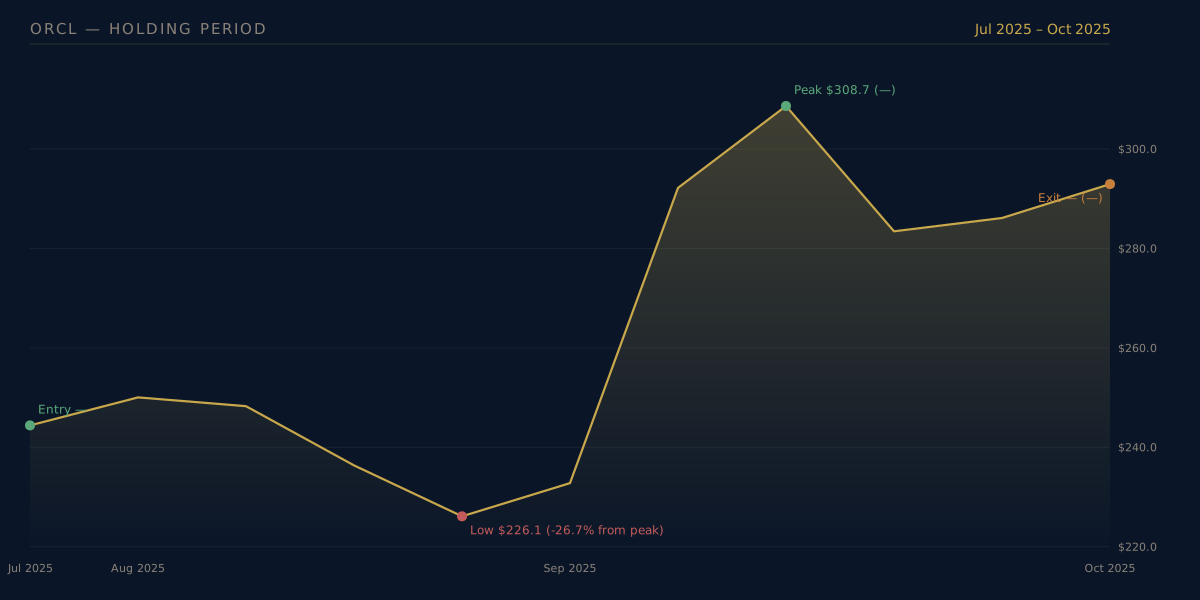
Weekly candlestick chart showing entry at $244.42 (green) and exit at $291.31 (blue). Note the August trough and September explosion.
Relative Performance vs. Benchmarks
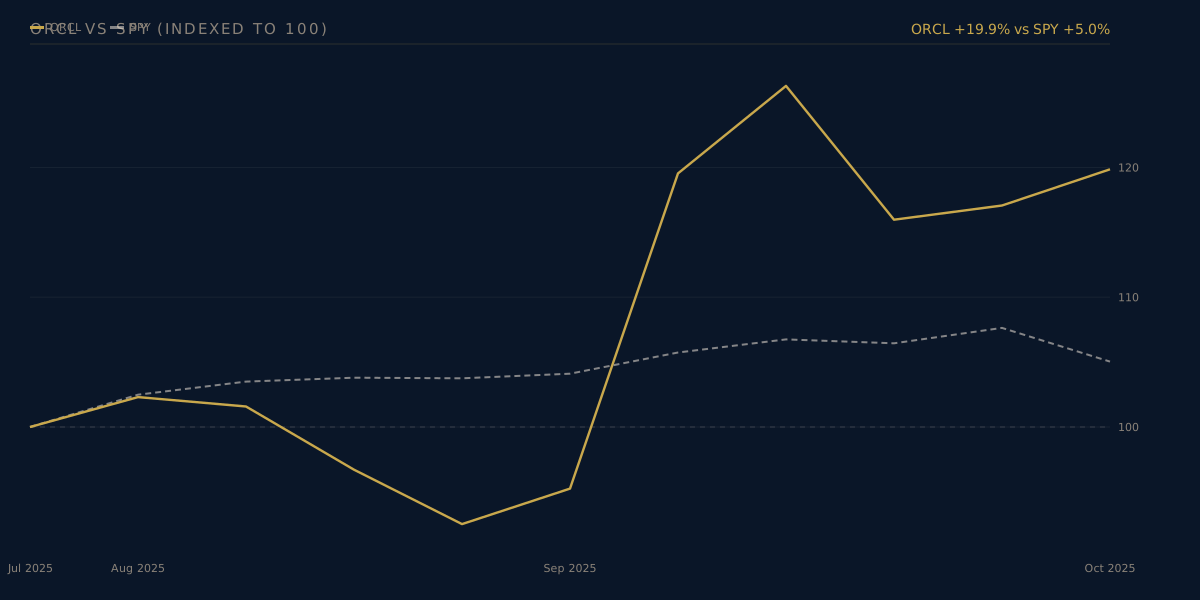
ORCL significantly outperformed the S&P 500 during this period.
Drawdown from Peak
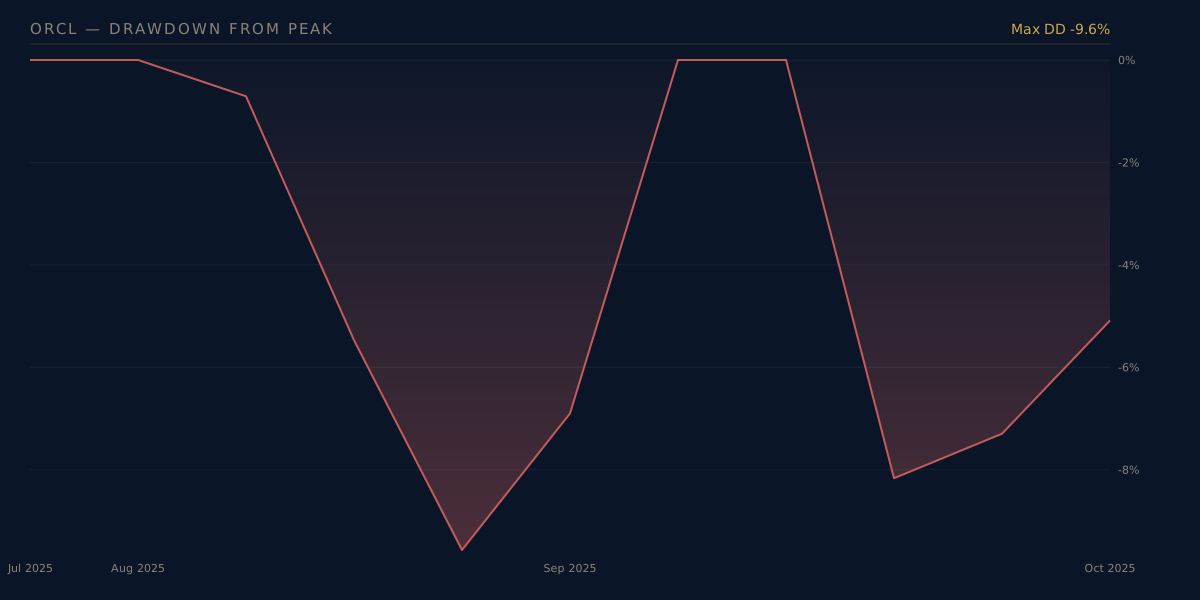
The brief August drawdown followed by strong gains.
Results
Performance Analysis
Absolute Returns
| Metric | Value |
|---|---|
| Entry Price | $244.42 |
| Exit Price | $291.31 |
| Gross Return | +19.2% |
| Holding Period | ~11 weeks |
| Max Price (Close) | $308.66 |
| Min Price (Close) | $226.13 |
| Max Drawdown from Entry | -7.5% |
| Peak Unrealized Gain | +26.3% |
Relative Performance
During the same period:
- S&P 500 (SPY): Up approximately 5%
- Tech Sector (XLK): Up approximately 8%
- ORCL vs. S&P 500: Outperformed by ~14%
Exceptional outperformance driven by the September breakout.
Lessons
What Worked
What Worked
-
Holding through early weakness: The 7.5% dip to $226 tested conviction. Holding captured the subsequent 25% breakout.
-
Volume confirmed the move: The 313M share day on September 8 was unmistakable institutional buying.
-
Transformation thesis was correct: Oracle’s cloud execution had finally improved, and the market rewarded it.
-
Riding the breakout: The September surge added most of the gains. Staying invested was essential.
What Didn’t Work
-
Left gains on the table: The $308 peak was 26% above entry; exit at $291 was only 19%. A trailing stop could have captured more.
-
Early volatility was uncomfortable: The drop to $226 before the breakout required patience.
-
Entry after a 63% rally: While the trade worked, entering so late increased risk.
Key Takeaways
Lessons and Takeaways
-
Transformations eventually pay off. Oracle’s cloud pivot took years, but execution finally delivered. Patient believers were rewarded.
-
Volume-confirmed breakouts are powerful. The 313M share day was the signal. Normal volume days don’t move stocks 25%.
-
Early pain doesn’t mean wrong thesis. The drop to $226 felt like the trade was failing. It was actually setting up the breakout.
-
Take profits at peaks. A 26% gain became 19%. Trailing stops or partial profit-taking would have helped.
-
Contrast with the 2013 trade. Same company, opposite outcomes. Execution matters more than narrative.
-
Breakouts after consolidation are high-probability. The August base-building preceded the September explosion.
Sources
- Yahoo Finance historical data for ORCL
- Oracle quarterly earnings (2025)
- Cloud infrastructure market reports
- AI workload analysis
Disclosure: This case study is for educational purposes only and does not constitute investment advice. Past performance does not guarantee future results. All investments carry risk of loss.
Timeline of Events
- Jul 28, 2025: Entry at $244.42
Entry — Starting point
- Aug 4-11, 2025: Early strength to $250
Rally — Encouraging start
- Aug 18-25, 2025: Correction to $226.13
Trough — -7.5% from entry
- Sep 1, 2025: Recovery to $232.80
Recovery — Bouncing
- Sep 8, 2025: Breakout to $292.18 on 313M volume
Breakout — +20% from entry
- Sep 15, 2025: Peak at $308.66
Peak — +26% from entry
- Sep 22-Oct 6, 2025: Consolidation in $283-293 range
Pause — Digesting gains
- Oct 13, 2025: Exit at $291.31
Exit — +19.2% from entry
Phase Breakdown
Phase 1: Early Chop (Late July - Mid-August)
The trade began with volatility. ORCL touched $250 in the first two weeks, then dropped to $226—a 7.5% decline from entry that tested conviction. Volume was moderate, and the action felt uncertain.
Phase 2: The Consolidation (Late August)
After the dip to $226, Oracle stabilized around $230. This was the base-building phase. Volume declined as selling pressure exhausted. The setup for the next move was forming.
Phase 3: The Explosion (September 8)
Then came the breakout. On September 8, Oracle surged 25% to $292 on 313 million shares—nearly 3x average volume. This was unmistakable institutional buying. Something fundamental had shifted. The following week saw continuation to $308.
Phase 4: Consolidation and Exit (Late September - October)
After the explosive move, Oracle consolidated in the $283-293 range. The volatility subsided, and the stock settled. The exit at $291 captured the bulk of the move.
Key Lessons
- Transformations eventually pay off
Oracle's cloud pivot took years, but execution finally delivered. Patient believers were rewarded.
- Volume-confirmed breakouts are powerful
The 313M share day was the signal. Normal volume days don't move stocks 25%.
- Early pain doesn't mean wrong thesis
The drop to $226 felt like the trade was failing. It was actually setting up the breakout.
- Take profits at peaks
A 26% gain became 19%. Trailing stops or partial profit-taking would have helped.
- Contrast with the 2013 trade
Same company, opposite outcomes. Execution matters more than narrative.
- Breakouts after consolidation are high-probability
The August base-building preceded the September explosion.
Disclaimer: Equicurious provides educational content only, not investment advice. Past performance does not guarantee future results. Always verify with primary sources and consult a licensed professional for your specific situation.