Setup
In early 2018, Accenture entered the new year riding high. The consulting giant had climbed steadily through 2017, benefiting from digital transformation demand, stable enterprise IT budgets, and the tailwind of U.S. tax reform. The stock sat near all-time highs around $157.
But 2018 would bring unexpected turbulence. The February VIX spike—the largest volatility shock in years—rattled markets. Trade tensions emerged. And the Fed continued its hiking cycle, raising questions about how long the growth party could last.
This case study follows a six-month position through one of the more volatile stretches for a typically steady large-cap stock. Would the strong fundamentals hold up, or would macro forces overwhelm?
What Was Observable Before Entry
What Was Observable Before Entry (2017)
Macro Regime:
- U.S. tax reform had just been enacted, providing a tailwind for corporate earnings
- The Fed was in a gradual hiking cycle, with rates still historically low
- Global growth was synchronized, with Europe stabilizing and emerging markets contributing
- Volatility (VIX) had been remarkably subdued throughout 2017
Company-Specific Setup:
- Accenture had risen steadily from ~$126 to ~$153 during 2017 (+21%)
- Digital and consulting segments were showing strong growth
- Enterprise IT budgets remained healthy
- The stock had weathered brief pullbacks in June and October 2017, with buyers defending the $125-135 zone
Sector Momentum:
- Professional services and IT consulting were in favor
- Digital transformation spending was accelerating across industries
Sentiment:
- Generally bullish on Accenture as a quality compounder
- Some concern about elevated valuations after the strong 2017 run
Thesis Formation
A reasonable trader might have entered here seeing:
- Strong momentum from a 21% gain in 2017
- Tax reform benefits ahead (lower corporate rate, repatriation)
- Continued digital transformation spending
- Defensive characteristics of a diversified consulting business
The contrarian concern: After a big run, was the easy money already made? And could rising rates or trade policy disrupt the steady growth story?
Entry
What Was Observable at Entry
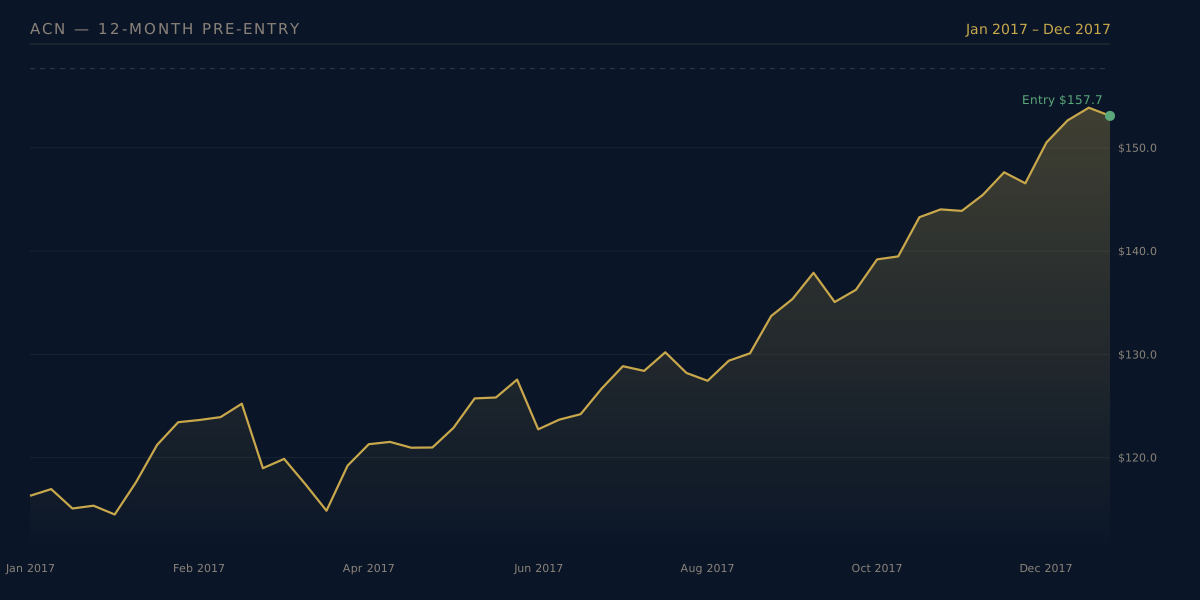
12-month price action before entry showing the steady 2017 uptrend, moving averages, and entry point near all-time highs.
Entry Details
- Date: January 1, 2018
- Price: $157.67
- Context: Entering near 52-week highs after a strong 2017, betting on continued momentum
The Thesis
A reasonable trader might have entered here seeing:
- Strong momentum from a 21% gain in 2017
- Tax reform benefits ahead (lower corporate rate, repatriation)
- Continued digital transformation spending
- Defensive characteristics of a diversified consulting business
The contrarian concern: After a big run, was the easy money already made? And could rising rates or trade policy disrupt the steady growth story?
Before continuing: Consider what you would have done. Would you have taken this entry? What risks would you have been most concerned about?
Journey
Key Events
| Date | Event | Category | Stock Reaction |
|---|---|---|---|
| Jan 2018 | Tax reform takes effect | Policy | Initially positive |
| Feb 5, 2018 | VIX spike - largest volatility shock in years | Macro | Sharp selloff |
| Feb 2018 | Stock drops to ~$149, recovering to ~$154 | Volatility | -5% drawdown |
| Mar 19, 2018 | Tech/earnings wobble, trade tensions emerge | Macro | Further weakness |
| Mar 2018 | Stock hits trough at ~$147.35 | Trough | -6.5% from entry |
| Apr-May 2018 | Gradual recovery as earnings remain solid | Earnings | Positive |
| Jun 25, 2018 | Stock reaches new high at ~$163.59 | Recovery | Exit point |
How It Unfolded
Phase 1: Early Optimism (Jan 2018) The trade began with continued post-tax-reform enthusiasm. ACN quickly pushed toward $162, extending the 2017 trend. Volume was moderate, and the path seemed clear.
Phase 2: The February Shock (Feb 2018) Then came the volatility explosion. On February 5th, the VIX spiked dramatically in what became known as “Volmageddon.” ACN dropped from the low $160s to below $149 in a matter of days. Volume surged to 17M+ as fear gripped markets. For a typically steady stock, this was jarring.
Phase 3: The March Retest (Mar 2018)
Just as the dust settled from February, fresh concerns emerged. Trade tensions between the U.S. and China began making headlines. Tech stocks wobbled on earnings concerns. ACN slid further, hitting a trough of $147.35—a 6.5% drawdown from entry. The prior support zone from 2017 ($145-150) was being tested.
Phase 4: The Recovery (Apr-Jun 2018) With fundamentals still intact and fears not materializing into actual earnings damage, buyers returned. ACN ground higher through spring, eventually pushing to a new all-time high of $163.59 by late June.
Exit
- Date: June 25, 2018
- Price: $163.59
- Context: New all-time high, full recovery from the volatility shocks
Charts
Price Chart with Entry/Exit
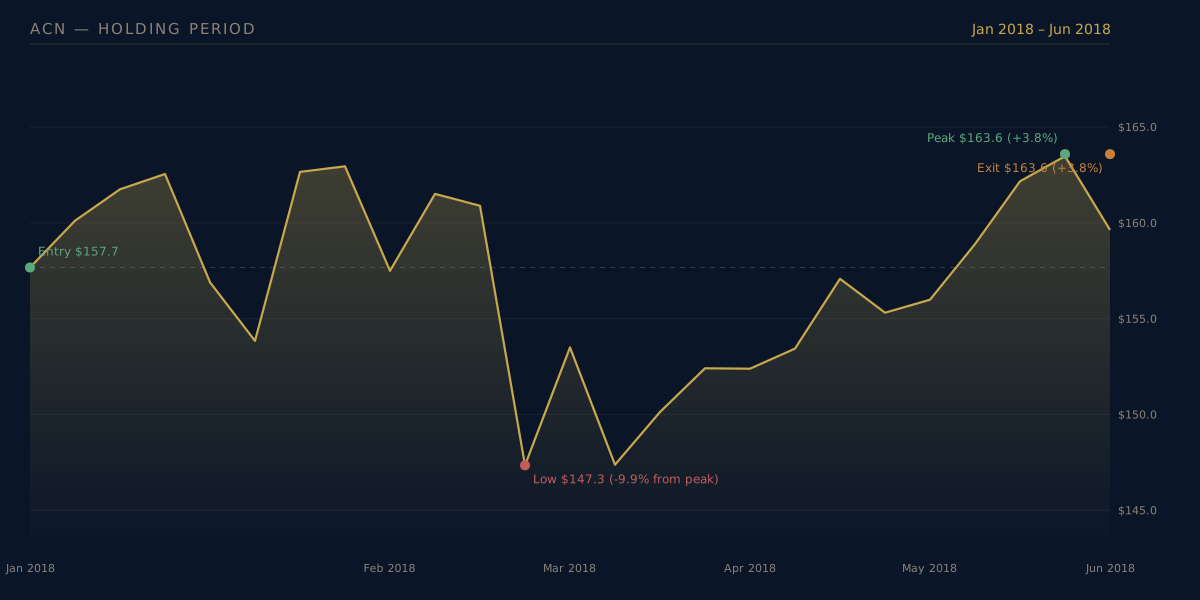
Weekly candlestick chart showing entry at $157.67 (green) and exit at $163.59 (blue). Note the February and March volatility before the recovery.
Relative Performance vs. Benchmarks
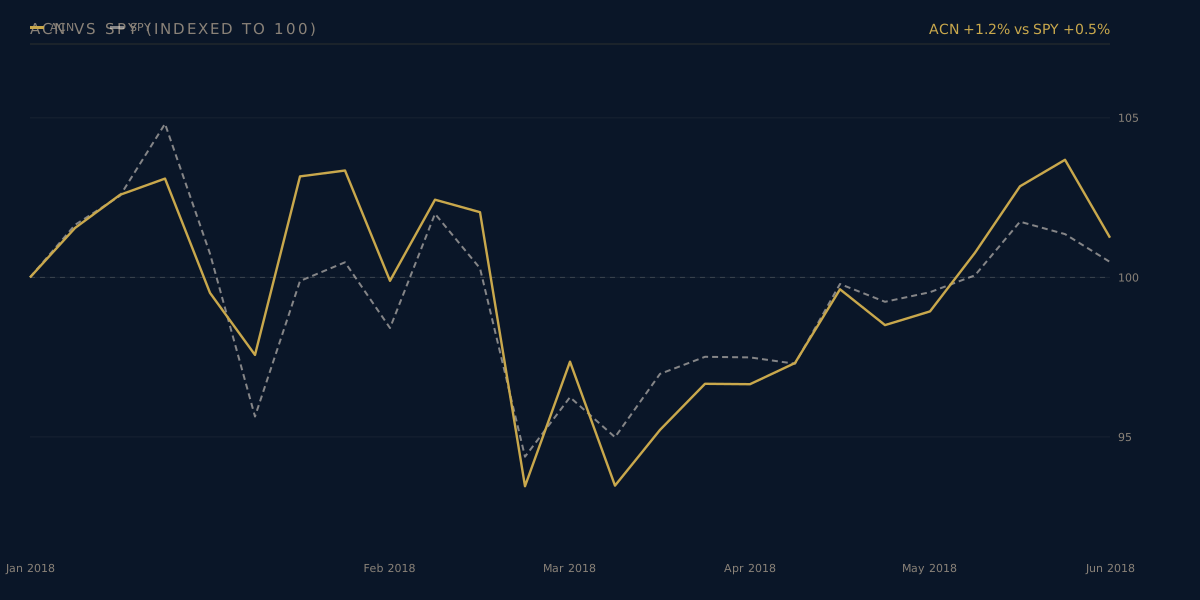
ACN vs. S&P 500, normalized to 100 at trade start.
Drawdown from Peak
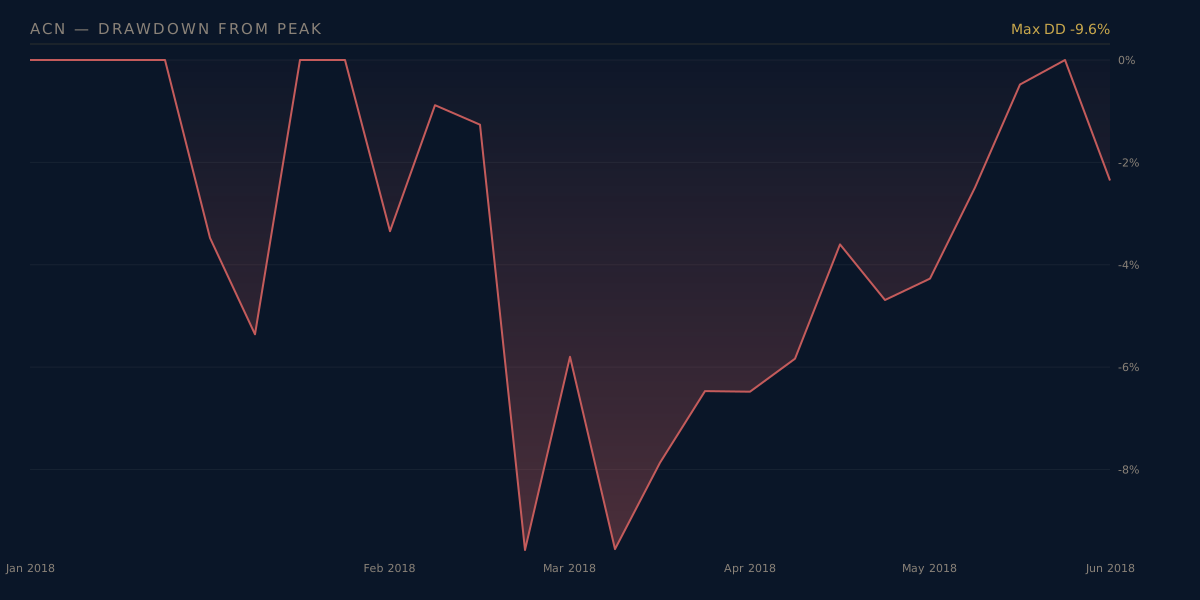
The 6.5% peak-to-trough drawdown occurred during the February-March volatility.
Results
Absolute Returns
| Metric | Value |
|---|---|
| Entry Price | $157.67 |
| Exit Price | $163.59 |
| Gross Return | +3.8% |
| Holding Period | ~6 months |
| Max Price (Close) | $163.59 |
| Min Price (Close) | $147.35 |
| Peak-to-Trough Drawdown | -6.5% |
Relative Performance
During the same period:
- S&P 500 (SPY): Approximately flat to slightly positive
- ACN vs. S&P 500: Modest outperformance
The trade delivered positive returns but required sitting through meaningful drawdowns during the volatility events.
Lessons
What Worked
-
Strong fundamental backdrop: Accenture’s steady demand and tax reform benefits provided a cushion during market stress.
-
Patience through volatility: Holding through the 6.5% drawdown allowed capture of the full recovery to new highs.
-
Quality characteristics: As a diversified, well-managed company, ACN attracted buyers during the recovery phase.
What Didn’t Work
-
No hedging or stops: Sitting through the entire drawdown with no protection meant experiencing the full pain of the volatility shock.
-
Modest upside for the risk: A 3.8% gain over six months, while positive, was underwhelming given the 6.5% drawdown endured.
-
Missed tactical opportunities: No scale-out near the early January highs (~$162) or addition on the March retest.
Key Takeaways
-
Even steady stocks can get volatile. Accenture isn’t known for drama, but the February 2018 shock proved that macro events can hit any stock. Position sizing should account for this possibility.
-
Strong trends can survive volatility events. The 2017 uptrend was intact, and the fundamentals hadn’t changed. This provided the foundation for recovery.
-
Define your risk tolerance upfront. A 6.5% drawdown is tolerable for some, painful for others. Having predefined stops or hedge triggers removes emotion from the decision.
-
Consider tactical overlays. Scaling out near prior highs or adding at support levels can improve risk-adjusted returns without changing the core thesis.
-
Time horizon matters. Six months isn’t long, but it was enough to see a full cycle of panic and recovery. Patience was rewarded, but barely.
Sources
- Yahoo Finance historical data for ACN
- Federal Reserve rate decision archives
- VIX historical data (CBOE)
- U.S. Tax Cuts and Jobs Act (enacted December 2017)
Disclosure: This case study is for educational purposes only and does not constitute investment advice. Past performance does not guarantee future results. All investments carry risk of loss.
Timeline of Events
- Jan 2018: Tax reform takes effect
Policy — Initially positive
- Feb 5, 2018: VIX spike - largest volatility shock in years
Macro — Sharp selloff
- Feb 2018: Stock drops to ~$149, recovering to ~$154
Volatility — -5% drawdown
- Mar 19, 2018: Tech/earnings wobble, trade tensions emerge
Macro — Further weakness
- Mar 2018: Stock hits trough at ~$147.35
Trough — -6.5% from entry
- Apr-May 2018: Gradual recovery as earnings remain solid
Earnings — Positive
- Jun 25, 2018: Stock reaches new high at ~$163.59
Recovery — Exit point
Phase Breakdown
Phase 1: Early Optimism (Jan 2018)
The trade began with continued post-tax-reform enthusiasm. ACN quickly pushed toward $162, extending the 2017 trend. Volume was moderate, and the path seemed clear.
Phase 2: The February Shock (Feb 2018)
Then came the volatility explosion. On February 5th, the VIX spiked dramatically in what became known as "Volmageddon." ACN dropped from the low $160s to below $149 in a matter of days. Volume surged to 17M+ as fear gripped markets. For a typically steady stock, this was jarring.
Phase 3: The March Retest (Mar 2018)
Just as the dust settled from February, fresh concerns emerged. Trade tensions between the U.S. and China began making headlines. Tech stocks wobbled on earnings concerns. ACN slid further, hitting a trough of ~$147.35—a 6.5% drawdown from entry. The prior support zone from 2017 (~$145-150) was being tested.
Phase 4: The Recovery (Apr-Jun 2018)
With fundamentals still intact and fears not materializing into actual earnings damage, buyers returned. ACN ground higher through spring, eventually pushing to a new all-time high of $163.59 by late June.
Key Lessons
- Even steady stocks can get volatile
Accenture isn't known for drama, but the February 2018 shock proved that macro events can hit any stock. Position sizing should account for this possibility.
- Strong trends can survive volatility events
The 2017 uptrend was intact, and the fundamentals hadn't changed. This provided the foundation for recovery.
- Define your risk tolerance upfront
A 6.5% drawdown is tolerable for some, painful for others. Having predefined stops or hedge triggers removes emotion from the decision.
- Consider tactical overlays
Scaling out near prior highs or adding at support levels can improve risk-adjusted returns without changing the core thesis.
- Time horizon matters
Six months isn't long, but it was enough to see a full cycle of panic and recovery. Patience was rewarded, but barely.
Disclaimer: Equicurious provides educational content only, not investment advice. Past performance does not guarantee future results. Always verify with primary sources and consult a licensed professional for your specific situation.