Setup
In August 2015, IBM was deep in its transformation from legacy hardware and services to cloud, analytics, and cognitive computing. Revenue was declining, margins were pressured, and skepticism ran high about whether the “strategic imperatives” could offset legacy decay.
The macro environment was turning hostile. China’s surprise devaluation in August shocked global markets. The Fed was preparing to raise rates for the first time since 2006. Oil prices were collapsing, straining credit markets. The strong dollar was crushing multinational earnings.
For IBM, this created a challenging setup. A restructuring company with declining revenue, facing a macro storm that would amplify downside risk. Could the turnaround thesis survive the volatility? This case study follows a trade through one of the most turbulent 12-month periods in recent memory.
What Was Observable Before Entry
What Was Observable Before Entry (2015)
Macro Regime:
- China devaluation shock was imminent (August 2015)
- Fed preparing for liftoff after years of zero rates
- Strong dollar pressuring multinationals
- Oil beginning its collapse toward $26/barrel
Company-Specific Setup:
- IBM trading around $148, near the lower end of its range
- Revenue declining as legacy businesses shrank
- Cloud and analytics growing, but not fast enough to offset declines
- Multiple quarters of disappointing results had eroded confidence
- “Strategic imperatives” thesis being questioned by investors
Sector Momentum:
- Tech was mixed; cloud leaders outperforming legacy names
- Enterprise IT spending under pressure
- The FAANG trade was drawing capital away from older tech
Sentiment:
- Skeptical about IBM’s turnaround timeline
- Dividend yield (~3.5%) provided some support
- Value investors saw a potential turnaround; growth investors had moved on
Thesis Formation
A value investor might have entered here seeing:
- A blue-chip name trading at a reasonable valuation
- Strategic pivot to cloud/AI with long-term potential
- Strong dividend providing downside support
- Eventually, the revenue declines would stabilize
The concern: Macro headwinds could accelerate the decline. Without visible inflection in fundamentals, the stock could remain dead money—or worse.
Entry
What Was Observable at Entry
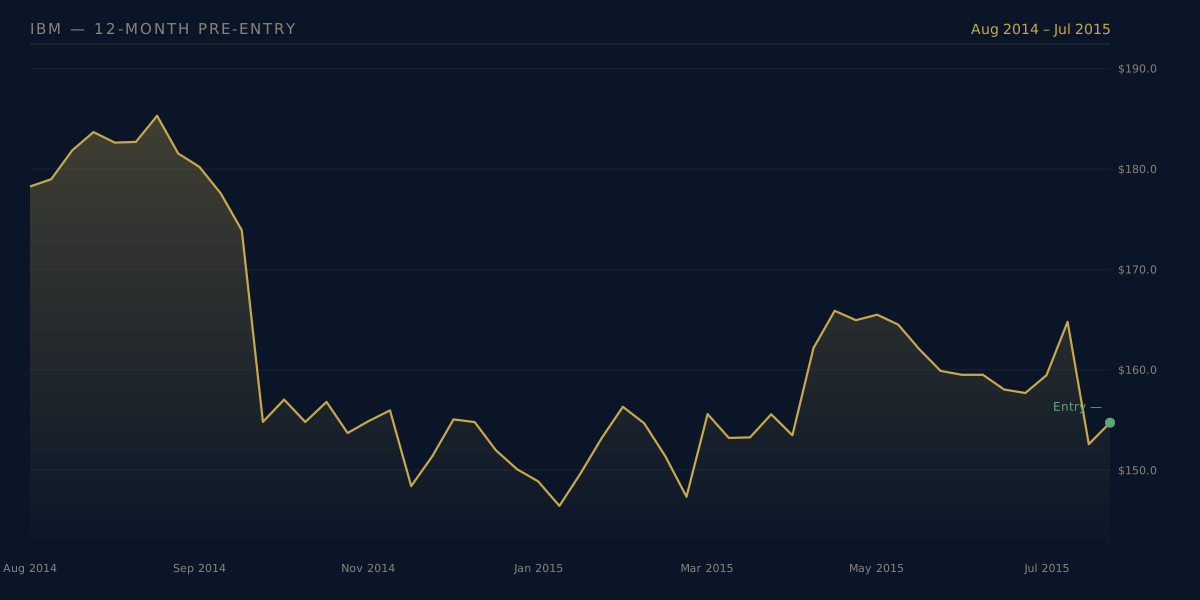
12-month price action before entry showing IBM’s struggles with revenue decline and valuation compression.
Entry Details
- Date: August 3, 2015
- Price: ~$148.17
- Context: Entering a restructuring story with macro headwinds building
The Thesis
A value investor might have entered here seeing:
- A blue-chip name trading at a reasonable valuation
- Strategic pivot to cloud/AI with long-term potential
- Strong dividend providing downside support
- Eventually, the revenue declines would stabilize
The concern: Macro headwinds could accelerate the decline. Without visible inflection in fundamentals, the stock could remain dead money—or worse.
Before continuing: Consider what you would have done. Would you have taken this entry? What risks would you have been most concerned about?
Journey
Key Events
| Date | Event | Category | Stock Reaction |
|---|---|---|---|
| Aug 3, 2015 | Entry at ~$148.17 | Entry | Starting point |
| Aug 24, 2015 | China devaluation shock | Macro | Drop to $141 on 34M volume |
| Oct 19, 2015 | Post-earnings selloff | Earnings | Falls to $138 on 44M volume |
| Nov 9, 2015 | Local trough at $125.84 | Trough | -15% from entry |
| Dec 16, 2015 | Fed hikes rates for first time | Macro | Market volatility increases |
| Jan 18, 2016 | Capitulation low at $117.01 | Capitulation | -21% from entry |
| Feb-Mar 2016 | Reflation rally begins | Recovery | Climbs back to $140 |
| Jun 23, 2016 | Brexit vote | Macro | Brief volatility |
| Jul 18, 2016 | Peak at ~$154.80 | Peak | +4.5% from entry |
| Jul 25, 2016 | Exit at ~$153.42 | Exit | Near highs |
How It Unfolded
Phase 1: The China Shock (August 2015) The trade began just before China’s surprise devaluation. Within three weeks, IBM dropped from $148 to $141—and the broader selling was just getting started. Volume spiked as investors fled emerging market exposure and anything dollar-sensitive.
Phase 2: The Grinding Decline (September - November 2015) Earnings disappointed in October, sending the stock to $138 on 44 million shares of volume. By November, IBM touched $125.84—down 15% from entry. The turnaround thesis was being severely tested. Revenue was still declining, and macro fears were mounting.
Phase 3: The Capitulation (January 2016) The new year brought chaos. Oil crashed toward $26, credit spreads blew out, and the Fed’s December rate hike seemed ill-timed. IBM collapsed to $117.01 in mid-January—a stunning 21% below entry. Volume hit 46 million shares that week. This was capitulation selling.
Phase 4: The Reflation Rally (February - July 2016) Just when all seemed lost, the tide turned. Oil stabilized, the Fed backed off further hikes, and risk appetite returned. IBM joined the reflation rally, climbing from $117 to $140 by March and eventually to $154.80 by mid-July. The brutal drawdown was nearly fully recovered.
Exit
- Date: July 25, 2016
- Price: ~$153.42
- Context: Exiting near 12-month highs after recovering from deep drawdown
Charts
Price Chart with Entry/Exit
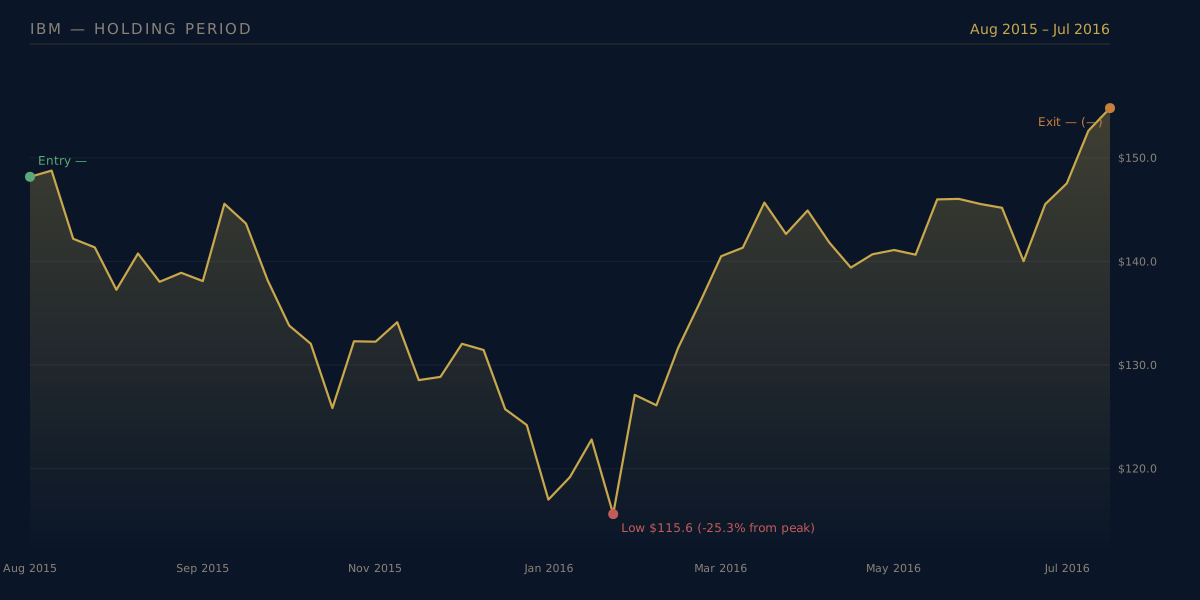
Weekly candlestick chart showing entry at ~$148 (green) and exit at ~$153 (blue). Note the January 2016 capitulation low and subsequent recovery.
Relative Performance vs. Benchmarks
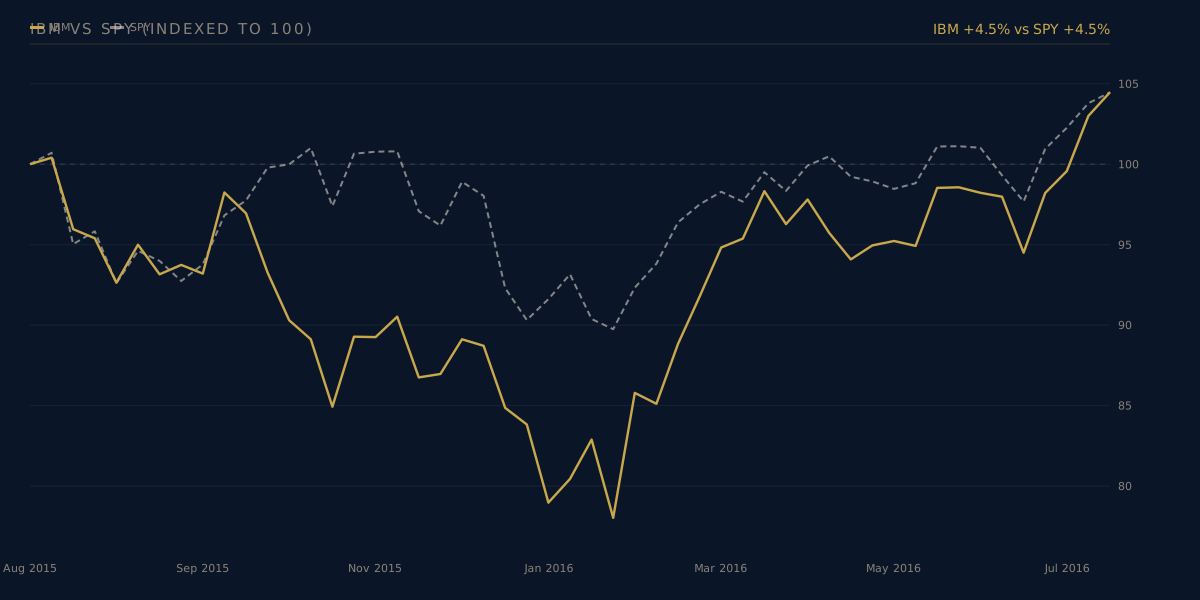
IBM vs. S&P 500. Both ended the period with modest gains after significant volatility.
Drawdown from Peak
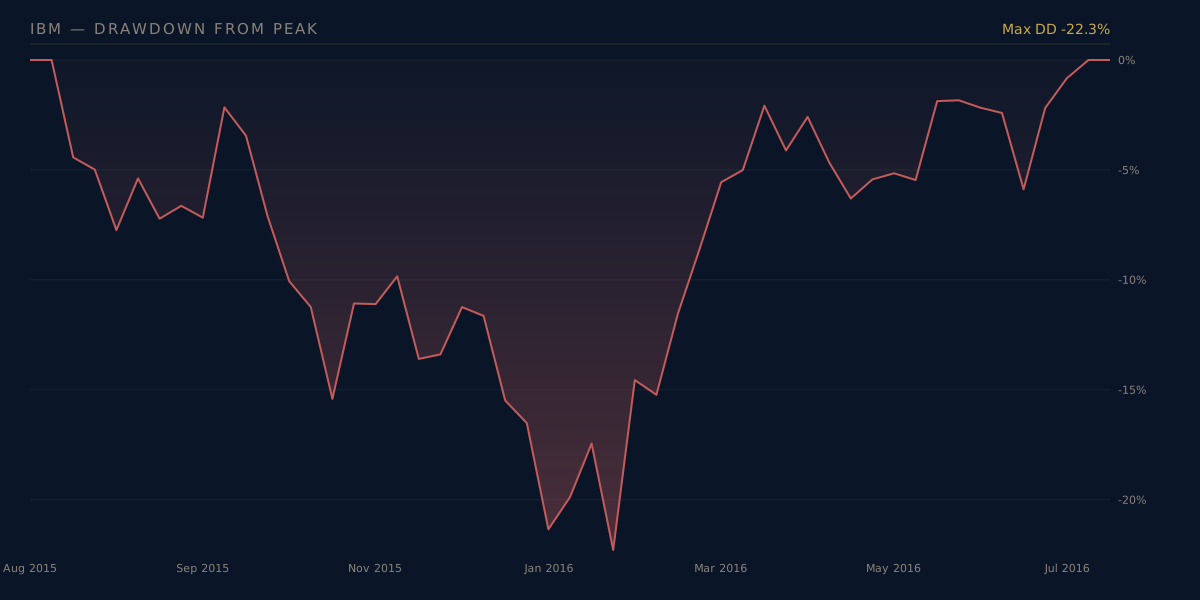
The 21% drawdown from entry and 25% peak-to-trough decline illustrate the pain of holding through macro shocks.
Results
Absolute Returns
| Metric | Value |
|---|---|
| Entry Price | ~$148.17 |
| Exit Price | ~$153.42 |
| Gross Return | +3.5% |
| Holding Period | ~52 weeks |
| Max Price (Close) | ~$154.80 |
| Min Price (Close) | ~$117.01 |
| Max Drawdown from Entry | -21.0% |
| Peak-to-Trough Drawdown | -25.4% |
Relative Performance
During the same period:
- S&P 500 (SPY): Approximately +2%
- Tech Sector (XLK): Approximately +5%
- IBM vs. S&P 500: Slight outperformance (+1.5%)
The return was roughly in line with the market—but the path was far more volatile.
Lessons
What Worked
-
Patience through the storm: Holding through a 21% drawdown ultimately recovered the losses—and then some.
-
Reflation rally participation: By staying invested, the trade captured the February-July recovery when many had sold at the lows.
-
Dividend income: IBM’s ~3.5% yield provided some cushion during the drawdown period.
What Didn’t Work
-
No stop loss or hedge: A 21% drawdown is gut-wrenching. Protective puts or a stop would have limited the damage.
-
Turnaround timing was off: Entering a restructuring story with declining fundamentals left the stock vulnerable to macro shocks.
-
Opportunity cost: +3.5% over 52 weeks, through massive volatility, barely beat cash. Was it worth the stress?
-
Late-cycle entry: IBM’s challenges were already priced in, limiting upside while downside remained substantial.
Key Takeaways
-
Turnaround stories amplify macro risk. When fundamentals are already declining, macro shocks hit harder. IBM’s legacy drag meant there was no margin of safety.
-
Define your drawdown tolerance before entry. A 21% decline tests conviction. Know your pain threshold and have a plan.
-
Consider hedges in volatile environments. Index puts, covered calls, or position sizing could have reduced the stress of holding through the drawdown.
-
Rallies in troubled names can be risk-reduction opportunities. The reflation rally was a chance to exit—not proof of a new trend.
-
Matching return for more volatility is a loss. Achieving S&P-like returns with 21% drawdowns is inferior risk-adjusted performance.
-
Time in the market isn’t always efficient. 52 weeks of holding, 21% drawdown, and +3.5% return suggests the trade consumed significant capital and emotional energy for modest reward.
Sources
- Yahoo Finance historical data for IBM
- Federal Reserve rate decision archives (December 2015)
- China devaluation coverage (August 2015)
- Oil price data (2015-2016)
Disclosure: This case study is for educational purposes only and does not constitute investment advice. Past performance does not guarantee future results. All investments carry risk of loss.
Timeline of Events
- Aug 3, 2015: Entry at ~$148.17
Entry — Starting point
- Aug 24, 2015: China devaluation shock
Macro — Drop to $141 on 34M volume
- Oct 19, 2015: Post-earnings selloff
Earnings — Falls to $138 on 44M volume
- Nov 9, 2015: Local trough at $125.84
Trough — -15% from entry
- Dec 16, 2015: Fed hikes rates for first time
Macro — Market volatility increases
- Jan 18, 2016: Capitulation low at $117.01
Capitulation — -21% from entry
- Feb-Mar 2016: Reflation rally begins
Recovery — Climbs back to $140
- Jun 23, 2016: Brexit vote
Macro — Brief volatility
- Jul 18, 2016: Peak at ~$154.80
Peak — +4.5% from entry
- Jul 25, 2016: Exit at ~$153.42
Exit — Near highs
Phase Breakdown
Phase 1: The China Shock (August 2015)
The trade began just before China's surprise devaluation. Within three weeks, IBM dropped from $148 to $141—and the broader selling was just getting started. Volume spiked as investors fled emerging market exposure and anything dollar-sensitive.
Phase 2: The Grinding Decline (September - November 2015)
Earnings disappointed in October, sending the stock to $138 on 44 million shares of volume. By November, IBM touched $125.84—down 15% from entry. The turnaround thesis was being severely tested. Revenue was still declining, and macro fears were mounting.
Phase 3: The Capitulation (January 2016)
The new year brought chaos. Oil crashed toward $26, credit spreads blew out, and the Fed's December rate hike seemed ill-timed. IBM collapsed to $117.01 in mid-January—a stunning 21% below entry. Volume hit 46 million shares that week. This was capitulation selling.
Phase 4: The Reflation Rally (February - July 2016)
Just when all seemed lost, the tide turned. Oil stabilized, the Fed backed off further hikes, and risk appetite returned. IBM joined the reflation rally, climbing from $117 to $140 by March and eventually to $154.80 by mid-July. The brutal drawdown was nearly fully recovered.
Key Lessons
- Turnaround stories amplify macro risk
When fundamentals are already declining, macro shocks hit harder. IBM's legacy drag meant there was no margin of safety.
- Define your drawdown tolerance before entry
A 21% decline tests conviction. Know your pain threshold and have a plan.
- Consider hedges in volatile environments
Index puts, covered calls, or position sizing could have reduced the stress of holding through the drawdown.
- Rallies in troubled names can be risk-reduction opportunities
The reflation rally was a chance to exit—not proof of a new trend.
- Matching return for more volatility is a loss
Achieving S&P-like returns with 21% drawdowns is inferior risk-adjusted performance.
- Time in the market isn't always efficient
52 weeks of holding, 21% drawdown, and +3.5% return suggests the trade consumed significant capital and emotional energy for modest reward.
Disclaimer: Equicurious provides educational content only, not investment advice. Past performance does not guarantee future results. Always verify with primary sources and consult a licensed professional for your specific situation.