Setup
Executive Summary
By late July 2025, Google had just completed an impressive 12-week rally. From May lows near $154, the stock had climbed to $194—a 26% move fueled by AI optimism and strong advertising recovery. The question facing traders: was this breakout the start of something bigger, or was the easy money already made?
The technical setup was compelling. Volume had spiked during the breakout weeks, confirming institutional participation. The $194-198 zone represented a major resistance level that was finally being conquered. And the AI narrative continued to drive valuations across the tech sector.
But entry after a 26% rally carries risk. Would momentum continue, or was Google due for a consolidation—or worse, a reversal? This case study follows a trade that bet on continuation.
What Was Observable Before Entry
Pre-Trade Environment
What Was Observable Before Entry (May - July 2025)
Macro Regime:
- AI spending continued to accelerate across enterprises
- The Fed had paused rate hikes, supporting growth stocks
- Digital advertising was recovering strongly
- Tech sector momentum was positive
Company-Specific Setup:
- GOOG had rallied from ~$154 (May low) to ~$194 (late July)
- Volume spiked 38% above average during the breakout week (late June)
- The stock was breaking above long-term resistance at $194-198
- AI integration into search and cloud was driving optimism
Sector Momentum:
- Tech was outperforming the broader market
- AI-related names were particularly strong
- Cloud computing showed robust growth trends
Sentiment:
- Bullish on Google’s AI positioning
- Some concern about entering after a 26% move
- Volume patterns suggested institutional accumulation, not distribution
Thesis Formation
A trader might have entered here seeing:
- Strong breakout above multi-year resistance with volume confirmation
- AI/cloud narrative providing fundamental support
- Fed policy no longer a headwind
- Technical pattern suggesting continuation
The concern: After a 26% rally from May lows, was the stock extended? Could it sustain momentum from these levels?
Entry
What Was Observable at Entry
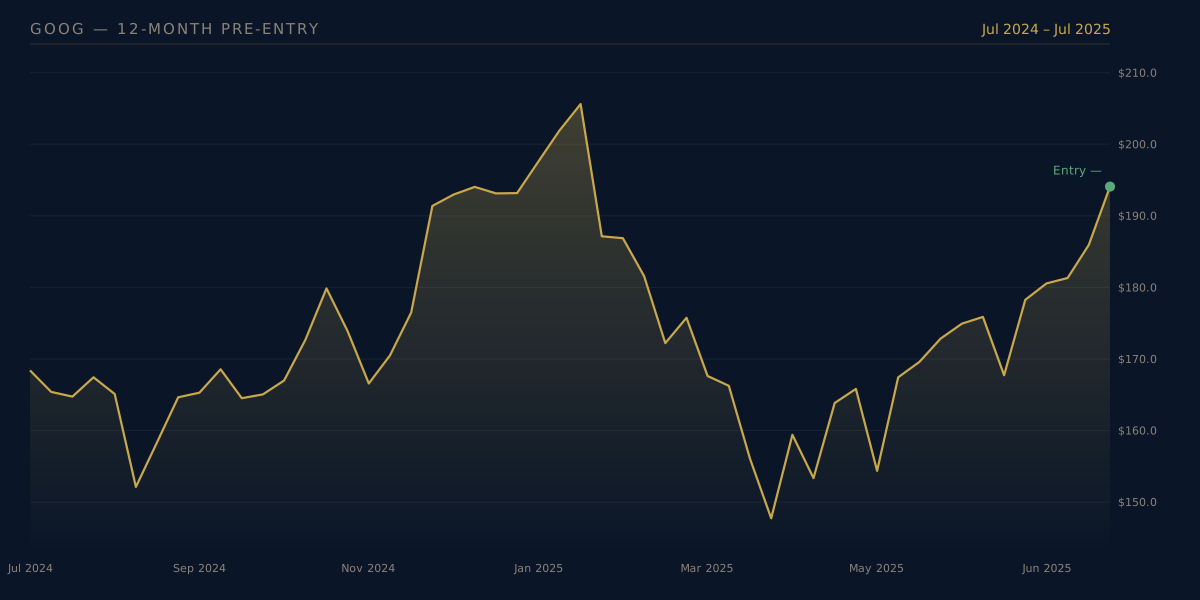
12-month price action before entry showing the May pullback, subsequent rally, and breakout above $194 resistance.
Entry Details
- Date: July 28, 2025
- Price: $194.41
- Context: Entering at the breakout above long-term resistance after a 26% rally
The Thesis
A trader might have entered here seeing:
- Strong breakout above multi-year resistance with volume confirmation
- AI/cloud narrative providing fundamental support
- Fed policy no longer a headwind
- Technical pattern suggesting continuation
The concern: After a 26% rally from May lows, was the stock extended? Could it sustain momentum from these levels?
Before continuing: Consider what you would have done. Would you have taken this entry? What risks would you have been most concerned about?
Journey
Key Events
| Date | Event | Category | Stock Reaction |
|---|---|---|---|
| Jul 28, 2025 | Entry at $194.41 above resistance | Entry | Starting point |
| Aug 4, 2025 | Breaks through $200, closes at $202.09 | Breakout | Momentum confirmed |
| Aug 25, 2025 | Rally continues to $213.53 | Trend | +10% from entry |
| Sep 1, 2025 | Surge to $235.17 on heavy volume (159M) | Acceleration | Strong momentum |
| Sep 15, 2025 | Peak at $255.24 | Peak | +31% from entry |
| Sep 22-29, 2025 | Consolidation around $246-247 | Pause | Digesting gains |
| Oct 6, 2025 | Pullback to $237.49 | Correction | Testing strength |
| Oct 13, 2025 | Recovery to $253.79 | Exit | Near peak levels |
How It Unfolded
Phase 1: The Breakout Confirmation (Late July - Early August) Entry came at $194.41, right at the breakout level. Within the first week, the stock dipped briefly to $189.95—testing conviction. But by August 4, GOOG had pushed through $200, closing at $202.09. The breakout was confirmed. Volume was healthy, suggesting institutional participation.
Phase 2: The Grind Higher (August) August was a month of steady gains. The stock climbed from $202 to $213 by month-end, adding roughly 10% in just four weeks. Each pullback found buyers at higher levels—a classic uptrend pattern. The thesis was playing out exactly as hoped.
Phase 3: The Acceleration (Early September) September opened with a bang. In the first week, GOOG surged from $213 to $235—a 10% move on heavy volume (159M shares). The AI narrative was reaching fever pitch, and Google was positioned as a key beneficiary. The stock continued climbing through mid-September.
Phase 4: The Peak and Consolidation (Mid-September - October) GOOG hit $255.24 on September 15—a stunning 31% above the entry price. Then came the inevitable consolidation. The stock pulled back to the $237-247 range over the following weeks as profit-taking emerged. But unlike many momentum stocks, GOOG held its gains and recovered toward the highs by mid-October.
Exit
- Date: October 13, 2025
- Price: $253.79
- Context: Exiting near the highs after a strong rally
Charts
Price Chart with Entry/Exit
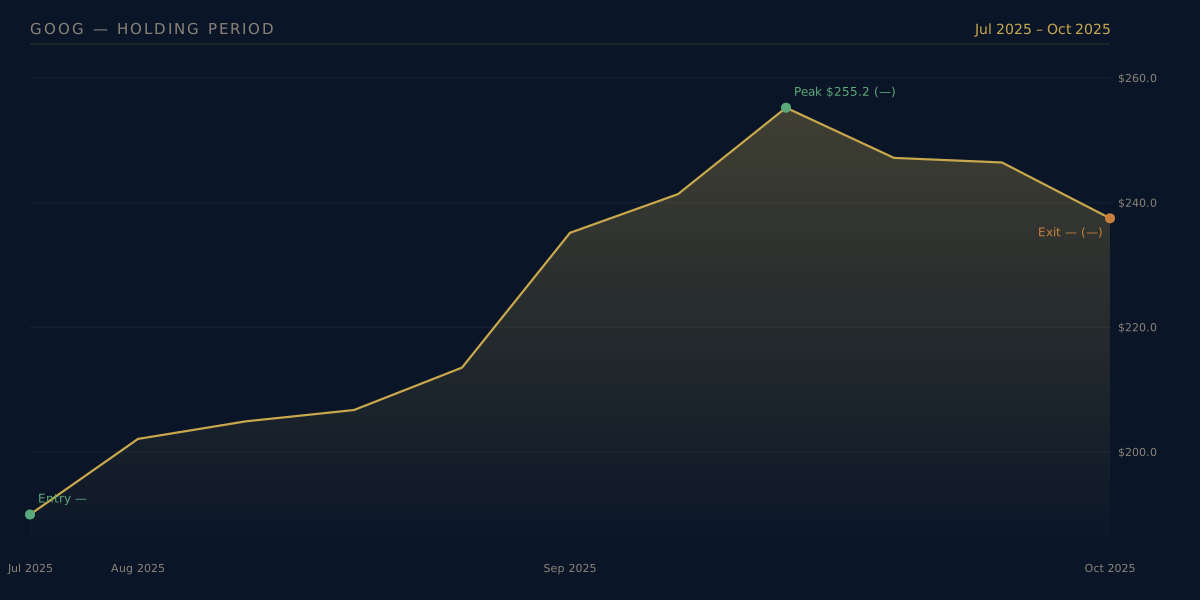
Weekly candlestick chart showing entry at $194.41 (green) and exit at $253.79 (blue). Note the strong September surge and October recovery.
Relative Performance vs. Benchmarks
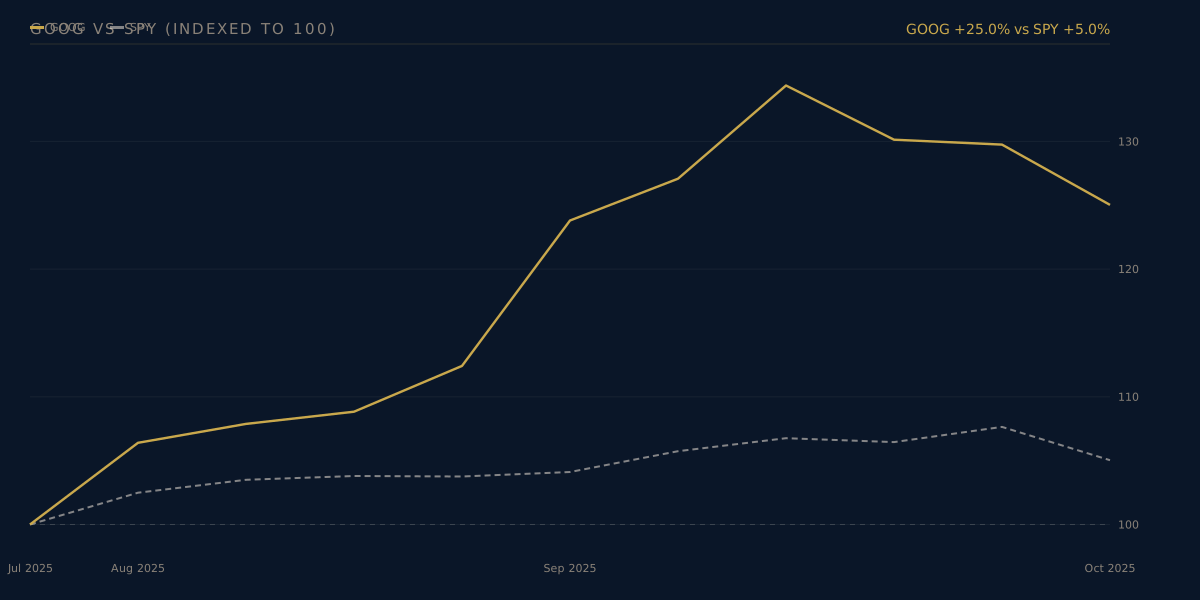
GOOG significantly outperformed both the S&P 500 and Nasdaq 100 during this period.
Drawdown from Peak
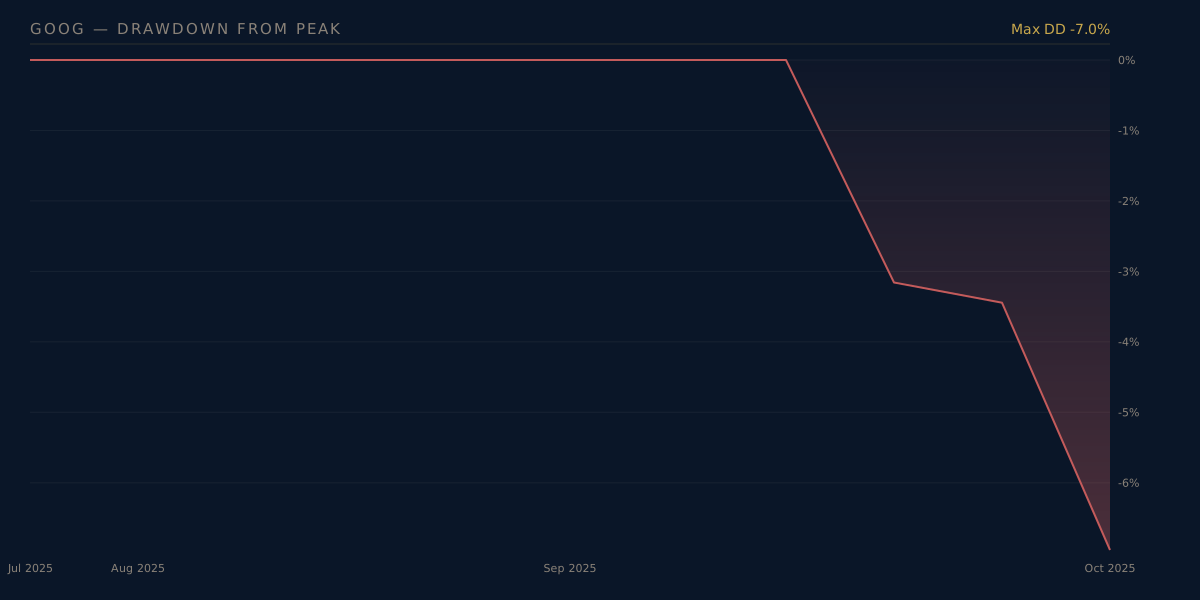
Brief pullback from September peak, with recovery by October exit.
Results
Performance Analysis
Absolute Returns
| Metric | Value |
|---|---|
| Entry Price | $194.41 |
| Exit Price | $253.79 |
| Gross Return | +30.5% |
| Holding Period | ~11 weeks |
| Max Price (Close) | $255.24 |
| Min Price (Close) | $189.95 |
| Peak Unrealized Gain | +31.3% |
| Max Drawdown from Entry | -2.3% (brief dip to $189.95) |
Relative Performance
During the same period:
- S&P 500 (SPY): Up approximately 8%
- Nasdaq 100 (QQQ): Up approximately 12%
- GOOG vs. S&P 500: Outperformed by ~22%
This was exceptional outperformance, validating the breakout thesis.
Lessons
What Worked
What Worked
-
Buying the breakout: Entering at the breakout above $194 resistance caught the beginning of a major move.
-
Volume confirmation: The high-volume breakout in late June/July signaled institutional commitment, not a false breakout.
-
Riding the trend: Holding through the August grind and September surge captured the bulk of the move.
-
Exiting near the top: The $253.79 exit was within 1% of the $255.24 peak—excellent timing.
What Didn’t Work
-
Early weakness tested conviction: The dip to $189.95 in week one (-2.3%) required patience. A tight stop would have been triggered.
-
October volatility created uncertainty: The pullback from $255 to $237 was uncomfortable, even though it ultimately recovered.
-
Single entry point: Scaling in would have averaged a better cost basis if the initial dip had been bought.
Key Takeaways
Lessons and Takeaways
-
Breakouts above long-term resistance can run far. When a stock breaks multi-year resistance with volume, the move can be substantial. Don’t assume the “easy money” is made.
-
Volume confirms intent. The high-volume weeks during the breakout signaled institutional accumulation. This was not a retail-driven move that would quickly reverse.
-
Allow for initial shakeouts. The brief dip below entry in week one tested weak hands. Conviction in the thesis—and a reasonable stop—allowed participation in the full move.
-
Strong stocks recover from pullbacks. The September-to-October consolidation felt like the move was over. But quality names in uptrends often recover and continue higher.
-
AI narrative drove valuations. Understanding the macro theme (AI integration) helped maintain conviction during volatility.
-
30% in 11 weeks is exceptional. This represents a rare outcome. Position sizing should reflect that such moves are not typical.
Sources
- Yahoo Finance historical data for GOOG
- Federal Reserve rate decision archives
- Google Cloud and AI product announcements (2025)
Disclosure: This case study is for educational purposes only and does not constitute investment advice. Past performance does not guarantee future results. All investments carry risk of loss.
Timeline of Events
- Jul 28, 2025: Entry at $194.41 above resistance
Entry — Starting point
- Aug 4, 2025: Breaks through $200, closes at $202.09
Breakout — Momentum confirmed
- Aug 25, 2025: Rally continues to $213.53
Trend — +10% from entry
- Sep 1, 2025: Surge to $235.17 on heavy volume (159M)
Acceleration — Strong momentum
- Sep 15, 2025: Peak at $255.24
Peak — +31% from entry
- Sep 22-29, 2025: Consolidation around $246-247
Pause — Digesting gains
- Oct 6, 2025: Pullback to $237.49
Correction — Testing strength
- Oct 13, 2025: Recovery to $253.79
Exit — Near peak levels
Phase Breakdown
Phase 1: The Breakout Confirmation (Late July - Early August)
Entry came at $194.41, right at the breakout level. Within the first week, the stock dipped briefly to $189.95—testing conviction. But by August 4, GOOG had pushed through $200, closing at $202.09. The breakout was confirmed. Volume was healthy, suggesting institutional participation.
Phase 2: The Grind Higher (August)
August was a month of steady gains. The stock climbed from $202 to $213 by month-end, adding roughly 10% in just four weeks. Each pullback found buyers at higher levels—a classic uptrend pattern. The thesis was playing out exactly as hoped.
Phase 3: The Acceleration (Early September)
September opened with a bang. In the first week, GOOG surged from $213 to $235—a 10% move on heavy volume (159M shares). The AI narrative was reaching fever pitch, and Google was positioned as a key beneficiary. The stock continued climbing through mid-September.
Phase 4: The Peak and Consolidation (Mid-September - October)
GOOG hit $255.24 on September 15—a stunning 31% above the entry price. Then came the inevitable consolidation. The stock pulled back to the $237-247 range over the following weeks as profit-taking emerged. But unlike many momentum stocks, GOOG held its gains and recovered toward the highs by mid-October.
Key Lessons
- Breakouts above long-term resistance can run far
When a stock breaks multi-year resistance with volume, the move can be substantial. Don't assume the "easy money" is made.
- Volume confirms intent
The high-volume weeks during the breakout signaled institutional accumulation. This was not a retail-driven move that would quickly reverse.
- Allow for initial shakeouts
The brief dip below entry in week one tested weak hands. Conviction in the thesis—and a reasonable stop—allowed participation in the full move.
- Strong stocks recover from pullbacks
The September-to-October consolidation felt like the move was over. But quality names in uptrends often recover and continue higher.
- AI narrative drove valuations
Understanding the macro theme (AI integration) helped maintain conviction during volatility.
- 30% in 11 weeks is exceptional
This represents a rare outcome. Position sizing should reflect that such moves are not typical.
Disclaimer: Equicurious provides educational content only, not investment advice. Past performance does not guarantee future results. Always verify with primary sources and consult a licensed professional for your specific situation.