Setup
Executive Summary
By late July 2025, IBM had just experienced a jarring reversal. After rallying from $249 to $292 over the prior 12 weeks, the stock collapsed in a single week—dropping 26 points to $259 on volume that spiked 183% above average. The selloff was violent and raised a critical question: was this the start of something worse, or an opportunity?
The company’s fundamentals hadn’t changed dramatically. IBM’s hybrid cloud strategy was progressing, AI integration (particularly watsonx) was gaining traction, and enterprise spending remained stable. The selloff appeared to be profit-taking after a strong run rather than a fundamental breakdown.
This case study follows a trade that entered after the crash, testing whether the $252 support level would hold and the uptrend could resume.
What Was Observable Before Entry
Pre-Trade Environment
What Was Observable Before Entry (May - July 2025)
Macro Regime:
- Enterprise IT spending remained resilient
- AI adoption was accelerating across industries
- Interest rates had stabilized, supporting tech valuations
- No major macro shocks on the immediate horizon
Company-Specific Setup:
- IBM had rallied from $249 to $292 (+17%) from May to late June
- A violent 26-point drop in late July (week of July 21) on 46M volume
- The selloff took the stock back to $259—erasing much of the rally
- Support at $252 (the May low) was being tested
Sector Momentum:
- Enterprise software and cloud names were performing well
- AI-related names seeing strong interest
- Legacy tech names gaining from AI integration narratives
Sentiment:
- Nervous after the sharp reversal
- Volume spike suggested capitulation selling
- But fundamentals hadn’t deteriorated
- $252 support level was a clear line in the sand
Thesis Formation
A trader might have entered here seeing:
- Sharp selloff creating a potential entry after a strong rally
- $252 support level providing a clear stop loss point
- Fundamentals unchanged despite the price action
- High-volume selloff could signal exhaustion
The concern: Was this profit-taking after a rally, or the start of a deeper correction? Could the stock recover, or would it continue lower?
Entry
What Was Observable at Entry
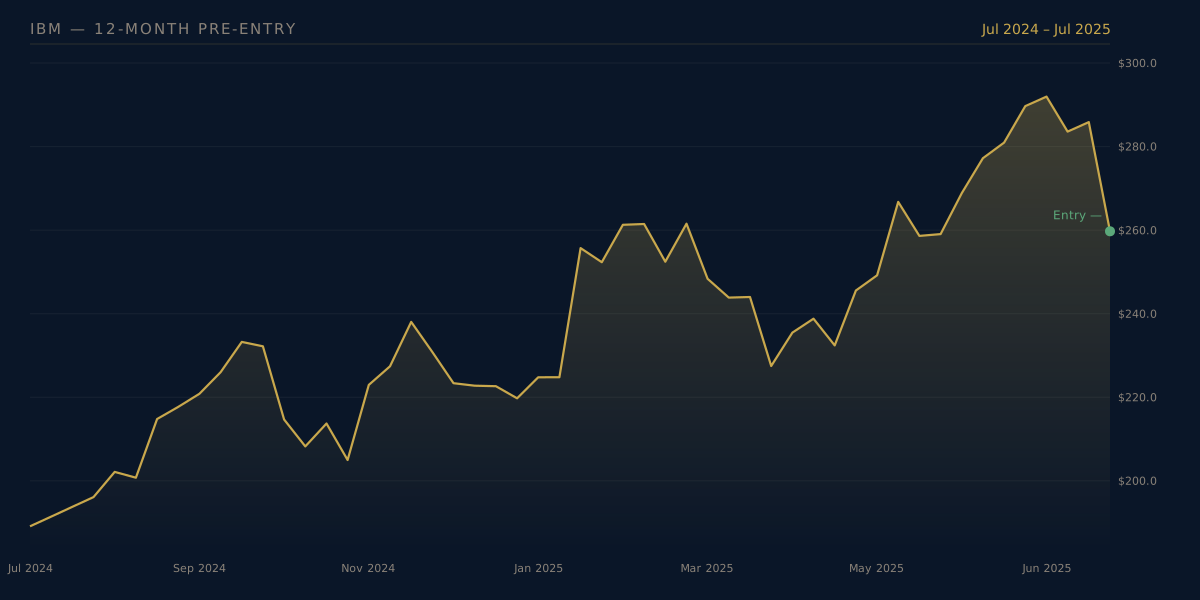
12-month price action before entry showing the May-July rally and the sharp late-July reversal.
Entry Details
- Date: July 28, 2025
- Price: $260.30
- Context: Entering after a 26-point selloff, betting on support holding
The Thesis
A trader might have entered here seeing:
- Sharp selloff creating a potential entry after a strong rally
- $252 support level providing a clear stop loss point
- Fundamentals unchanged despite the price action
- High-volume selloff could signal exhaustion
The concern: Was this profit-taking after a rally, or the start of a deeper correction? Could the stock recover, or would it continue lower?
Before continuing: Consider what you would have done. Would you have taken this entry? What risks would you have been most concerned about?
Journey
Key Events
| Date | Event | Category | Stock Reaction |
|---|---|---|---|
| Jul 28, 2025 | Entry at $260.30 after sharp selloff | Entry | Starting point |
| Aug 4, 2025 | Further decline to $242.27 | Weakness | Testing conviction |
| Aug 11, 2025 | Low at $233.36, close at $239.72 | Trough | -10% from entry |
| Aug 18-25, 2025 | Stabilization around $242-243 | Base building | Volume declining |
| Sep 1-8, 2025 | Rally resumes, reaches $253-266 | Recovery | Trend turning |
| Sep 15, 2025 | Surge to $284.31 on 34M volume | Breakout | +9% from entry |
| Sep 22, 2025 | Peak at $293.32, close at $288.37 | Peak | +11% from entry |
| Oct 6, 2025 | Pullback to $277.82 | Correction | Giving back some gains |
| Oct 13, 2025 | Recovery to $281.28 | Exit | +8% from entry |
How It Unfolded
Phase 1: The Test of Conviction (Late July - Early August) The trade began poorly. Despite entering after a sharp selloff, IBM continued lower—dropping from $260 to $242 in the first two weeks. Volume remained elevated (28-30M shares), suggesting continued selling pressure. The thesis was being tested immediately.
Phase 2: The Low and Base Building (Mid-August) August 11 marked the low at $233.36—a gut-wrenching 10% below entry. But crucially, this held above the critical $252 support from the lead-in (which had briefly been breached). Over the next two weeks, the stock stabilized in the $239-243 range as volume declined—a sign that selling pressure was exhausting.
Phase 3: The Recovery Rally (September) September brought the turnaround. The stock climbed from $243 to $284 in just four weeks—a 17% surge. Volume picked up on the advance, with 34M shares trading on the week of the breakout. The uptrend was clearly resuming.
Phase 4: Peak and Consolidation (Late September - October) IBM touched $293.32 in late September—up 11% from entry and nearly recovering to the prior highs. A pullback to $277 in early October was uncomfortable, but the stock recovered to $281 by exit. The trade ended with solid gains despite the rocky start.
Exit
- Date: October 13, 2025
- Price: $281.28
- Context: Exiting with +8% gain after volatile journey
Charts
Price Chart with Entry/Exit
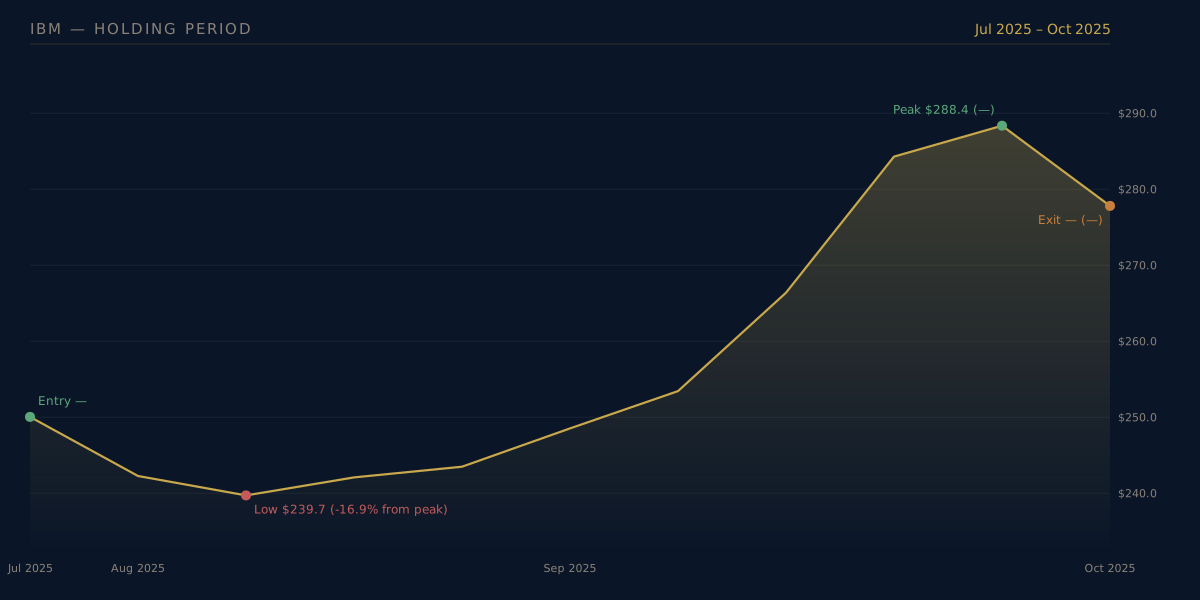
Weekly candlestick chart showing entry at $260.30 (green) and exit at $281.28 (blue). Note the August low and September recovery.
Relative Performance vs. Benchmarks
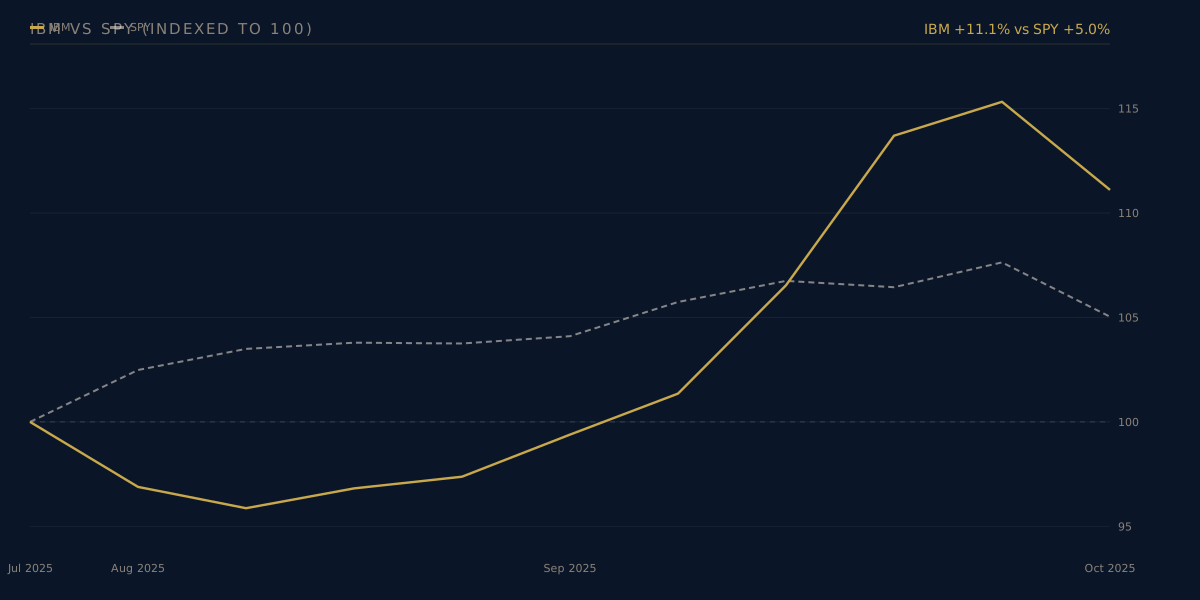
IBM outperformed the S&P 500 during this period despite early weakness.
Drawdown from Peak
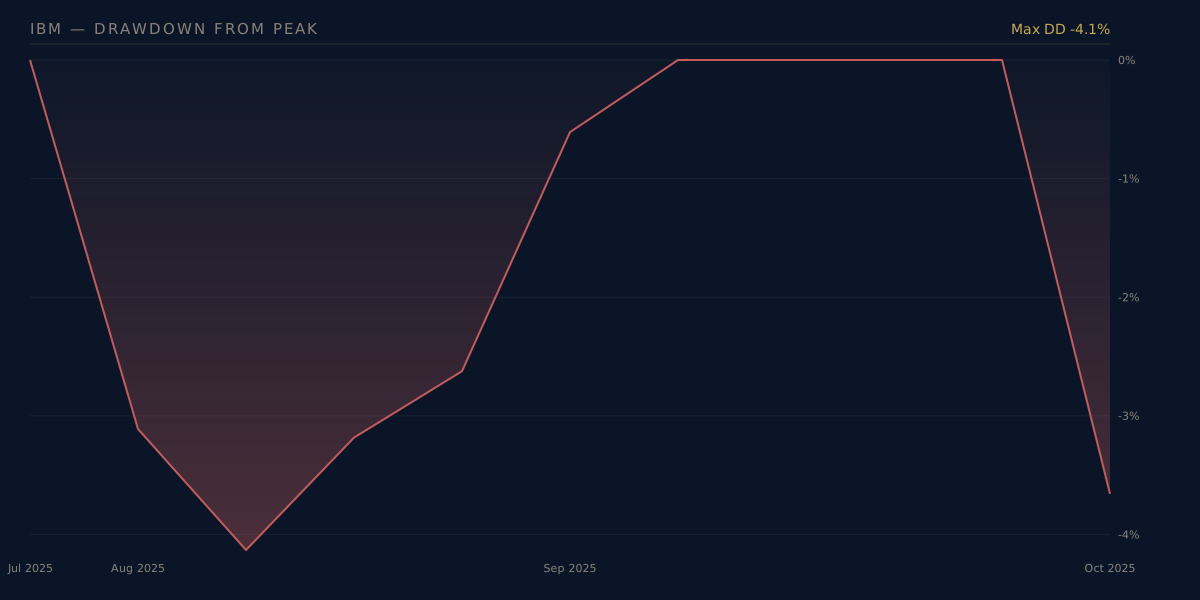
The 10% drawdown from entry tested conviction before the recovery.
Results
Performance Analysis
Absolute Returns
| Metric | Value |
|---|---|
| Entry Price | $260.30 |
| Exit Price | $281.28 |
| Gross Return | +8.1% |
| Holding Period | ~11 weeks |
| Max Price (Close) | $288.37 |
| Min Price (Close) | $239.72 |
| Max Drawdown from Entry | -10.3% |
| Peak Unrealized Gain | +10.8% |
Relative Performance
During the same period:
- S&P 500 (SPY): Up approximately 5%
- Tech Sector (XLK): Up approximately 6%
- IBM vs. S&P 500: Outperformed by ~3%
Solid outperformance, though achieved through significant volatility.
Lessons
What Worked
What Worked
-
Buying after the crash: Entering after the 26-point selloff caught the stock near a low, even though it went lower initially.
-
Holding through the drawdown: The 10% decline was painful, but holding allowed participation in the recovery.
-
Volume as a guide: The high-volume selloff in late July suggested capitulation. Declining volume during the base-building phase confirmed selling exhaustion.
-
Support held (eventually): While the stock briefly broke below $252, it found buyers and recovered—validating the support thesis.
What Didn’t Work
-
Immediate pain after entry: Buying at $260 and watching it fall to $233 is psychologically difficult. A staged entry would have averaged in at better prices.
-
No scale-out at the peak: The $288-293 area was the high. Taking partial profits there would have locked in more gains.
-
10% drawdown required significant conviction: Without strong conviction in the thesis, this trade could have been stopped out at the lows.
Key Takeaways
Lessons and Takeaways
-
Selloffs after rallies can be opportunities. The violent late-July drop wiped out gains, but created a better entry for patient buyers.
-
Early pain doesn’t mean wrong thesis. The trade went 10% against before working. Entry timing is often imperfect even when the direction is correct.
-
Volume tells the story. High volume on the selloff, declining volume during the base, and rising volume on the recovery confirmed each phase.
-
Define your stop before entry. Knowing that $252 was the key support level provided a clear exit point if the thesis failed.
-
Staged entries reduce timing risk. Entering 1/3 at $260, 1/3 at $245, and 1/3 at $235 would have produced a much better average cost.
-
Take profits at resistance. The $290+ area was the prior peak. Scaling out there would have captured more of the move.
Sources
- Yahoo Finance historical data for IBM
- IBM quarterly earnings reports (2025)
- Enterprise IT spending surveys
Disclosure: This case study is for educational purposes only and does not constitute investment advice. Past performance does not guarantee future results. All investments carry risk of loss.
Timeline of Events
- Jul 28, 2025: Entry at $260.30 after sharp selloff
Entry — Starting point
- Aug 4, 2025: Further decline to $242.27
Weakness — Testing conviction
- Aug 11, 2025: Low at $233.36, close at $239.72
Trough — -10% from entry
- Aug 18-25, 2025: Stabilization around $242-243
Base building — Volume declining
- Sep 1-8, 2025: Rally resumes, reaches $253-266
Recovery — Trend turning
- Sep 15, 2025: Surge to $284.31 on 34M volume
Breakout — +9% from entry
- Sep 22, 2025: Peak at $293.32, close at $288.37
Peak — +11% from entry
- Oct 6, 2025: Pullback to $277.82
Correction — Giving back some gains
- Oct 13, 2025: Recovery to $281.28
Exit — +8% from entry
Phase Breakdown
Phase 1: The Test of Conviction (Late July - Early August)
The trade began poorly. Despite entering after a sharp selloff, IBM continued lower—dropping from $260 to $242 in the first two weeks. Volume remained elevated (28-30M shares), suggesting continued selling pressure. The thesis was being tested immediately.
Phase 2: The Low and Base Building (Mid-August)
August 11 marked the low at $233.36—a gut-wrenching 10% below entry. But crucially, this held above the critical $252 support from the lead-in (which had briefly been breached). Over the next two weeks, the stock stabilized in the $239-243 range as volume declined—a sign that selling pressure was exhausting.
Phase 3: The Recovery Rally (September)
September brought the turnaround. The stock climbed from $243 to $284 in just four weeks—a 17% surge. Volume picked up on the advance, with 34M shares trading on the week of the breakout. The uptrend was clearly resuming.
Phase 4: Peak and Consolidation (Late September - October)
IBM touched $293.32 in late September—up 11% from entry and nearly recovering to the prior highs. A pullback to $277 in early October was uncomfortable, but the stock recovered to $281 by exit. The trade ended with solid gains despite the rocky start.
Key Lessons
- Selloffs after rallies can be opportunities
The violent late-July drop wiped out gains, but created a better entry for patient buyers.
- Early pain doesn't mean wrong thesis
The trade went 10% against before working. Entry timing is often imperfect even when the direction is correct.
- Volume tells the story
High volume on the selloff, declining volume during the base, and rising volume on the recovery confirmed each phase.
- Define your stop before entry
Knowing that $252 was the key support level provided a clear exit point if the thesis failed.
- Staged entries reduce timing risk
Entering 1/3 at $260, 1/3 at $245, and 1/3 at $235 would have produced a much better average cost.
- Take profits at resistance
The $290+ area was the prior peak. Scaling out there would have captured more of the move.
Disclaimer: Equicurious provides educational content only, not investment advice. Past performance does not guarantee future results. Always verify with primary sources and consult a licensed professional for your specific situation.