Setup
In late 2014, Microsoft was in the early stages of its transformation under Satya Nadella. The cloud pivot was underway, Azure was growing, and Office 365 was gaining traction. The stock had rallied from $42 in October to nearly $50 in November, riding optimism about the new direction.
But storm clouds were gathering. The Fed had just ended QE3. Oil prices were collapsing toward $50 per barrel. The dollar was surging, crushing multinational earnings. And earnings season loomed with foreign exchange headwinds clearly visible.
This case study follows a trade that entered a strong fundamental story at the wrong macro moment. What happens when company-specific tailwinds meet macro headwinds?
What Was Observable Before Entry
What Was Observable Before Entry (September - November 2014)
Macro Regime:
- Fed had ended QE3 in October 2014
- Dollar was strengthening rapidly
- Oil was collapsing (WTI heading toward $50)
- Europe flirting with deflation; ECB QE speculation building
- Global growth fears had caused an October correction
Company-Specific Setup:
- MSFT had rallied from $42 (October low) to nearly $50 (November high)
- Satya Nadella’s cloud pivot was gaining traction
- Azure and Office 365 growing strongly
- But PC/Windows revenue still significant and exposed to dollar strength
- Stock had recovered from October selloff and was near 52-week highs
Sector Momentum:
- Tech was mixed; cloud names strong but hardware weak
- FX headwinds becoming a theme for multinationals
- Enterprise spending cautiously optimistic
Sentiment:
- Bullish on the cloud transformation story
- But October’s sharp selloff showed market fragility
- Earnings season approaching with FX risk elevated
Thesis Formation
A trader might have entered here seeing:
- Strong fundamental story with cloud transformation
- Stock had recovered from October lows, showing buyer conviction
- Near new highs, suggesting breakout potential
- Satya’s vision gaining investor confidence
The concern: Dollar strength could pressure earnings. Entering after a rally from $42 to $48 meant limited upside with FX risks ahead.
Entry
What Was Observable at Entry
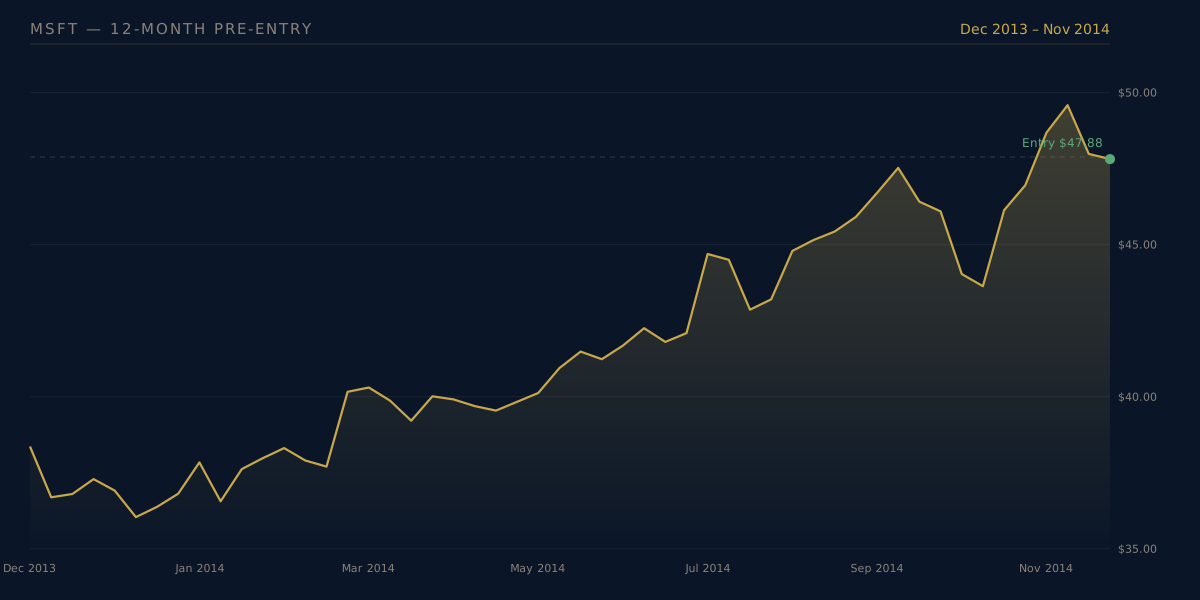
12-month price action before entry showing the October selloff, November recovery, and entry near recent highs.
Entry Details
- Date: December 1, 2014
- Price: $47.88
- Context: Entering after the October-November recovery, betting on continuation
The Thesis
A trader might have entered here seeing:
- Strong fundamental story with cloud transformation
- Stock had recovered from October lows, showing buyer conviction
- Near new highs, suggesting breakout potential
- Satya’s vision gaining investor confidence
The concern: Dollar strength could pressure earnings. Entering after a rally from $42 to $48 meant limited upside with FX risks ahead.
Before continuing: Consider what you would have done. Would you have taken this entry? What risks would you have been most concerned about?
Journey
Key Events
| Date | Event | Category | Stock Reaction |
|---|---|---|---|
| Dec 1, 2014 | Entry at $47.88 near recent highs | Entry | Starting point |
| Dec 1, 2014 | Stock touches $48.42 (trade peak) | Peak | +1.1% from entry |
| Dec 15, 2014 | Oil collapse accelerates, stock drops to $47.66 | Macro | Volatility rising |
| Jan 5, 2015 | Drift lower to $47.19 | Weakness | Trend deteriorating |
| Jan 15, 2015 | SNB removes CHF peg, global volatility spike | Macro | Risk-off |
| Jan 26, 2015 | Earnings gap-down to $40.40 on 438M volume | Crash | -15.6% from entry |
| Feb 2, 2015 | Stabilization at $42.41 | Recovery | Bouncing |
| Feb 16, 2015 | Exit at $43.86 | Exit | -8.4% from entry |
How It Unfolded
Phase 1: False Dawn (Early December) The trade began well enough. In the first week, MSFT touched $48.42—a new high for the period and 1% above entry. But this proved to be the peak. Oil was collapsing, and risk appetite was fading.
Phase 2: The Slow Bleed (December - January) Through December and early January, the stock drifted lower. From $48.42 to $46.24 by mid-January—a 4.5% decline that didn’t feel alarming but was steadily eroding the position. Volume was moderate, and the selling wasn’t panicked.
Phase 3: The Gap-Down (Late January) Then came the earnings gap. On January 26, Microsoft reported earnings. Revenue guidance included significant FX headwinds. The stock gapped from $46 to $40—a stunning 13% overnight drop. Volume exploded to 438 million shares. This was the moment that transformed a modest loss into a painful one.
Phase 4: The Partial Recovery (February) After the gap, the stock stabilized. By mid-February, it had recovered to $43.86—still down 8.4% from entry, but significantly better than the $40 low. The worst was over, but the damage was done.
Exit
- Date: February 16, 2015
- Price: $43.86
- Context: Exiting with -8.4% loss after partial recovery from gap-down
Charts
Price Chart with Entry/Exit
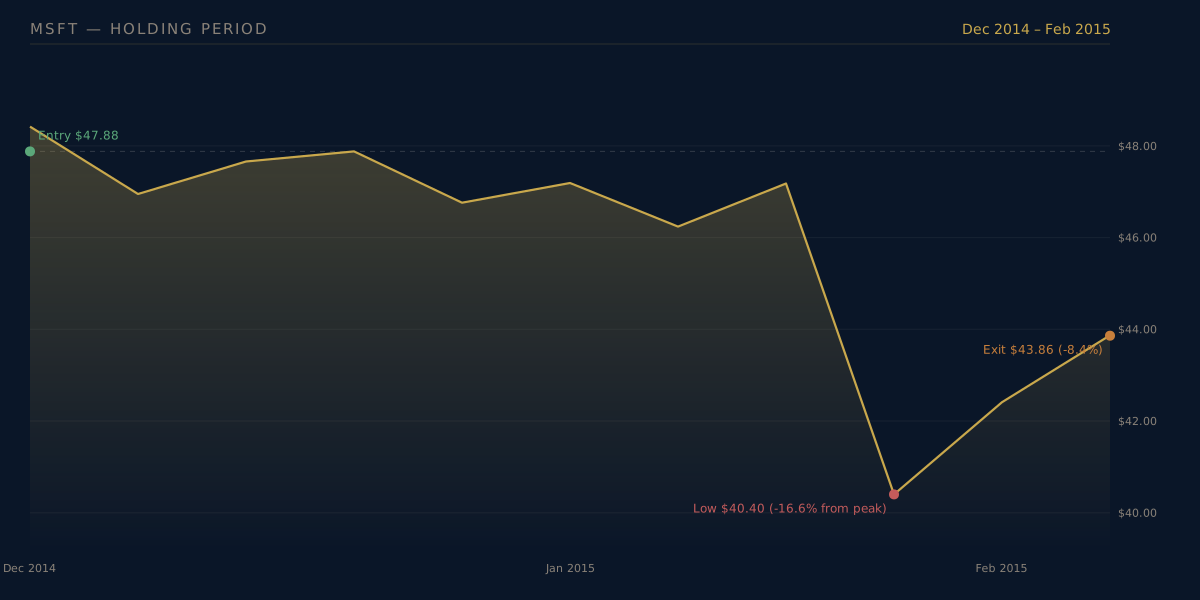
Weekly candlestick chart showing entry at $47.88 (green) and exit at $43.86 (blue). Note the devastating January gap-down.
Relative Performance vs. Benchmarks
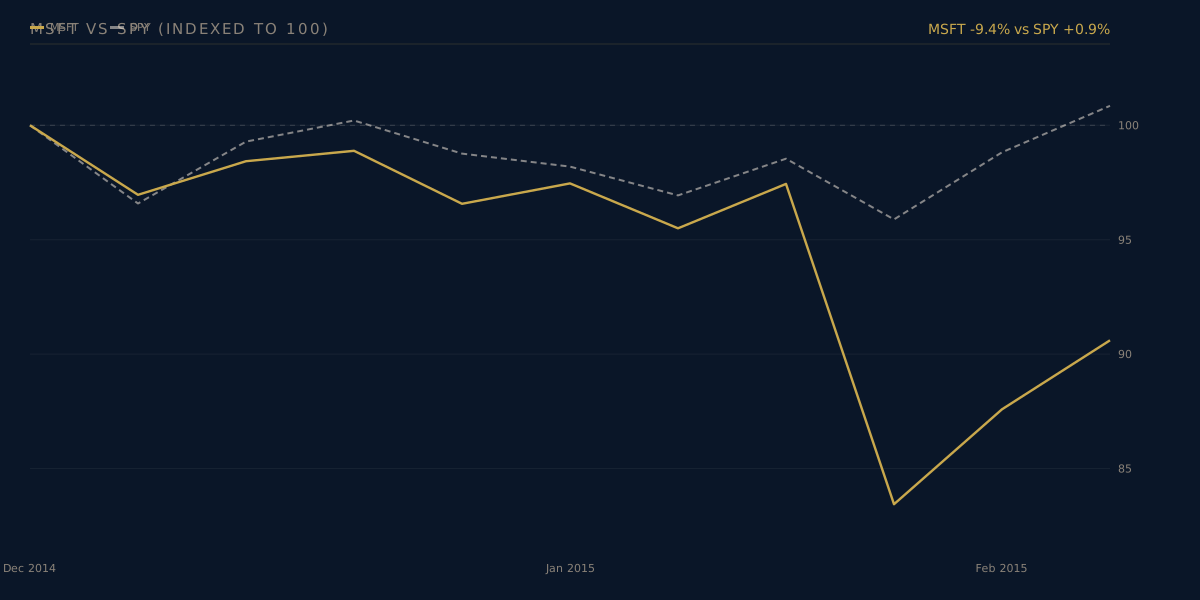
MSFT underperformed the S&P 500 due to the earnings-driven gap-down.
Drawdown from Peak
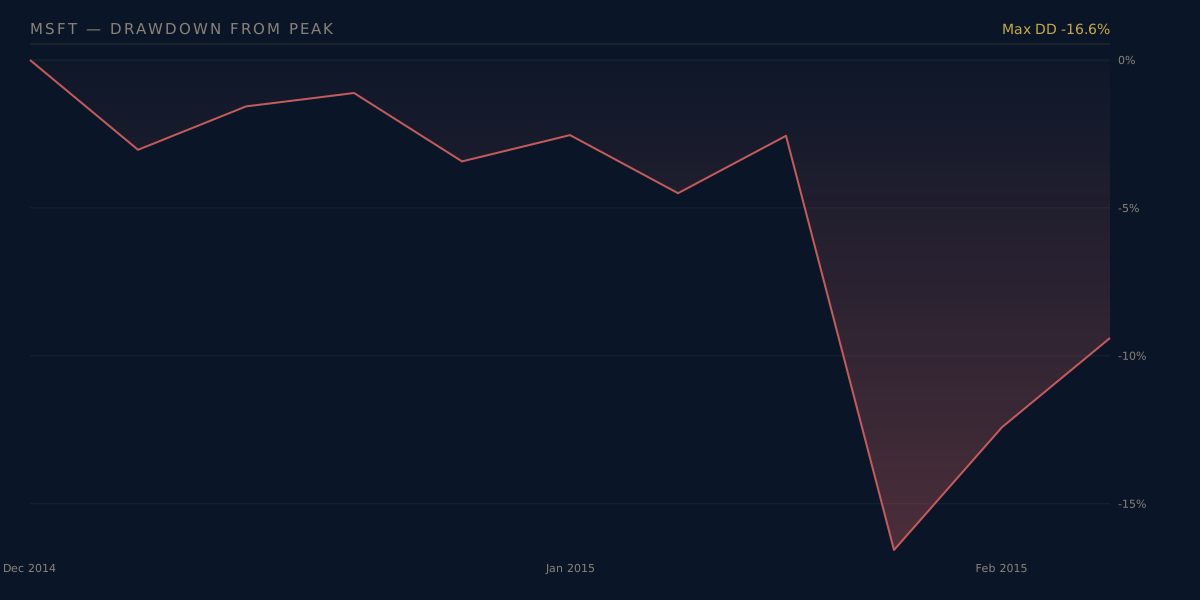
The 16% drawdown from peak illustrates the violence of the January selloff.
Results
Absolute Returns
| Metric | Value |
|---|---|
| Entry Price | $47.88 |
| Exit Price | $43.86 |
| Gross Return | -8.4% |
| Holding Period | ~11 weeks |
| Max Price (Close) | $48.42 |
| Min Price (Close) | $40.40 |
| Max Drawdown from Entry | -15.6% |
| Peak-to-Trough Drawdown | -16.6% |
Relative Performance
During the same period:
- S&P 500 (SPY): Approximately flat
- Tech Sector (XLK): Down approximately 3%
- MSFT vs. S&P 500: Underperformed by ~8%
Microsoft significantly underperformed due to the earnings gap, even as the broader market was stable.
Lessons
What Worked
-
Held through the gap and recovered partially: Panic selling at $40 would have locked in a 16% loss. Holding allowed a partial recovery to -8%.
-
Fundamental thesis was correct long-term: Microsoft’s cloud pivot did work—just not on this trade’s timeline.
-
Avoided adding to a loser: No additional capital was committed as the position deteriorated.
What Didn’t Work
-
No stop loss: A stop at -10% would have limited the loss to $43—roughly where the trade ended anyway, but with less stress.
-
Entered after a significant rally: Buying at $48 after a run from $42 left little margin of safety.
-
Underestimated FX risk: The dollar’s strength was visible, but its impact on earnings was underpriced.
-
Earnings risk unhedged: Holding through earnings without protection (puts, reduced size) exposed the position to gap risk.
-
Macro environment ignored: Oil collapse, Fed taper, dollar strength—all were warning signs that weren’t heeded.
Key Takeaways
-
Late entries into maturing trends are fragile. Buying after a 15% rally leaves little upside and exposes you to the inevitable pullback.
-
Macro trumps micro in the short term. Microsoft’s cloud story was real, but FX headwinds crushed the stock. Company fundamentals can be overwhelmed by macro forces.
-
Earnings gaps are binary risk. Holding through earnings without hedges is a coin flip. Consider reducing size or buying puts before major announcements.
-
Dollar strength matters for multinationals. When the dollar is surging, multinational earnings will disappoint. Microsoft had significant international exposure.
-
Partial recovery doesn’t equal success. Recovering from -16% to -8% feels like a win, but it’s still a loss. The capital was tied up for 11 weeks with a negative return.
-
Define your risk before entry. Without a predetermined stop or hedge, you’re at the mercy of the tape.
Sources
- Yahoo Finance historical data for MSFT
- Federal Reserve QE3 timeline
- Oil price data (WTI, 2014-2015)
- Microsoft quarterly earnings (January 2015)
Disclosure: This case study is for educational purposes only and does not constitute investment advice. Past performance does not guarantee future results. All investments carry risk of loss.
Timeline of Events
- Dec 1, 2014: Entry at $47.88 near recent highs
Entry — Starting point
- Dec 1, 2014: Stock touches $48.42 (trade peak)
Peak — +1.1% from entry
- Dec 15, 2014: Oil collapse accelerates, stock drops to $47.66
Macro — Volatility rising
- Jan 5, 2015: Drift lower to $47.19
Weakness — Trend deteriorating
- Jan 15, 2015: SNB removes CHF peg, global volatility spike
Macro — Risk-off
- Jan 26, 2015: Earnings gap-down to $40.40 on 438M volume
Crash — -15.6% from entry
- Feb 2, 2015: Stabilization at $42.41
Recovery — Bouncing
- Feb 16, 2015: Exit at $43.86
Exit — -8.4% from entry
Phase Breakdown
Phase 1: False Dawn (Early December)
The trade began well enough. In the first week, MSFT touched $48.42—a new high for the period and 1% above entry. But this proved to be the peak. Oil was collapsing, and risk appetite was fading.
Phase 2: The Slow Bleed (December - January)
Through December and early January, the stock drifted lower. From $48.42 to $46.24 by mid-January—a 4.5% decline that didn't feel alarming but was steadily eroding the position. Volume was moderate, and the selling wasn't panicked.
Phase 3: The Gap-Down (Late January)
Then came the earnings gap. On January 26, Microsoft reported earnings. Revenue guidance included significant FX headwinds. The stock gapped from $46 to $40—a stunning 13% overnight drop. Volume exploded to 438 million shares. This was the moment that transformed a modest loss into a painful one.
Phase 4: The Partial Recovery (February)
After the gap, the stock stabilized. By mid-February, it had recovered to $43.86—still down 8.4% from entry, but significantly better than the $40 low. The worst was over, but the damage was done.
Key Lessons
- Late entries into maturing trends are fragile
Buying after a 15% rally leaves little upside and exposes you to the inevitable pullback.
- Macro trumps micro in the short term
Microsoft's cloud story was real, but FX headwinds crushed the stock. Company fundamentals can be overwhelmed by macro forces.
- Earnings gaps are binary risk
Holding through earnings without hedges is a coin flip. Consider reducing size or buying puts before major announcements.
- Dollar strength matters for multinationals
When the dollar is surging, multinational earnings will disappoint. Microsoft had significant international exposure.
- Partial recovery doesn't equal success
Recovering from -16% to -8% feels like a win, but it's still a loss. The capital was tied up for 11 weeks with a negative return.
- Define your risk before entry
Without a predetermined stop or hedge, you're at the mercy of the tape.
Disclaimer: Equicurious provides educational content only, not investment advice. Past performance does not guarantee future results. Always verify with primary sources and consult a licensed professional for your specific situation.