Setup
Executive Summary
In late July 2025, Intel was at a crossroads. The stock had been bouncing between $19 and $24 for months, going nowhere. The company was executing on its foundry ambitions, but skeptics questioned whether the turnaround would ever materialize. At $21, the stock was cheap—but cheap for a reason.
Then the narrative shifted. News of major foundry wins and government subsidies reignited interest in the restructuring story. Volume exploded. And what followed was one of the most dramatic rallies in Intel’s recent history.
This case study follows a trade that caught the breakout—but also endured early pain before the thesis worked. How do you hold through initial losses when the eventual move is spectacular?
What Was Observable Before Entry
Pre-Trade Environment
What Was Observable Before Entry (May - July 2025)
Macro Regime:
- Semiconductor spending remained robust
- Government subsidies (CHIPS Act) were flowing to domestic manufacturers
- AI chip demand was surging, though Intel was playing catch-up
- Interest rates had stabilized
Company-Specific Setup:
- INTC had been range-bound between $19 and $24 since May
- The stock showed high volatility but no clear direction
- Volume spiked 80% above average in late July with a sharp drop from $23.83 to $20.36
- Foundry strategy was progressing but not yet proven
Sector Momentum:
- Semiconductors were generally strong
- NVIDIA was capturing AI mindshare
- Intel was seen as a turnaround story with execution risk
Sentiment:
- Mixed—bulls saw deep value, bears saw structural decline
- The late July selloff created fear
- Support at $19-20 was being tested
Thesis Formation
A trader might have entered here seeing:
- Stock near the bottom of a multi-month range
- High-volume capitulation suggesting potential exhaustion
- Foundry catalysts potentially approaching
- Deep value if execution improved
The concern: Intel had disappointed many times before. Was this value trap or opportunity?
Entry
What Was Observable at Entry
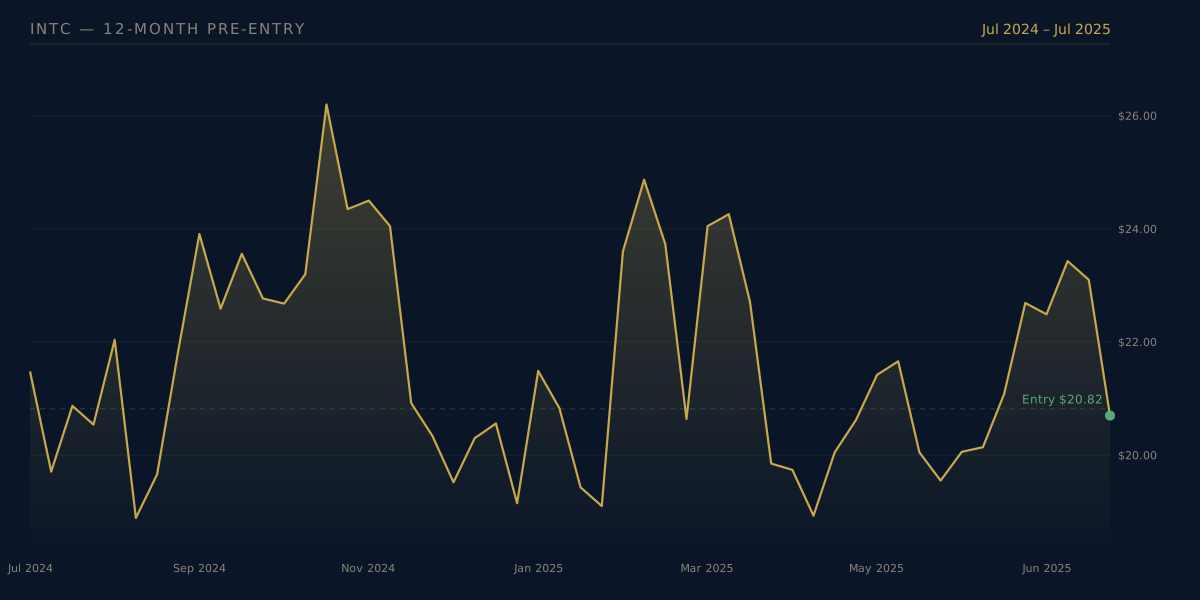
12-month price action before entry showing Intel’s range-bound trading and the late July selloff.
Entry Details
- Date: July 28, 2025
- Price: $20.82
- Context: Entering after a high-volume selloff near range support
The Thesis
A trader might have entered here seeing:
- Stock near the bottom of a multi-month range
- High-volume capitulation suggesting potential exhaustion
- Foundry catalysts potentially approaching
- Deep value if execution improved
The concern: Intel had disappointed many times before. Was this value trap or opportunity?
Before continuing: Consider what you would have done. Would you have taken this entry? What risks would you have been most concerned about?
Journey
Key Events
| Date | Event | Category | Stock Reaction |
|---|---|---|---|
| Jul 28, 2025 | Entry at $20.82 | Entry | Starting point |
| Aug 4, 2025 | Stock dips to $19.31 close | Weakness | -7% from entry |
| Aug 11, 2025 | Breakout begins—surge to $24.56 on 894M volume | Breakout | +18% from entry |
| Aug 18, 2025 | Rally continues to $24.80 on 969M volume | Momentum | Confirmation |
| Sep 1-8, 2025 | Consolidation around $24 | Pause | Digesting gains |
| Sep 15, 2025 | Second breakout—$29.58 on 957M volume | Acceleration | +42% from entry |
| Sep 22, 2025 | Surge to $35.50 on 985M volume | Climax | +70% from entry |
| Sep 29, 2025 | Peak at $38.08 high, close $36.83 | Peak | +77% from entry |
| Oct 6, 2025 | All-time high $39.65, close $36.37 | High | Near peak |
| Oct 13, 2025 | Exit at $37.01 | Exit | +78% from entry |
How It Unfolded
Phase 1: The Initial Test (Late July - Early August) The trade began with pain. Within the first week, Intel dropped from $20.82 to $19.31—a 7% loss. Volume was elevated (431-440M shares), and the thesis seemed immediately wrong. This was the moment that separated conviction from capitulation.
Phase 2: The First Breakout (Mid-August) Then everything changed. In the week of August 11, Intel exploded from $20 to $24.56—a 23% move in a single week. Volume nearly doubled to 894M shares. Something fundamental was shifting. The following week saw continued strength to $24.80 on even higher volume (969M).
Phase 3: Consolidation (Late August - Early September) After the initial surge, Intel paused. For three weeks, the stock consolidated around $24, with volume declining. This was healthy—digesting gains before the next move. Weak hands were being shaken out.
Phase 4: The Second Breakout (Mid-September) September 15 brought the second explosion. Intel surged from $24 to $29.58—a 23% move in one week on 957M shares. The following week saw another massive move to $35.50 on 985M shares. The stock was in full breakout mode.
Phase 5: The Peak (Late September - October) Intel touched $39.65 intraweek in early October—an astonishing 91% above the early August lows. The stock consolidated around $36-37 as profit-taking emerged. But the move had been captured.
Exit
- Date: October 13, 2025
- Price: $37.01
- Context: Exiting with +78% gain after spectacular rally
Charts
Price Chart with Entry/Exit
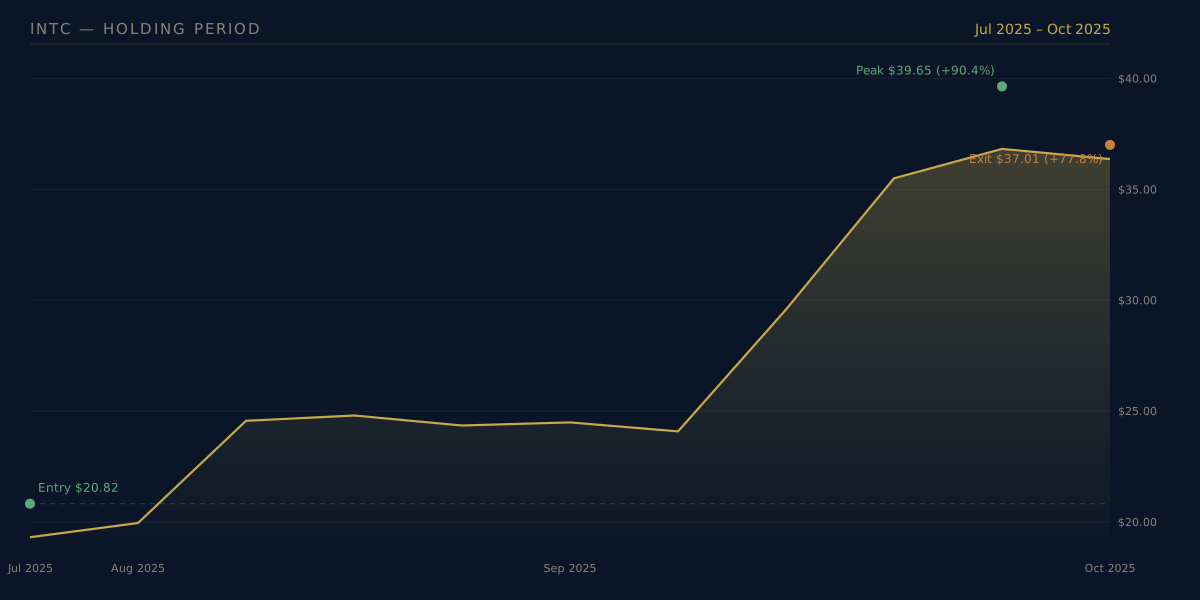
Weekly candlestick chart showing entry at $20.82 (green) and exit at $37.01 (blue). Note the August and September breakouts.
Relative Performance vs. Benchmarks
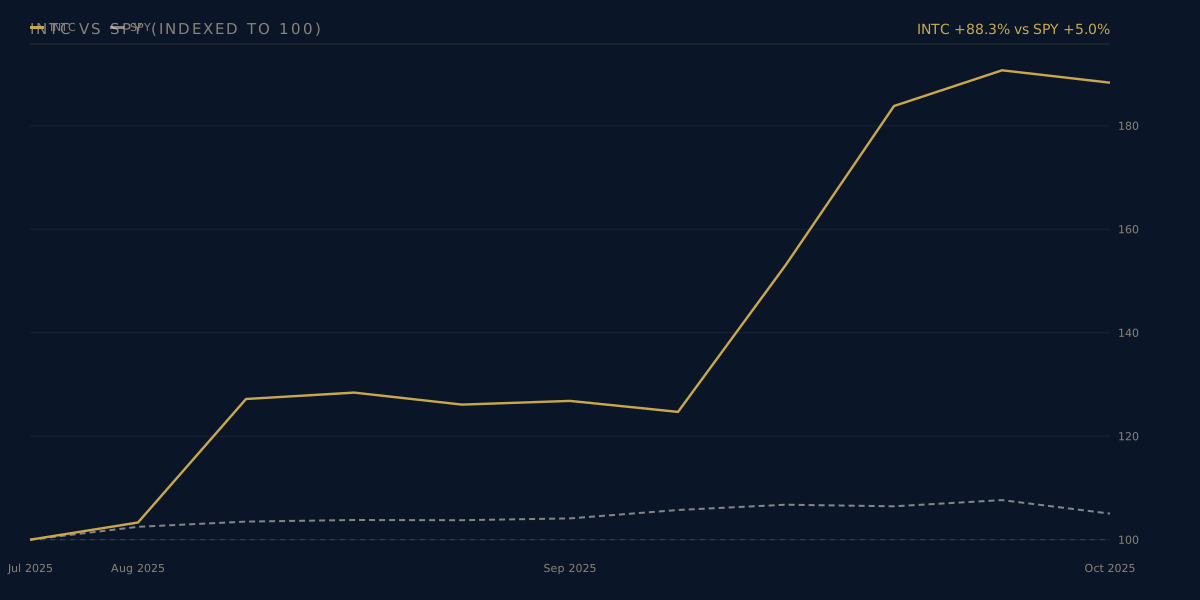
INTC dramatically outperformed both the S&P 500 and semiconductor sector.
Drawdown from Peak
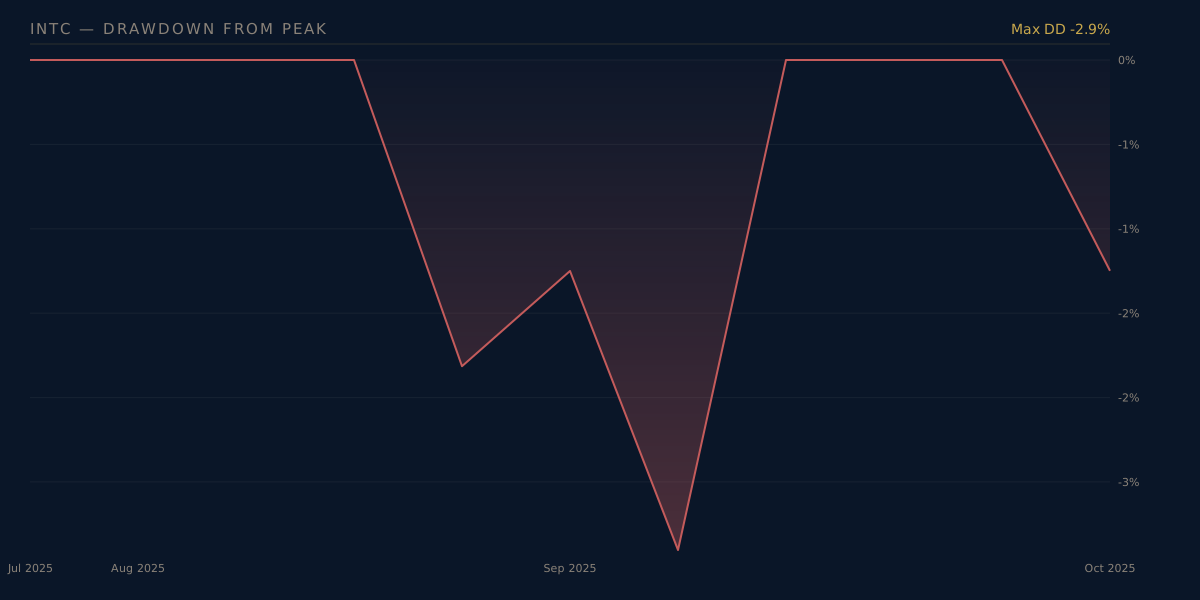
Brief early drawdown followed by persistent gains—a rare and valuable pattern.
Results
Performance Analysis
Absolute Returns
| Metric | Value |
|---|---|
| Entry Price | $20.82 |
| Exit Price | $37.01 |
| Gross Return | +77.8% |
| Holding Period | ~11 weeks |
| Max Price (High) | $39.65 |
| Min Price (Close) | $19.31 |
| Max Drawdown from Entry | -7.3% |
| Peak Unrealized Gain | +90.4% |
Relative Performance
During the same period:
- S&P 500 (SPY): Up approximately 5%
- Semiconductor ETF (SMH): Up approximately 12%
- INTC vs. S&P 500: Outperformed by ~73%
This was exceptional outperformance—one of the best single-stock trades possible in this period.
Lessons
What Worked
What Worked
-
Buying near support: Entry at $20.82 was near the bottom of the multi-month range. Support held at $19.31.
-
Holding through early weakness: The 7% initial decline tested conviction. Holding through it was essential to capturing the subsequent move.
-
Volume confirmed the breakout: The 894M and 969M share weeks in mid-August signaled institutional accumulation—this was real buying.
-
Riding multiple breakouts: The stock broke out twice (August and September). Staying invested captured both moves.
-
Exiting near the top: The $37.01 exit was within 7% of the $39.65 peak—excellent timing.
What Didn’t Work
-
Immediate pain: The 7% drop right after entry is psychologically difficult. Many traders would have stopped out.
-
No scale-in: A staged entry at $20.82, $19.50, and $19.00 would have averaged a better cost basis.
-
Left some on the table: The $39.65 high was 7% above exit. A trailing stop might have captured more.
Key Takeaways
Lessons and Takeaways
-
Turnaround stories can produce explosive returns. When sentiment shifts on a beaten-down name, the rally can be dramatic. Intel went from “value trap” to “must-own” in weeks.
-
Early pain doesn’t invalidate the thesis. A 7% drop right after entry is uncomfortable, but the stock was still within the established range. Conviction—not panic—was rewarded.
-
Volume is the ultimate confirmation. Both breakouts were accompanied by volume nearly doubling. This wasn’t retail speculation—institutions were buying.
-
Consolidation is healthy. The late August pause felt like the move was over. It was actually building a base for the next leg higher.
-
Multiple breakouts compound returns. The August breakout added ~20%. The September breakout added ~50%. Holding through both was essential.
-
78% in 11 weeks is extraordinary. This is a tail outcome—not something to expect regularly. Position sizing should reflect the inherent uncertainty.
Sources
- Yahoo Finance historical data for INTC
- CHIPS Act implementation timeline
- Intel foundry announcement coverage
- Semiconductor industry reports (2025)
Disclosure: This case study is for educational purposes only and does not constitute investment advice. Past performance does not guarantee future results. All investments carry risk of loss.
Timeline of Events
- Jul 28, 2025: Entry at $20.82
Entry — Starting point
- Aug 4, 2025: Stock dips to $19.31 close
Weakness — -7% from entry
- Aug 11, 2025: Breakout begins—surge to $24.56 on 894M volume
Breakout — +18% from entry
- Aug 18, 2025: Rally continues to $24.80 on 969M volume
Momentum — Confirmation
- Sep 1-8, 2025: Consolidation around $24
Pause — Digesting gains
- Sep 15, 2025: Second breakout—$29.58 on 957M volume
Acceleration — +42% from entry
- Sep 22, 2025: Surge to $35.50 on 985M volume
Climax — +70% from entry
- Sep 29, 2025: Peak at $38.08 high, close $36.83
Peak — +77% from entry
- Oct 6, 2025: All-time high $39.65, close $36.37
High — Near peak
- Oct 13, 2025: Exit at $37.01
Exit — +78% from entry
Phase Breakdown
Phase 1: The Initial Test (Late July - Early August)
The trade began with pain. Within the first week, Intel dropped from $20.82 to $19.31—a 7% loss. Volume was elevated (431-440M shares), and the thesis seemed immediately wrong. This was the moment that separated conviction from capitulation.
Phase 2: The First Breakout (Mid-August)
Then everything changed. In the week of August 11, Intel exploded from $20 to $24.56—a 23% move in a single week. Volume nearly doubled to 894M shares. Something fundamental was shifting. The following week saw continued strength to $24.80 on even higher volume (969M).
Phase 3: Consolidation (Late August - Early September)
After the initial surge, Intel paused. For three weeks, the stock consolidated around $24, with volume declining. This was healthy—digesting gains before the next move. Weak hands were being shaken out.
Phase 4: The Second Breakout (Mid-September)
September 15 brought the second explosion. Intel surged from $24 to $29.58—a 23% move in one week on 957M shares. The following week saw another massive move to $35.50 on 985M shares. The stock was in full breakout mode.
Phase 5: The Peak (Late September - October)
Intel touched $39.65 intraweek in early October—an astonishing 91% above the early August lows. The stock consolidated around $36-37 as profit-taking emerged. But the move had been captured.
Key Lessons
- Turnaround stories can produce explosive returns
When sentiment shifts on a beaten-down name, the rally can be dramatic. Intel went from "value trap" to "must-own" in weeks.
- Early pain doesn't invalidate the thesis
A 7% drop right after entry is uncomfortable, but the stock was still within the established range. Conviction—not panic—was rewarded.
- Volume is the ultimate confirmation
Both breakouts were accompanied by volume nearly doubling. This wasn't retail speculation—institutions were buying.
- Consolidation is healthy
The late August pause felt like the move was over. It was actually building a base for the next leg higher.
- Multiple breakouts compound returns
The August breakout added ~20%. The September breakout added ~50%. Holding through both was essential.
- 78% in 11 weeks is extraordinary
This is a tail outcome—not something to expect regularly. Position sizing should reflect the inherent uncertainty.
Disclaimer: Equicurious provides educational content only, not investment advice. Past performance does not guarantee future results. Always verify with primary sources and consult a licensed professional for your specific situation.