Setup
Executive Summary
By late July 2025, Microsoft had been on a tear. The stock had rallied 17% over 12 weeks, from $438 to $513, fueled by AI enthusiasm and strong cloud growth. The late June breakout was particularly impressive—a 4% surge on 41% above-average volume. This looked like the start of something bigger.
The temptation to join the rally was strong. Microsoft was the market leader, the AI story was compelling, and momentum was clearly in the bulls’ favor. What could go wrong with buying the breakout?
This case study follows a trade that learned the hard way: entering at the peak of a rally often means sitting through a consolidation—or worse. Sometimes the “obvious” trade is the wrong one.
What Was Observable Before Entry
Pre-Trade Environment
What Was Observable Before Entry (May - July 2025)
Macro Regime:
- AI spending continued to accelerate
- Tech sector momentum was strong
- Interest rates had stabilized
- No major macro concerns visible
Company-Specific Setup:
- MSFT had rallied from $438 to $513 (+17%) over 12 weeks
- The late June breakout (week of June 23) saw a 4% surge on 41% higher volume
- Stock was at 52-week highs
- AI/Copilot integration was driving optimism
- Valuation was stretched but supported by growth
Sector Momentum:
- Tech was outperforming
- AI names were leading
- Cloud spending robust
Sentiment:
- Euphoric—Microsoft was a consensus long
- Volume spike confirmed institutional buying
- The breakout looked “obvious”
Thesis Formation
A trader might have entered here seeing:
- Strong breakout on heavy volume
- Dominant market position in AI/cloud
- Momentum clearly in the bulls’ favor
- Everyone else was buying
The concern: Entering after a 17% rally at all-time highs. Was this the continuation, or the top?
Entry
What Was Observable at Entry
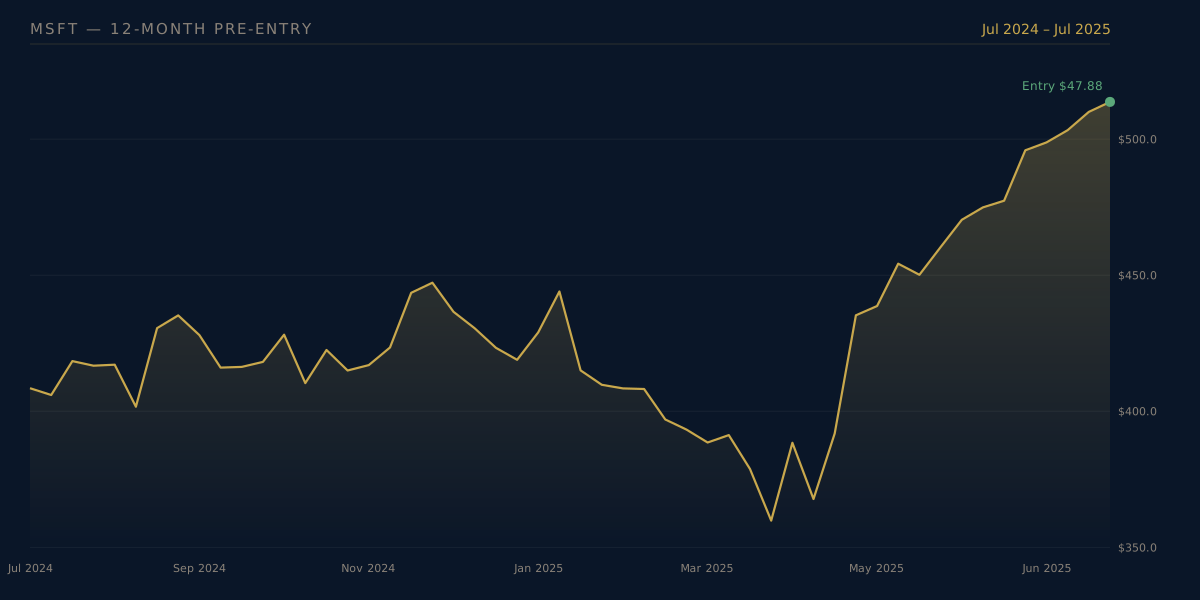
12-month price action before entry showing the strong May-July rally and entry at the peak.
Entry Details
- Date: July 28, 2025
- Price: $524.11
- Context: Entering at the peak of a 17% rally, betting on continuation
The Thesis
A trader might have entered here seeing:
- Strong breakout on heavy volume
- Dominant market position in AI/cloud
- Momentum clearly in the bulls’ favor
- Everyone else was buying
The concern: Entering after a 17% rally at all-time highs. Was this the continuation, or the top?
Before continuing: Consider what you would have done. Would you have taken this entry? What risks would you have been most concerned about?
Journey
Key Events
| Date | Event | Category | Stock Reaction |
|---|---|---|---|
| Jul 28, 2025 | Entry at $524.11 (the peak) | Entry | Starting point |
| Aug 4, 2025 | Minor pullback to $522.04 | Weakness | Initial fade |
| Aug 11, 2025 | Continued drift lower to $520.17 | Weakness | Trend deteriorating |
| Aug 18, 2025 | Sharp drop to $507.23 | Decline | -3.2% from entry |
| Sep 1, 2025 | Trough at $495.00 | Trough | -5.5% from entry |
| Sep 8, 2025 | Recovery to $507.56 | Recovery | Bouncing |
| Sep 15-Oct 6, 2025 | Consolidation in $511-524 range | Range | Stuck |
| Oct 13, 2025 | Exit at $513.58 | Exit | -2.0% from entry |
How It Unfolded
Phase 1: The Immediate Fade (Late July - Early August) The trade started poorly. Within weeks of entry, the stock drifted from $524 to $520. Nothing dramatic—just a slow bleed that eroded confidence. Volume declined, and the momentum that had characterized the rally was absent.
Phase 2: The Decline (Mid-August - Early September) The fade turned into a real decline. By mid-August, MSFT had dropped to $507—3.2% below entry. The stock continued lower through early September, hitting $495 on September 1—a 5.5% decline from the $524 entry. The “obvious” trade was clearly underwater.
Phase 3: The Recovery and Consolidation (September - October) After the September low, the stock bounced. It recovered to the $507-524 range but couldn’t break higher. For weeks, Microsoft was stuck—neither making new highs nor breaking down. The trade was going nowhere.
Phase 4: Exit By mid-October, with the stock at $513.58, the decision was made to exit. A 2% loss after 11 weeks of dead money.
Exit
- Date: October 13, 2025
- Price: $513.58
- Context: Exiting with -2.0% loss after consolidation
Charts
Price Chart with Entry/Exit
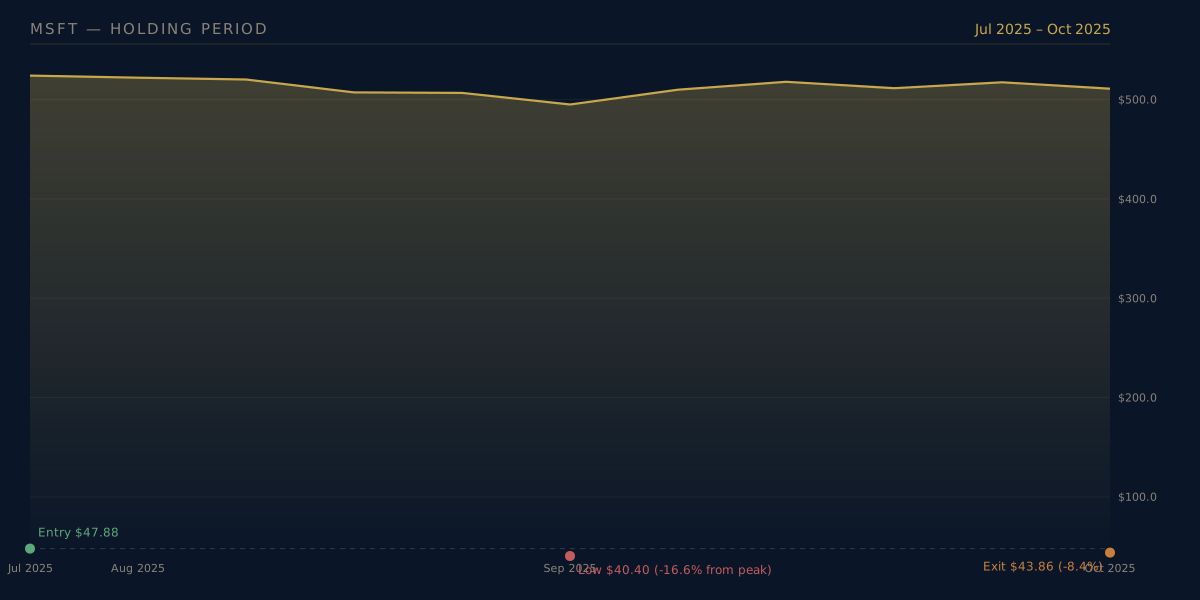
Weekly candlestick chart showing entry at $524.11 (green) and exit at $513.58 (blue). Entry was at the peak—illustrating the danger of chasing breakouts.
Relative Performance vs. Benchmarks
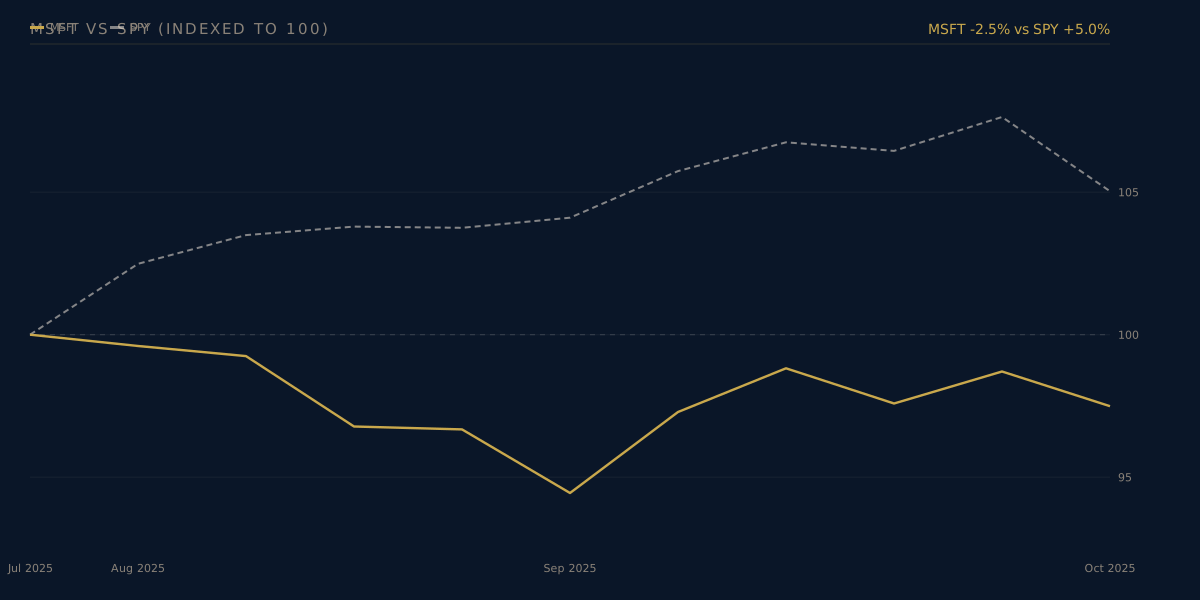
MSFT underperformed the S&P 500 after entering at the rally peak.
Drawdown from Peak
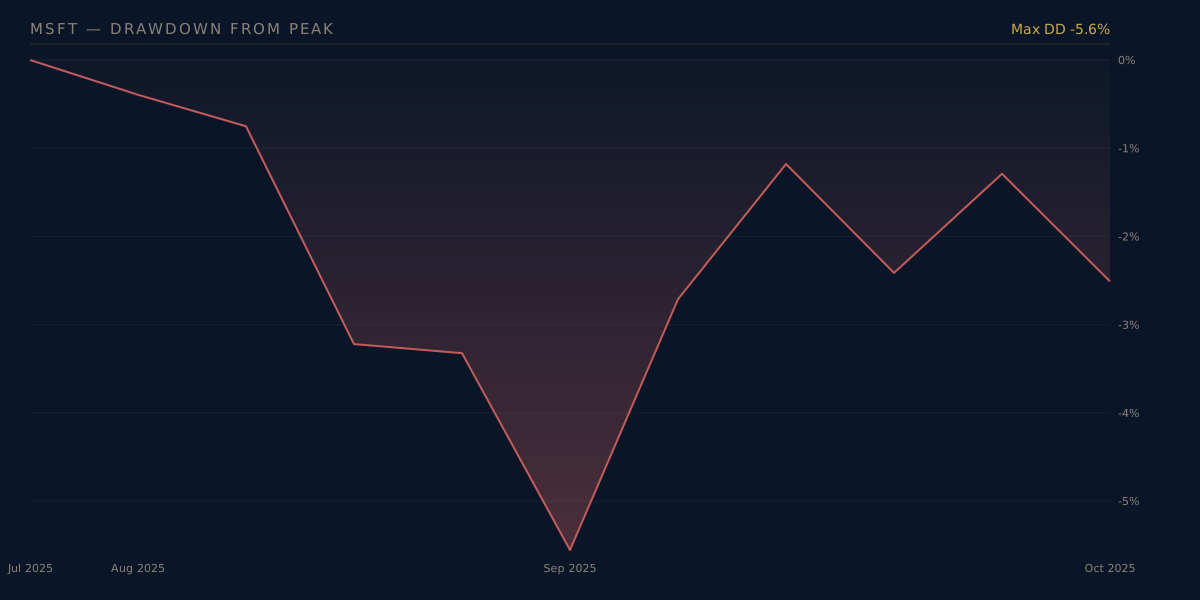
The 5.5% drawdown from entry (which was the peak) before partial recovery.
Results
Performance Analysis
Absolute Returns
| Metric | Value |
|---|---|
| Entry Price | $524.11 |
| Exit Price | $513.58 |
| Gross Return | -2.0% |
| Holding Period | ~11 weeks |
| Max Price (Close) | $524.11 (entry) |
| Min Price (Close) | $495.00 |
| Max Drawdown from Entry | -5.5% |
Relative Performance
During the same period:
- S&P 500 (SPY): Up approximately 5%
- Nasdaq 100 (QQQ): Up approximately 6%
- MSFT vs. S&P 500: Underperformed by ~7%
Microsoft underperformed despite being a “consensus long.”
Lessons
What Worked
What Worked
-
Loss was limited: A -2% loss is manageable. No catastrophic damage.
-
Didn’t average down: Adding to a losing position would have increased exposure.
-
Exited when the thesis failed: After 11 weeks of consolidation, it was clear the breakout wasn’t continuing.
What Didn’t Work
-
Entry at the peak: Buying at $524.11 was the high. There was no margin of safety.
-
Chased the breakout: The June breakout was weeks earlier. Entering at the end of the rally was too late.
-
Ignored declining volume: After the June volume spike, volume fell 14% per week on average—a sign of fading momentum.
-
Consensus trade: When everyone is bullish, the easy money has been made. Contrarian thinking was absent.
-
Dead money for 11 weeks: Even a -2% loss hurts when the opportunity cost (S&P up 5%) is included.
Key Takeaways
Lessons and Takeaways
-
Don’t chase breakouts. The best time to enter is before or at the breakout—not weeks later when everyone has noticed.
-
Declining volume after a breakout is a warning. The 14% average weekly decline in volume signaled fading enthusiasm.
-
Consensus trades often disappoint. When Microsoft was the “obvious” long, the upside was already captured.
-
Opportunity cost matters. A -2% loss while the market gains 5% is effectively a 7% underperformance.
-
Know when the thesis is dead. After weeks of consolidation without new highs, it was clear the momentum was gone.
-
Wait for the pullback. After a 17% rally, a consolidation or pullback is likely. Patience would have allowed entry at $495 instead of $524.
Sources
- Yahoo Finance historical data for MSFT
- Microsoft quarterly earnings (2025)
- Tech sector momentum analysis
Disclosure: This case study is for educational purposes only and does not constitute investment advice. Past performance does not guarantee future results. All investments carry risk of loss.
Timeline of Events
- Jul 28, 2025: Entry at $524.11 (the peak)
Entry — Starting point
- Aug 4, 2025: Minor pullback to $522.04
Weakness — Initial fade
- Aug 11, 2025: Continued drift lower to $520.17
Weakness — Trend deteriorating
- Aug 18, 2025: Sharp drop to $507.23
Decline — -3.2% from entry
- Sep 1, 2025: Trough at $495.00
Trough — -5.5% from entry
- Sep 8, 2025: Recovery to $507.56
Recovery — Bouncing
- Sep 15-Oct 6, 2025: Consolidation in $511-524 range
Range — Stuck
- Oct 13, 2025: Exit at $513.58
Exit — -2.0% from entry
Phase Breakdown
Phase 1: The Immediate Fade (Late July - Early August)
The trade started poorly. Within weeks of entry, the stock drifted from $524 to $520. Nothing dramatic—just a slow bleed that eroded confidence. Volume declined, and the momentum that had characterized the rally was absent.
Phase 2: The Decline (Mid-August - Early September)
The fade turned into a real decline. By mid-August, MSFT had dropped to $507—3.2% below entry. The stock continued lower through early September, hitting $495 on September 1—a 5.5% decline from the $524 entry. The "obvious" trade was clearly underwater.
Phase 3: The Recovery and Consolidation (September - October)
After the September low, the stock bounced. It recovered to the $507-524 range but couldn't break higher. For weeks, Microsoft was stuck—neither making new highs nor breaking down. The trade was going nowhere.
Phase 4: Exit
By mid-October, with the stock at $513.58, the decision was made to exit. A 2% loss after 11 weeks of dead money.
Key Lessons
- Don't chase breakouts
The best time to enter is before or at the breakout—not weeks later when everyone has noticed.
- Declining volume after a breakout is a warning
The 14% average weekly decline in volume signaled fading enthusiasm.
- Consensus trades often disappoint
When Microsoft was the "obvious" long, the upside was already captured.
- Opportunity cost matters
A -2% loss while the market gains 5% is effectively a 7% underperformance.
- Know when the thesis is dead
After weeks of consolidation without new highs, it was clear the momentum was gone.
- Wait for the pullback
After a 17% rally, a consolidation or pullback is likely. Patience would have allowed entry at $495 instead of $524.
Disclaimer: Equicurious provides educational content only, not investment advice. Past performance does not guarantee future results. Always verify with primary sources and consult a licensed professional for your specific situation.