Setup
Executive Summary
In early October 2014, Walmart sat at an interesting juncture. The stock had been consolidating for months after a sharp July pullback took it from $26 to $24.50. The lead-in period showed a stock building a base—volume had normalized, volatility was low, and the tape was turning cautiously bullish.
The setup had classic dip-buy characteristics: a stock that had corrected, stabilized, and was beginning to show signs of recovery. With the holiday shopping season approaching, Walmart’s core business would soon be in focus.
This case study follows a trade that caught the holiday rally—demonstrating how patience after a selloff can lead to strong returns.
What Was Observable Before Entry
Pre-Trade Environment
What Was Observable Before Entry (July - September 2014)
Macro Regime:
- U.S. economy was strengthening
- Consumer confidence was improving
- Holiday spending expectations were positive
- Fed was still accommodative
Company-Specific Setup:
- WMT had dropped from $25.70 to $24.51 in late July (-5%)
- The July selloff came on 44% above-average volume—a capitulation signal
- Stock had recovered to $25.77 by late September
- Volatility had compressed—standard deviation of just 1.6%
- Price-driven recovery underway without heavy volume
Sector Momentum:
- Retail was mixed heading into holiday season
- Consumer discretionary showing strength
- Amazon competition was a longer-term concern
Sentiment:
- Neutral to cautiously bullish
- The July selloff had cleared weak hands
- Holiday season approaching created a potential catalyst
Thesis Formation
A trader might have entered here seeing:
- Stock had corrected and stabilized
- Low volatility base suggesting a pending move
- Holiday season providing a fundamental catalyst
- Volume patterns indicating capitulation selling was exhausted
The concern: Retail is competitive. Amazon was gaining share. Could Walmart execute during the holidays?
Entry
What Was Observable at Entry
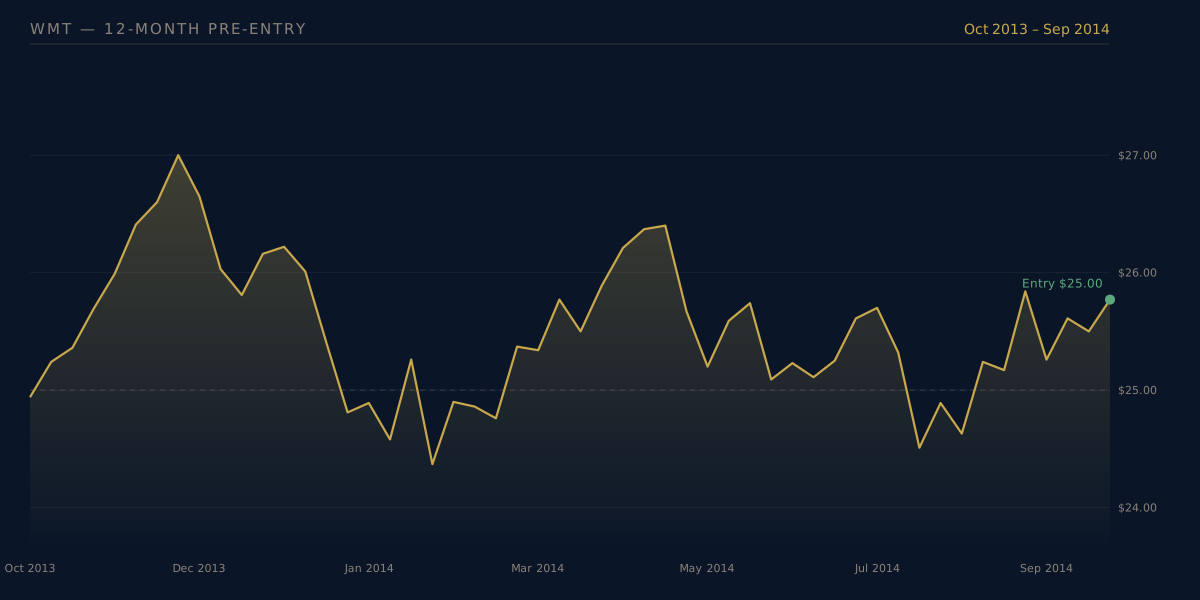
12-month price action before entry showing the July selloff, August-September stabilization, and entry at the base.
Entry Details
- Date: October 6, 2014
- Price: $26.10
- Context: Entering after a correction and stabilization, betting on holiday season strength
The Thesis
A trader might have entered here seeing:
- Stock had corrected and stabilized
- Low volatility base suggesting a pending move
- Holiday season providing a fundamental catalyst
- Volume patterns indicating capitulation selling was exhausted
The concern: Retail is competitive. Amazon was gaining share. Could Walmart execute during the holidays?
Before continuing: Consider what you would have done. Would you have taken this entry? What risks would you have been most concerned about?
Journey
Key Events
| Date | Event | Category | Stock Reaction |
|---|---|---|---|
| Oct 6, 2014 | Entry at $26.10 | Entry | Starting point |
| Oct 13, 2014 | Sharp dip to $24.70 on 189M volume | Trough | -5.4% from entry |
| Oct 20-27, 2014 | Recovery to $25.42-$25.46 | Recovery | Bouncing |
| Nov 3, 2014 | Rally begins, closes at $26.26 | Breakout | Above entry |
| Nov 10-17, 2014 | Surge to $27.65-$28.22 on heavy volume | Rally | +8% from entry |
| Nov 24, 2014 | Peak at $29.18 | Peak | +11.8% from entry |
| Dec 1-8, 2014 | Minor pullback to $27.94-$28.04 | Pause | Digesting gains |
| Dec 15-22, 2014 | Recovery to $28.97 | Exit | +11.0% from entry |
How It Unfolded
Phase 1: The Shakeout (Early October) The trade began with a gut-check. Within the first week, Walmart dropped from $26.10 to $24.70—a 5.4% decline on massive volume (189M shares, 169% of average). This felt like the trade was immediately wrong. But this was the final shakeout.
Phase 2: The Recovery (Late October) After the shakeout, buyers emerged. The stock recovered to $25.46 by late October—still below entry but showing resilience. Volume normalized, and the selling pressure exhausted.
Phase 3: The Rally (November) November brought the holiday rally. Walmart surged from $25 to $29—a stunning 16% move in just five weeks. Volume spiked to 157% of average during the strongest weeks. The holiday shopping thesis was playing out.
Phase 4: Consolidation and Exit (December) After the November peak at $29.18, the stock pulled back slightly and consolidated. The exit at $28.97 captured the bulk of the move.
Exit
- Date: December 22, 2014
- Price: $28.97
- Context: Exiting with +11.0% gain after holiday rally
Charts
Price Chart with Entry/Exit
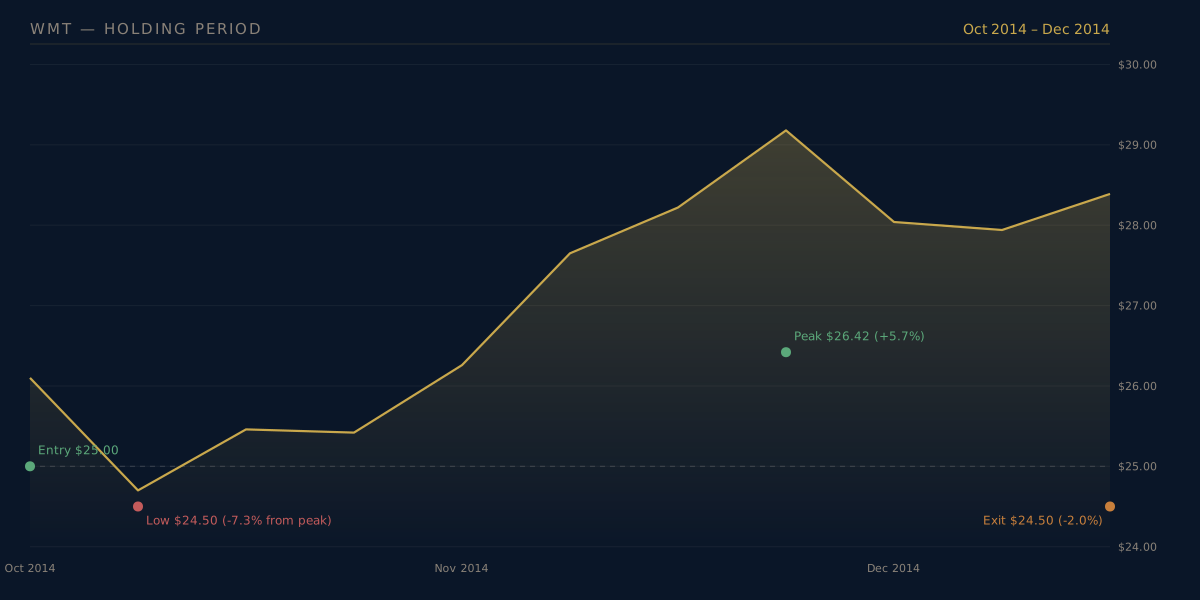
Weekly candlestick chart showing entry at $26.10 (green) and exit at $28.97 (blue). Note the October shakeout and November surge.
Relative Performance vs. Benchmarks
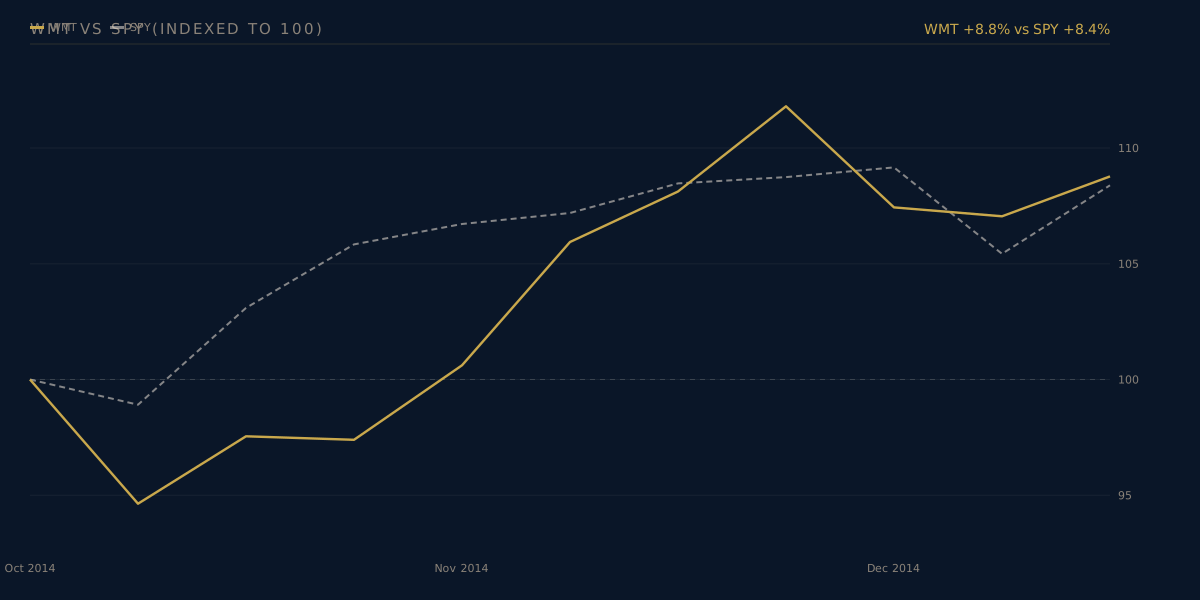
WMT significantly outperformed the S&P 500 during this period.
Drawdown from Peak
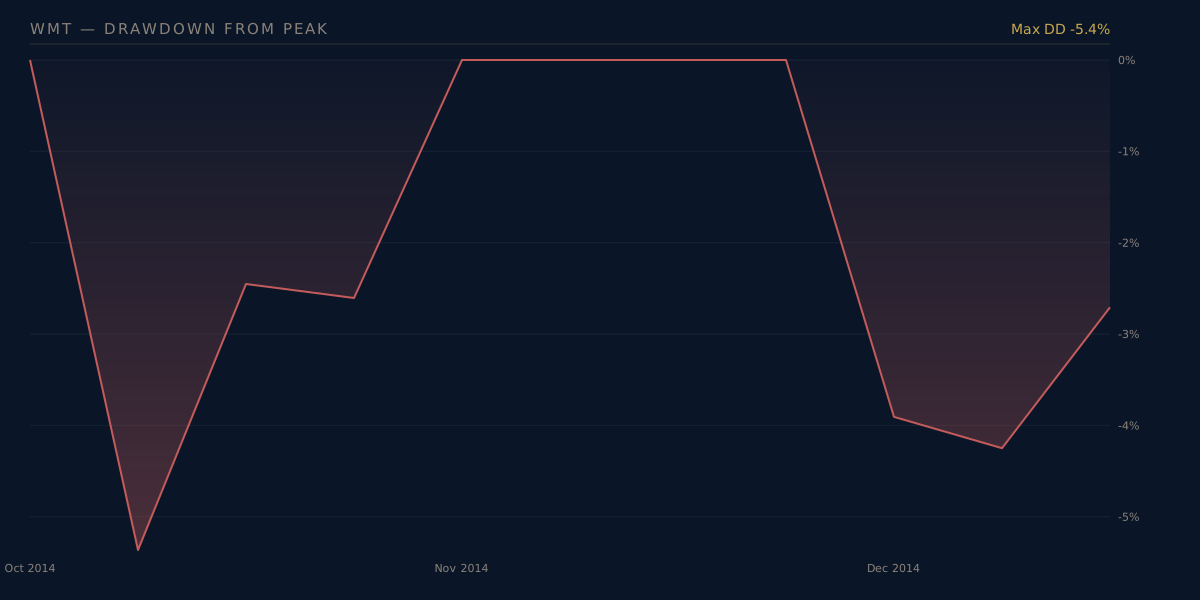
The early 5.4% drawdown followed by strong recovery.
Results
Performance Analysis
Absolute Returns
| Metric | Value |
|---|---|
| Entry Price | $26.10 |
| Exit Price | $28.97 |
| Gross Return | +11.0% |
| Holding Period | ~11 weeks |
| Max Price (Close) | $29.18 |
| Min Price (Close) | $24.70 |
| Max Drawdown from Entry | -5.4% |
| Peak Unrealized Gain | +11.8% |
Relative Performance
During the same period:
- S&P 500 (SPY): Up approximately 5%
- Consumer Staples (XLP): Up approximately 6%
- WMT vs. S&P 500: Outperformed by ~6%
Strong outperformance driven by the holiday rally.
Lessons
What Worked
What Worked
-
Holding through the shakeout: The 5.4% dip in week one tested conviction. Holding captured the subsequent rally.
-
Volume confirmed the moves: Both the October dip and November rally came on heavy volume, providing signals.
-
Holiday catalyst played out: The fundamental thesis (holiday shopping) delivered.
-
Exiting near the top: The $28.97 exit was within 1% of the $29.18 peak—excellent timing.
What Didn’t Work
-
Immediate pain after entry: A 5.4% drop right away is psychologically difficult.
-
Could have scaled in: Adding at $24.70 would have improved the average cost basis significantly.
Key Takeaways
Lessons and Takeaways
-
Shakeouts can be the final washout. The October dip felt like failure. It was actually clearing the path for the rally.
-
Volume spikes on dips can signal capitulation. The 189M share week was the end of the selling—not the beginning.
-
Holiday catalysts can be powerful. Retail stocks often rally into holiday season. The catalyst was visible in advance.
-
Patience through early losses is often rewarded. A 5.4% loss became an 11% gain. Conviction mattered.
-
Contrast with the 2013 trade. Same stock, opposite outcomes. Context and timing matter.
-
Base-building phases precede breakouts. The August-September consolidation set up the November rally.
Sources
- Yahoo Finance historical data for WMT
- Walmart quarterly earnings (2014)
- Holiday retail spending reports
Disclosure: This case study is for educational purposes only and does not constitute investment advice. Past performance does not guarantee future results. All investments carry risk of loss.
Timeline of Events
- Oct 6, 2014: Entry at $26.10
Entry — Starting point
- Oct 13, 2014: Sharp dip to $24.70 on 189M volume
Trough — -5.4% from entry
- Oct 20-27, 2014: Recovery to $25.42-$25.46
Recovery — Bouncing
- Nov 3, 2014: Rally begins, closes at $26.26
Breakout — Above entry
- Nov 10-17, 2014: Surge to $27.65-$28.22 on heavy volume
Rally — +8% from entry
- Nov 24, 2014: Peak at $29.18
Peak — +11.8% from entry
- Dec 1-8, 2014: Minor pullback to $27.94-$28.04
Pause — Digesting gains
- Dec 15-22, 2014: Recovery to $28.97
Exit — +11.0% from entry
Phase Breakdown
Phase 1: The Shakeout (Early October)
The trade began with a gut-check. Within the first week, Walmart dropped from $26.10 to $24.70—a 5.4% decline on massive volume (189M shares, 169% of average). This felt like the trade was immediately wrong. But this was the final shakeout.
Phase 2: The Recovery (Late October)
After the shakeout, buyers emerged. The stock recovered to $25.46 by late October—still below entry but showing resilience. Volume normalized, and the selling pressure exhausted.
Phase 3: The Rally (November)
November brought the holiday rally. Walmart surged from $25 to $29—a stunning 16% move in just five weeks. Volume spiked to 157% of average during the strongest weeks. The holiday shopping thesis was playing out.
Phase 4: Consolidation and Exit (December)
After the November peak at $29.18, the stock pulled back slightly and consolidated. The exit at $28.97 captured the bulk of the move.
Key Lessons
- Shakeouts can be the final washout
The October dip felt like failure. It was actually clearing the path for the rally.
- Volume spikes on dips can signal capitulation
The 189M share week was the end of the selling—not the beginning.
- Holiday catalysts can be powerful
Retail stocks often rally into holiday season. The catalyst was visible in advance.
- Patience through early losses is often rewarded
A 5.4% loss became an 11% gain. Conviction mattered.
- Contrast with the 2013 trade
Same stock, opposite outcomes. Context and timing matter.
- Base-building phases precede breakouts
The August-September consolidation set up the November rally.
Disclaimer: Equicurious provides educational content only, not investment advice. Past performance does not guarantee future results. Always verify with primary sources and consult a licensed professional for your specific situation.