Setup
Executive Summary
By late July 2025, NVIDIA was the undisputed leader of the AI revolution. The stock had rallied from $110 to $173 in just 12 weeks—a stunning 57% move fueled by insatiable data center demand. Everyone wanted exposure to AI, and NVIDIA was the most direct way to get it.
But after such a massive rally, the question was obvious: what now? Was there more upside, or was the easy money made? The stock sat at all-time highs with a stretched valuation. Yet the AI buildout showed no signs of slowing.
This case study follows a trade in the most crowded name in the market. Can you still profit when everyone agrees a stock is great?
What Was Observable Before Entry
Pre-Trade Environment
What Was Observable Before Entry (May - July 2025)
Macro Regime:
- AI spending continued to accelerate
- Tech sector was outperforming
- Interest rates had stabilized
- No major macro concerns on the horizon
Company-Specific Setup:
- NVDA had surged from $110 to $173 (+57%) in 12 weeks
- Data center revenue was growing at triple digits
- Hopper architecture was sold out; Blackwell was ramping
- Stock was at all-time highs with elevated valuation
- Volume had spiked to 1.3B shares on breakout weeks
Sector Momentum:
- Semiconductors were leading the market
- AI infrastructure names were the most crowded trades
- The “Magnificent Seven” continued to dominate
Sentiment:
- Euphoric—NVIDIA was consensus long #1
- But stretched valuations created nervousness
- The question was entry timing, not direction
Thesis Formation
A trader might have entered here seeing:
- Unmatched position in AI infrastructure
- Data center demand continuing to accelerate
- Breakout to new highs with volume confirmation
- The most important tech trend of the decade
The concern: After a 57% rally, was there upside left? Valuation was stretched, and positioning was crowded.
Entry
What Was Observable at Entry
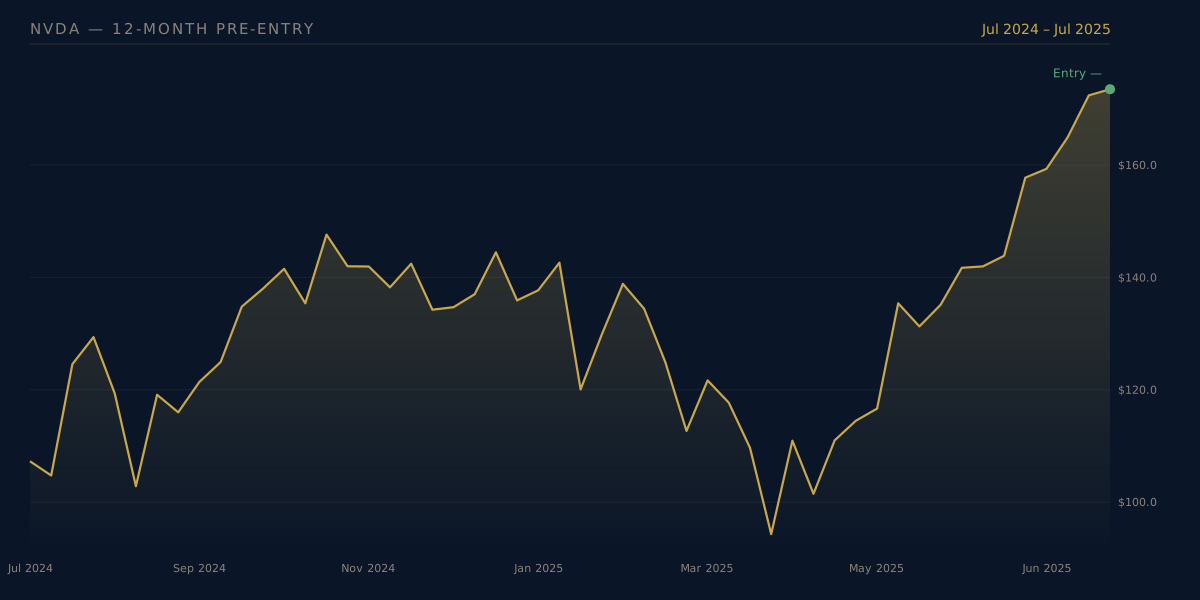
12-month price action before entry showing the massive May-July rally and entry at all-time highs.
Entry Details
- Date: July 28, 2025
- Price: $173.72
- Context: Entering at all-time highs after a 57% rally
The Thesis
A trader might have entered here seeing:
- Unmatched position in AI infrastructure
- Data center demand continuing to accelerate
- Breakout to new highs with volume confirmation
- The most important tech trend of the decade
The concern: After a 57% rally, was there upside left? Valuation was stretched, and positioning was crowded.
Before continuing: Consider what you would have done. Would you have taken this entry? What risks would you have been most concerned about?
Journey
Key Events
| Date | Event | Category | Stock Reaction |
|---|---|---|---|
| Jul 28, 2025 | Entry at $173.72 at all-time highs | Entry | Starting point |
| Aug 4, 2025 | Rally to $182.70 | Strength | +5% from entry |
| Aug 18-25, 2025 | Pullback begins, volatility increases | Weakness | Trend fading |
| Sep 1, 2025 | Trough at $167.02 | Trough | -4% from entry |
| Sep 8, 2025 | Recovery to $177.82 | Recovery | Bouncing |
| Sep 29, 2025 | New high at $187.62 | Peak | +8% from entry |
| Oct 6-13, 2025 | Consolidation around $183 | Pause | Digesting |
| Oct 13, 2025 | Exit at $183.22 | Exit | +5.5% from entry |
How It Unfolded
Phase 1: Early Strength (Late July - Early August) The trade started well. Within a week, NVIDIA pushed from $173 to $182—a quick 5% gain. The AI narrative remained intact, and the stock acted well. Entry at all-time highs seemed validated.
Phase 2: The Correction (Mid-August - Early September) Then came the pullback. NVIDIA dropped from $182 to $167 over three weeks—a 9% decline from the highs. Volume spiked on the selling, creating concern that the rally was over. This was the test of conviction.
Phase 3: The Recovery Rally (Mid-September - Late September) But buyers emerged. The stock recovered from $167 to a new high at $187 by late September—a 12% surge in just three weeks. The AI story was too strong to ignore.
Phase 4: Consolidation (October) After the September peak, NVIDIA consolidated around $183. The volatility subsided, and the stock settled into a range. The trade ended with a solid 5.5% gain.
Exit
- Date: October 13, 2025
- Price: $183.22
- Context: Exiting with +5.5% gain after consolidation
Charts
Price Chart with Entry/Exit
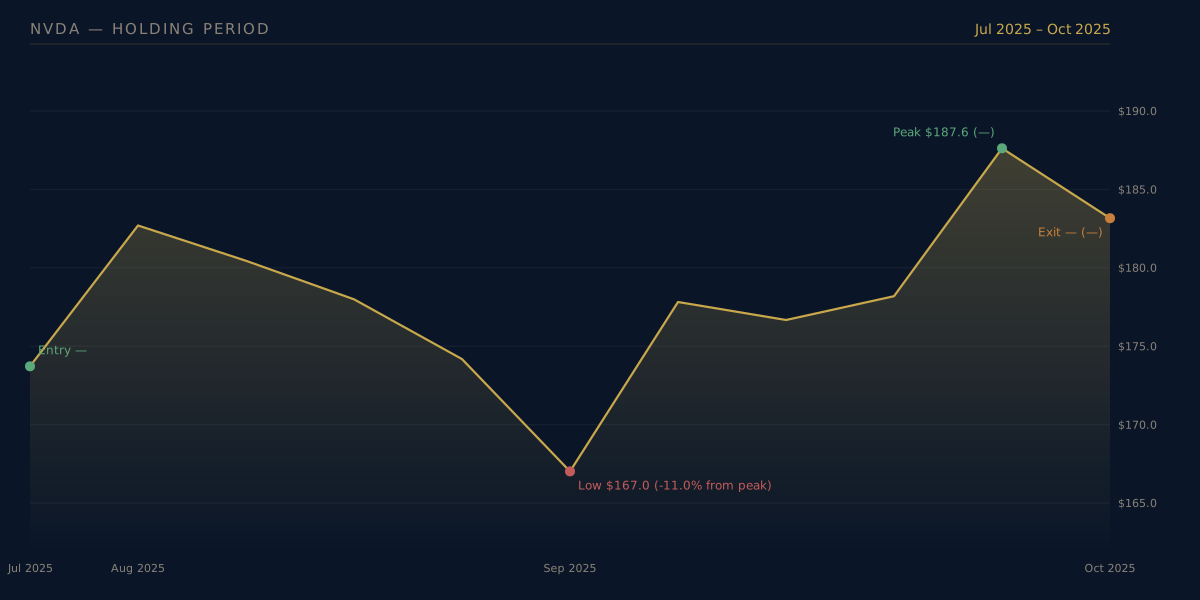
Weekly candlestick chart showing entry at $173.72 (green) and exit at $183.22 (blue). Note the September correction and recovery.
Relative Performance vs. Benchmarks
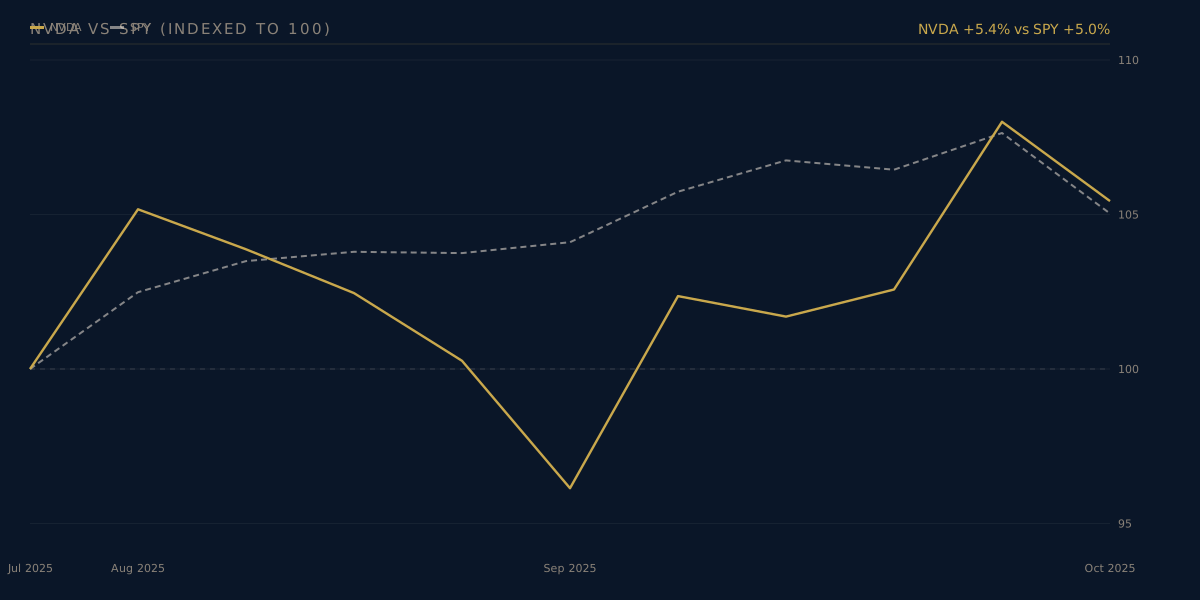
NVDA roughly matched the S&P 500 and semiconductor sector during this period.
Drawdown from Peak
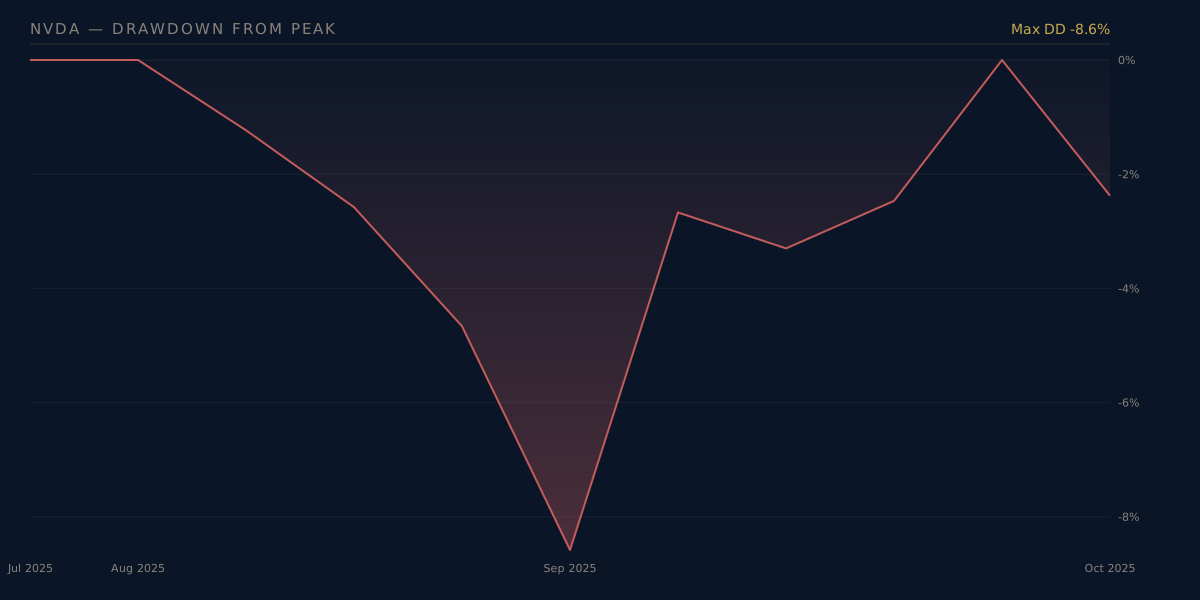
The 4% drawdown from entry during the September correction.
Results
Performance Analysis
Absolute Returns
| Metric | Value |
|---|---|
| Entry Price | $173.72 |
| Exit Price | $183.22 |
| Gross Return | +5.5% |
| Holding Period | ~11 weeks |
| Max Price (Close) | $187.62 |
| Min Price (Close) | $167.02 |
| Max Drawdown from Entry | -3.9% |
| Peak Unrealized Gain | +8.0% |
Relative Performance
During the same period:
- S&P 500 (SPY): Up approximately 5%
- Semiconductor ETF (SMH): Up approximately 7%
- NVDA vs. S&P 500: Roughly inline
NVIDIA matched the market—respectable given entry at all-time highs, but no outperformance.
Lessons
What Worked
What Worked
-
The thesis was correct: AI infrastructure demand remained strong. NVIDIA’s position was unassailable.
-
Held through the correction: The September dip to $167 tested conviction. Holding captured the subsequent recovery.
-
Volume confirmed moves: Both the correction and recovery were accompanied by meaningful volume, providing signals.
What Didn’t Work
-
Entry after a 57% rally: Buying at all-time highs left limited upside. A 5.5% return is modest.
-
Matched the market: After all the volatility, the trade merely kept pace with the S&P 500.
-
Left gains on the table: The $187 peak was 8% above entry. Exit at $183 gave back some gains.
-
Crowded trade risk: As the consensus long, any disappointment could trigger sharp selling.
Key Takeaways
Lessons and Takeaways
-
Even the best stocks can underperform after big rallies. NVIDIA was the best AI play, but entry after a 57% move limited returns.
-
Crowded trades have crowded exits. When everyone owns a stock, corrections can be swift. The September drop was fast.
-
Market-matching returns don’t justify single-stock risk. A 5.5% return is fine, but not exceptional. An index would have delivered similar returns with less concentration risk.
-
The thesis was right; the timing was late. The AI story remained compelling. But the optimal entry was months earlier.
-
Volatility within trends is normal. The 9% peak-to-trough swing was uncomfortable but didn’t break the trend.
-
Consider opportunity cost. Was tying up capital in NVDA the best use of funds when returns matched the index?
Sources
- Yahoo Finance historical data for NVDA
- NVIDIA quarterly earnings (2025)
- Data center spending surveys
- AI infrastructure market analysis
Disclosure: This case study is for educational purposes only and does not constitute investment advice. Past performance does not guarantee future results. All investments carry risk of loss.
Timeline of Events
- Jul 28, 2025: Entry at $173.72 at all-time highs
Entry — Starting point
- Aug 4, 2025: Rally to $182.70
Strength — +5% from entry
- Aug 18-25, 2025: Pullback begins, volatility increases
Weakness — Trend fading
- Sep 1, 2025: Trough at $167.02
Trough — -4% from entry
- Sep 8, 2025: Recovery to $177.82
Recovery — Bouncing
- Sep 29, 2025: New high at $187.62
Peak — +8% from entry
- Oct 6-13, 2025: Consolidation around $183
Pause — Digesting
- Oct 13, 2025: Exit at $183.22
Exit — +5.5% from entry
Phase Breakdown
Phase 1: Early Strength (Late July - Early August)
The trade started well. Within a week, NVIDIA pushed from $173 to $182—a quick 5% gain. The AI narrative remained intact, and the stock acted well. Entry at all-time highs seemed validated.
Phase 2: The Correction (Mid-August - Early September)
Then came the pullback. NVIDIA dropped from $182 to $167 over three weeks—a 9% decline from the highs. Volume spiked on the selling, creating concern that the rally was over. This was the test of conviction.
Phase 3: The Recovery Rally (Mid-September - Late September)
But buyers emerged. The stock recovered from $167 to a new high at $187 by late September—a 12% surge in just three weeks. The AI story was too strong to ignore.
Phase 4: Consolidation (October)
After the September peak, NVIDIA consolidated around $183. The volatility subsided, and the stock settled into a range. The trade ended with a solid 5.5% gain.
Key Lessons
- Even the best stocks can underperform after big rallies
NVIDIA was the best AI play, but entry after a 57% move limited returns.
- Crowded trades have crowded exits
When everyone owns a stock, corrections can be swift. The September drop was fast.
- Market-matching returns don't justify single-stock risk
A 5.5% return is fine, but not exceptional. An index would have delivered similar returns with less concentration risk.
- The thesis was right; the timing was late
The AI story remained compelling. But the optimal entry was months earlier.
- Volatility within trends is normal
The 9% peak-to-trough swing was uncomfortable but didn't break the trend.
- Consider opportunity cost
Was tying up capital in NVDA the best use of funds when returns matched the index?
Disclaimer: Equicurious provides educational content only, not investment advice. Past performance does not guarantee future results. Always verify with primary sources and consult a licensed professional for your specific situation.