Setup
Executive Summary
In early 2013, Walmart was a defensive stalwart. The stock had quietly climbed from $22.88 in January to nearly $25 by April—a steady 9% grind that attracted income investors seeking stability in an uncertain environment. The dividend yield was attractive, and the company’s scale provided a moat.
But defensive doesn’t mean boring. The trade that followed would test patience as the stock hit new highs, then slowly gave back all the gains. What happens when a range-bound stock refuses to trend?
This case study follows a trade in a low-volatility retail giant—illustrating the challenges of trading names that don’t provide clean directional moves.
What Was Observable Before Entry
Pre-Trade Environment
What Was Observable Before Entry (January - March 2013)
Macro Regime:
- QE3 liquidity supporting risk assets
- U.S. housing recovery underway
- Consumer spending gradually improving
- Taper talk not yet a factor
Company-Specific Setup:
- WMT had rallied from $22.88 to $24.94 (+9%) since January
- Volume had spiked in February (176M shares, +45% above average)
- Stock was approaching multi-year resistance near $25
- Defensive name with strong dividend yield
Sector Momentum:
- Retail was mixed
- Defensive consumer staples outperforming in risk-off periods
- Amazon was growing but not yet a major threat to Walmart’s core
Sentiment:
- Cautiously bullish on Walmart as a defensive play
- Some concern about consumer spending strength
- The stock was approaching resistance levels
Thesis Formation
A trader might have entered here seeing:
- Steady uptrend since January
- Defensive characteristics in an uncertain market
- Approaching a potential breakout above $25
- Volume confirmed the February rally
The concern: Walmart was approaching resistance. Range-bound stocks can frustrate traders who expect directional moves.
Entry
What Was Observable at Entry
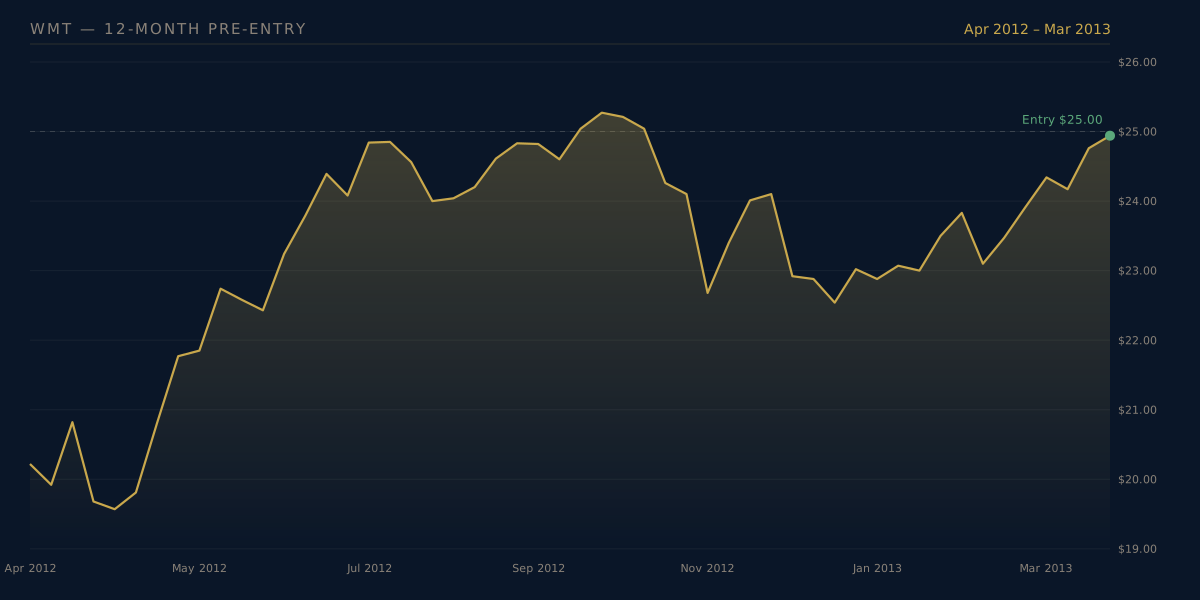
12-month price action before entry showing the steady Q1 2013 rally and approach to resistance.
Entry Details
- Date: April 1, 2013
- Price: $25.00
- Context: Entering near resistance after a 9% rally, betting on breakout
The Thesis
A trader might have entered here seeing:
- Steady uptrend since January
- Defensive characteristics in an uncertain market
- Approaching a potential breakout above $25
- Volume confirmed the February rally
The concern: Walmart was approaching resistance. Range-bound stocks can frustrate traders who expect directional moves.
Before continuing: Consider what you would have done. Would you have taken this entry? What risks would you have been most concerned about?
Journey
Key Events
| Date | Event | Category | Stock Reaction |
|---|---|---|---|
| Apr 1, 2013 | Entry at $25.00 | Entry | Starting point |
| Apr 8-22, 2013 | Rally to $26.19-$26.35 | Rally | +5.4% from entry |
| May 6, 2013 | Peak at $26.42 | Peak | +5.7% from entry |
| May 13-27, 2013 | Slow fade begins | Weakness | Trend changing |
| Jun 3-10, 2013 | Acceleration of decline | Decline | Giving back gains |
| Jun 17, 2013 | Exit at $24.50 | Exit | -2.0% from entry |
How It Unfolded
Phase 1: The Early Rally (April) The trade started well. Walmart pushed from $25 to $26.35 in the first four weeks—a 5.4% gain that broke above resistance. Volume was moderate but steady. The breakout looked genuine.
Phase 2: The Peak (Early May) In early May, Walmart touched $26.42—the high of the trade and a 5.7% gain from entry. But volume was declining on the advance. The buyers were getting tired.
Phase 3: The Slow Fade (Mid-May - June) Then came the retreat. The stock drifted lower week after week—$26.30, $25.96, $25.77, $24.95. There was no panic, just a steady erosion of gains. By early June, the position was underwater.
Phase 4: The Exit (Mid-June) The trade ended at $24.50—2% below entry. The entire 5.7% gain had been given back, plus some. A frustrating round trip.
Exit
- Date: June 17, 2013
- Price: $24.50
- Context: Exiting with -2.0% loss after giving back all gains
Charts
Price Chart with Entry/Exit
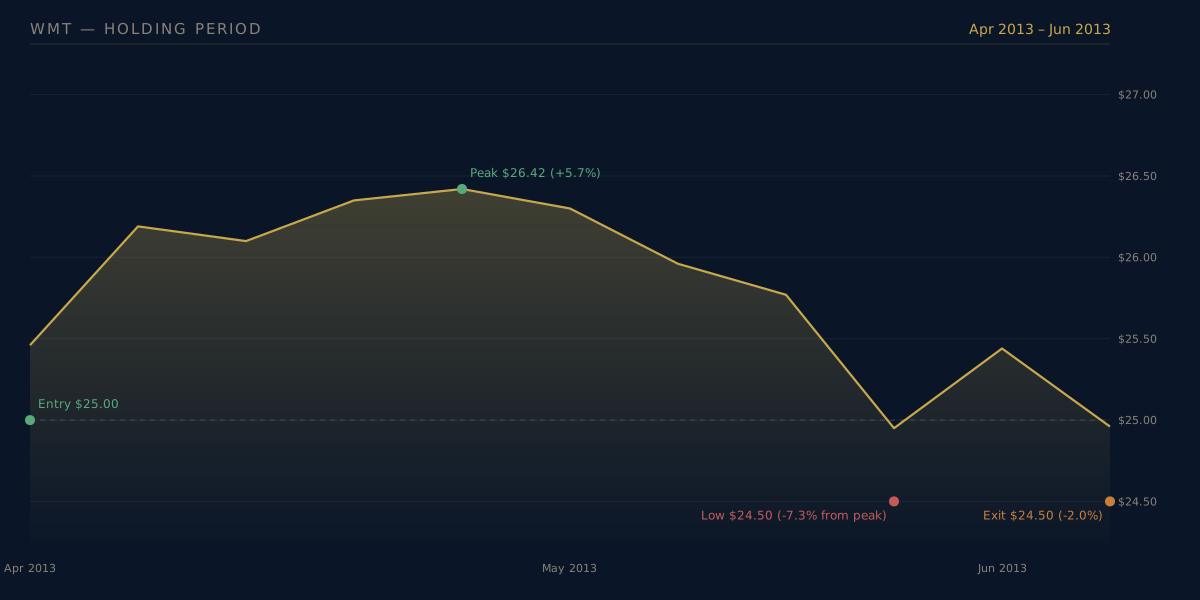
Weekly candlestick chart showing entry at $25.00 (green) and exit at $24.50 (blue). Note the May peak and subsequent fade.
Relative Performance vs. Benchmarks
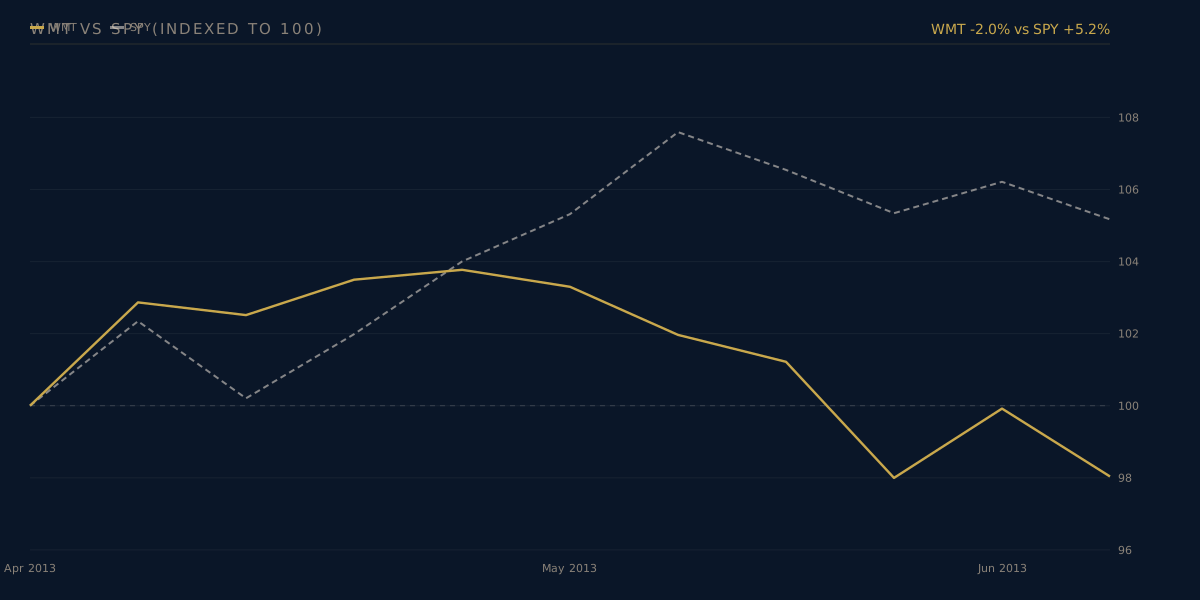
WMT underperformed the S&P 500 during this period.
Drawdown from Peak
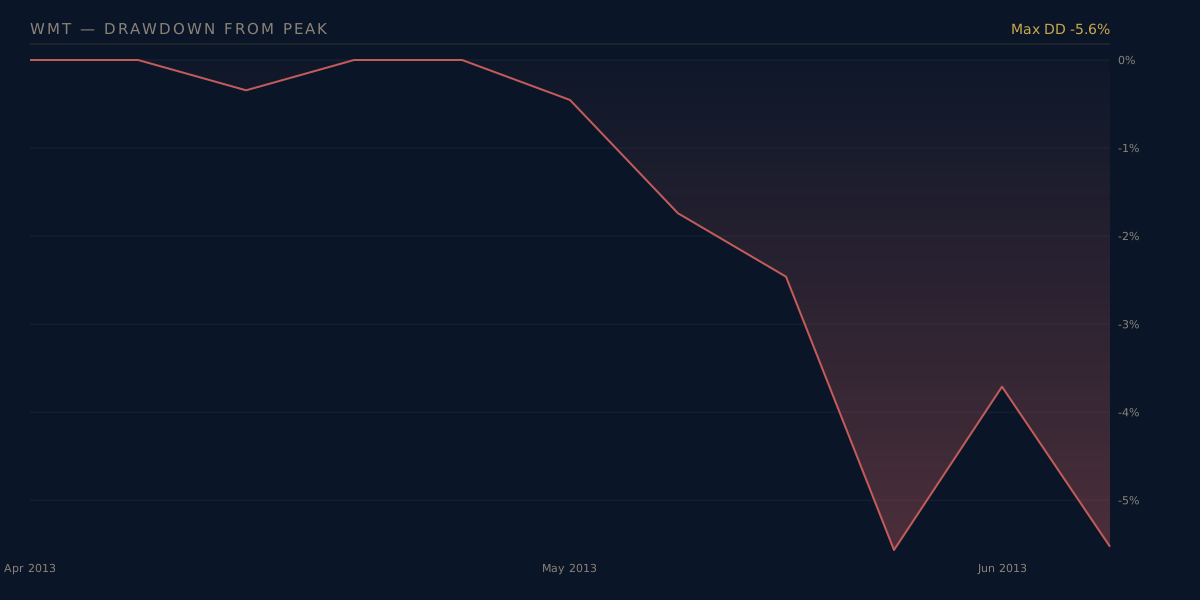
The 7.3% decline from the May peak to the June exit.
Results
Performance Analysis
Absolute Returns
| Metric | Value |
|---|---|
| Entry Price | $25.00 |
| Exit Price | $24.50 |
| Gross Return | -2.0% |
| Holding Period | ~11 weeks |
| Max Price (Close) | $26.42 |
| Min Price (Close) | $24.50 |
| Peak Unrealized Gain | +5.7% |
| Max Drawdown from Peak | -7.3% |
Relative Performance
During the same period:
- S&P 500 (SPY): Up approximately 4%
- Consumer Staples (XLP): Approximately flat
- WMT vs. S&P 500: Underperformed by ~6%
Walmart underperformed the market during a mildly bullish period.
Lessons
What Worked
What Worked
-
Initial breakout captured: The rally from $25 to $26.42 worked exactly as hoped. The breakout was real—temporarily.
-
Loss was limited: A -2% loss is manageable in the context of a range-bound stock.
What Didn’t Work
-
No profit-taking at the peak: A 5.7% gain evaporated. Taking profits near $26.40 would have locked in a solid return.
-
Held through the entire fade: The slow decline was visible week after week. Earlier exit would have helped.
-
Declining volume on rally was a warning: Volume fell as price rose—a classic sign of weak conviction.
-
Range-bound stock, not a trending stock: Walmart was trading in a range. Expecting a sustained breakout was optimistic.
Key Takeaways
Lessons and Takeaways
-
Take profits on low-volatility stocks. Without strong momentum, gains in range-bound names are often temporary.
-
Declining volume on rallies is a warning. When volume falls as price rises, the move may not be sustainable.
-
Range-bound stocks require different strategies. Trending stock tactics don’t work for range-bound names. Consider selling at resistance.
-
The round trip is a common outcome. A 5.7% gain becoming a -2% loss is frustrating but common in choppy markets.
-
Defensive doesn’t mean directional. Walmart’s defensive qualities made it stable—not a momentum stock.
-
Know when to take a small win. A 4-5% gain in a low-volatility stock is often the best you’ll get.
Sources
- Yahoo Finance historical data for WMT
- Walmart quarterly earnings (2013)
- Consumer spending data
Disclosure: This case study is for educational purposes only and does not constitute investment advice. Past performance does not guarantee future results. All investments carry risk of loss.
Timeline of Events
- Apr 1, 2013: Entry at $25.00
Entry — Starting point
- Apr 8-22, 2013: Rally to $26.19-$26.35
Rally — +5.4% from entry
- May 6, 2013: Peak at $26.42
Peak — +5.7% from entry
- May 13-27, 2013: Slow fade begins
Weakness — Trend changing
- Jun 3-10, 2013: Acceleration of decline
Decline — Giving back gains
- Jun 17, 2013: Exit at $24.50
Exit — -2.0% from entry
Phase Breakdown
Phase 1: The Early Rally (April)
The trade started well. Walmart pushed from $25 to $26.35 in the first four weeks—a 5.4% gain that broke above resistance. Volume was moderate but steady. The breakout looked genuine.
Phase 2: The Peak (Early May)
In early May, Walmart touched $26.42—the high of the trade and a 5.7% gain from entry. But volume was declining on the advance. The buyers were getting tired.
Phase 3: The Slow Fade (Mid-May - June)
Then came the retreat. The stock drifted lower week after week—$26.30, $25.96, $25.77, $24.95. There was no panic, just a steady erosion of gains. By early June, the position was underwater.
Phase 4: The Exit (Mid-June)
The trade ended at $24.50—2% below entry. The entire 5.7% gain had been given back, plus some. A frustrating round trip.
Key Lessons
- Take profits on low-volatility stocks
Without strong momentum, gains in range-bound names are often temporary.
- Declining volume on rallies is a warning
When volume falls as price rises, the move may not be sustainable.
- Range-bound stocks require different strategies
Trending stock tactics don't work for range-bound names. Consider selling at resistance.
- The round trip is a common outcome
A 5.7% gain becoming a -2% loss is frustrating but common in choppy markets.
- Defensive doesn't mean directional
Walmart's defensive qualities made it stable—not a momentum stock.
- Know when to take a small win
A 4-5% gain in a low-volatility stock is often the best you'll get.
Disclaimer: Equicurious provides educational content only, not investment advice. Past performance does not guarantee future results. Always verify with primary sources and consult a licensed professional for your specific situation.